Toggle light / dark theme

China’s dark-matter satellite launches era of space science

“The detector could help to clear up some mysteries. In 2013, the AMS announced it had seen hints of dark matter but so far it has detected too few high-energy particles to say for sure. Though DAMPE lacks the equipment to resolve the conundrum directly, it could reveal if the signal is caused by a different astrophysical source, such as pulsars, says Capell.

Although it will collect fewer incoming photons, DAMPE is better at pinpointing their energy than are existing γ-ray telescopes, such as NASA’s Fermi-LAT, says Miguel Sanchez-Conde, a physicist at the Oskar Klein Centre for Cosmoparticle Physics in Stockholm. This capability should allow DAMPE to see sharp spikes in radiation predicted by some dark-matter models.”

Read more

World’s most sensitive dark matter detector gets better

LEAD, S.D. [Brown University] — The Large Underground Xenon (LUX) dark matter experiment, which operates nearly a mile underground at the Sanford Underground Research Facility (Sanford Lab) in the Black Hills of South Dakota, has already proven itself to be the most sensitive dark matter detector in the world. Now, a new set of calibration techniques employed by LUX scientists has again dramatically improved its sensitivity.

Researchers with LUX are looking for WIMPs, weakly interacting massive particles, which are among the leading candidates for dark matter. “It is vital that we continue to push the capabilities of our detector in the search for the elusive dark matter particles,” said Rick Gaitskell, professor of physics at Brown University and co-spokesperson for the LUX experiment. “We have improved the sensitivity of LUX by more than a factor of 20 for low-mass dark matter particles, significantly enhancing our ability to look for WIMPs.”

The new research is described in a paper submitted to Physical Review Letters and posted to ArXiv. The work re-examines data collected during LUX’s first three-month run in 2013, and helps to rule out the possibility of dark matter detections at low-mass ranges where other experiments had previously reported potential detections.

Read more

The Universe is a Quantum Algorithm, and the proof has been found in the … Stock Market

Which mean for us?


Recently, quantum gates and quantum circuits have been found when portfolios of stocks were simulated in quantum computation processes, pointing out to the existence of a bizarre quantum code beneath the stock market transactions. The quantum code of the stock market might prove to have a more profound signification if is related to the recent finding of quantum codes at the deepest levels of our reality, such as quantum mechanics of black holes and the space-time of the universe. Could this mysterious stock market quantum code be a tiny fragment of a quantum code that our universe uses to create the physical reality?

John Preskill’s talk „Is spacetime a quantum error-correcting code?” held at the Center for Quantum Information and Control, University of New Mexico, and previously at Kavli Institute for Theoretical physics, may represent a turning point in physical research related to questioning the existence and evolution of our Universe. The essence of this talk may change forever our understanding of the Universe, shifting the perspective of physical research from masses and energies to codes of information theory.

John Preskill, professor at California Institute of Technology, is well known mostly for his remarkable developments of quantum computational models, more specifically topological quantum computing. Preskill’s lectures inspire a whole generation of brilliant physicists working on quantum computation. This experience in quantum computing may point out Dr. Preskill to knock at the Universe gates with the unique perspective of a quantum code reality.

Read more

Event Horizon Telescope reveals magnetic fields at Milky Way’s central black hole

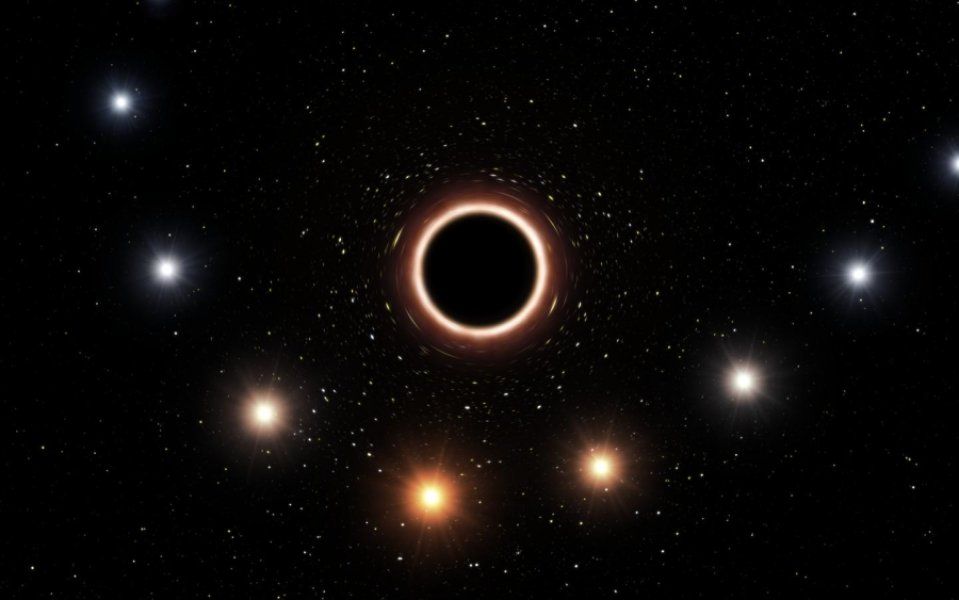
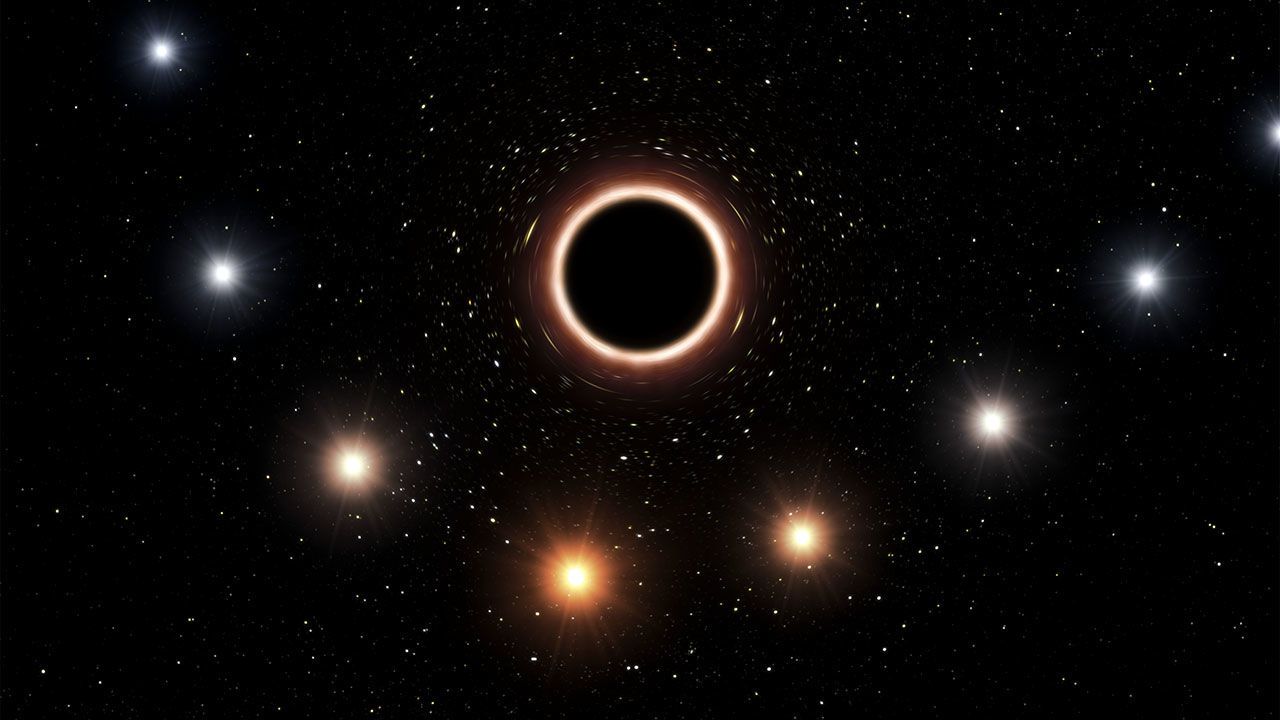
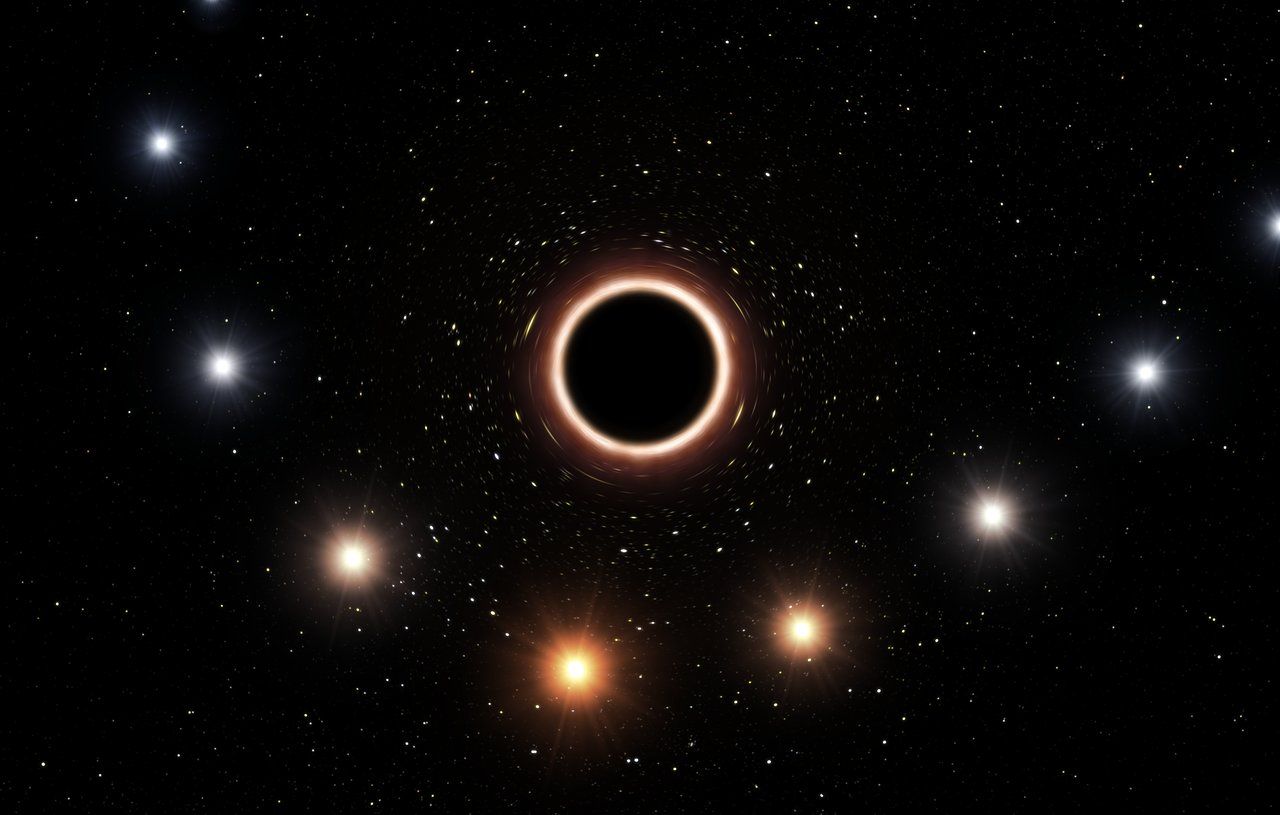
Most people think of black holes as giant vacuum cleaners sucking in everything that gets too close. But the supermassive black holes at the centers of galaxies are more like cosmic engines, converting energy from infalling matter into intense radiation that can outshine the combined light from all surrounding stars. If the black hole is spinning, it can generate strong jets that blast across thousands of light-years and shape entire galaxies. These black hole engines are thought to be powered by magnetic fields. For the first time, astronomers have detected magnetic fields just outside the event horizon of the black hole at the center of our Milky Way galaxy.

“Understanding these magnetic fields is critical. Nobody has been able to resolve magnetic fields near the until now,” says lead author Michael Johnson of the Harvard-Smithsonian Center for Astrophysics (CfA). The results appear in the Dec. 4th issue of the journal Science.

“These magnetic fields have been predicted to exist, but no one has seen them before. Our data puts decades of theoretical work on solid observational ground,” adds principal investigator Shep Doeleman (CfA/MIT), who is assistant director of MIT’s Haystack Observatory.

Read more

Stephen Hawking’s Legacy Could Be ‘Holy Grail’ Of Physics: Combining Gravity And Quantum Mechanics At Black Hole Horizons

Interesting…


To suggest that quantum mechanics and gravity are on the verge of being reconciled would be, to the physics world at least, as significant as the discover of splitting the atom. While splitting the atom might have led to the nuclear bomb, it also led to the technology of nuclear power, i.e. nuclear fission, which, if harnessed properly, creates a renewable and sustainable energy resource. The problem has always been that quantum mechanics — the rules that govern sub-atomic particles — and gravity, the rule that governs mass as we know it (the stuff we can touch and feel), do not agree with each other. The question has always been, what is it that “unifies” these two theories? Is quantum mechanics God playing dice, as Einstein suggested?

“God doesn’t play dice with the universe.”

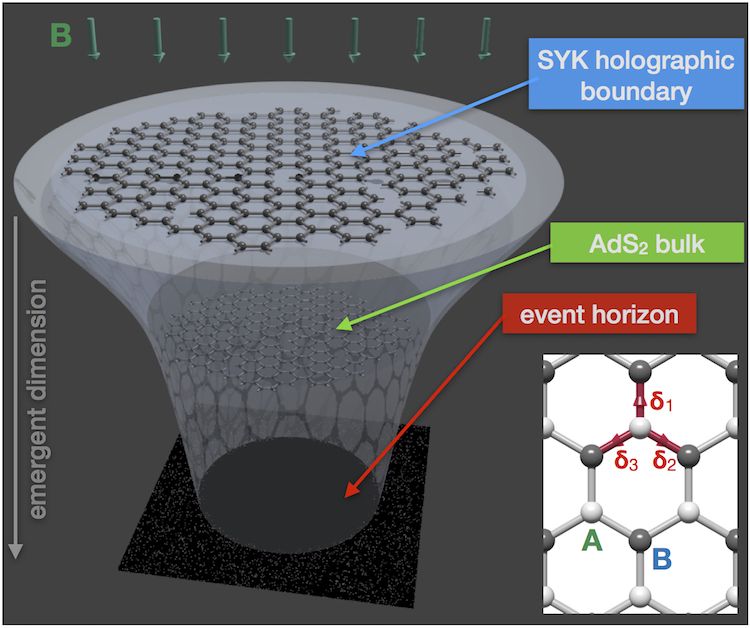
Stephen Hawking and his colleagues have come to a possible answer. Think of your television. You watch shows and movies and you are not thinking how unrealistic the movie is because it is on your two dimensional screen. The two dimensions represent information which is perceived by your brain as an accurate portrayal of the three dimensional universe. In short, the three dimensional universe is captured in two dimensions; reality becomes a hologram. Out reality could be nothing more than a television show if we extend Hawking’s Theory to the entire universe.

Read more

/* */