Risky business.
With chip shortages ongoing, some companies are having to change their plans, but could these gambles really pay off?

Big shift in the making.
✅ Want to maximize your business banking? Check out NorthOne*: https://get.northone.com/minoritymindset/
*This is an advertisement. Minority Mindset is compensated by NorthOne.
✅ Join Our FREE Guac Talk Community on Discord & chat with other Money Minds: https://discord.gg/ZEHs3M69a6
🚨FREE Money Management PDF & Newsletter🚨 Download it here: https://www.theminoritymindset.com/moneyguide/
Subscribe To Our Channel: http://bit.ly/M2YouTube.


Wiliot — the IoT startup that has developed a new kind of processor that is ultra thin and light and runs on ambient power but possesses all the power of a “computer” — has picked up a huge round of growth funding on the back of strong interest in its technology, and a strategy aimed squarely at scale.
The company has raised $200 million, a Series C that it will use toward its next steps as a business. In the coming months, it will make a move into a SaaS model — which Wiliot likes to say refers not to “software as a service,” but “sensing as a service,” using its AI to read and translate different signals on the object attached to the chip — to run and sell its software. This will be combined with a shift to a licensing model for its chip hardware, so that they can be produced by multiple third parties. Wiliot says that it already has several agreements in place for the chip licensing part. The plan is for this, in turn, to lead to a new range of sizes and form factors for the chips down the line.
Softbank’s Vision Fund 2 led the financing, with previous backers — it’s a pretty illustrious list that speaks of the opportunities ahead — including 83North, Amazon Web Services, Inc. (AWS), Avery Dennison, Grove Ventures, M Ventures, the corporate VC of Merck KGaA, Maersk Growth, Norwest Venture Partners, NTT DOCOMO Ventures, Qualcomm Ventures LLC, Samsung Venture Investment Corp., Vintage Investment Partners and Verizon Ventures.

Now businesses, start-ups and their backers are eyeing an even bigger bonanza in the form of the next generation of seniors. The market opportunities will shift to the development of products and services through a greater adoption of emerging technology to provide preventive health care, and help people to live in their homes for longer, plus increase independence and well being.
Opportunities in China’s elderly health care will shift to the development of tech-based products and services to help people live longer in their homes and increase their independence and well being.

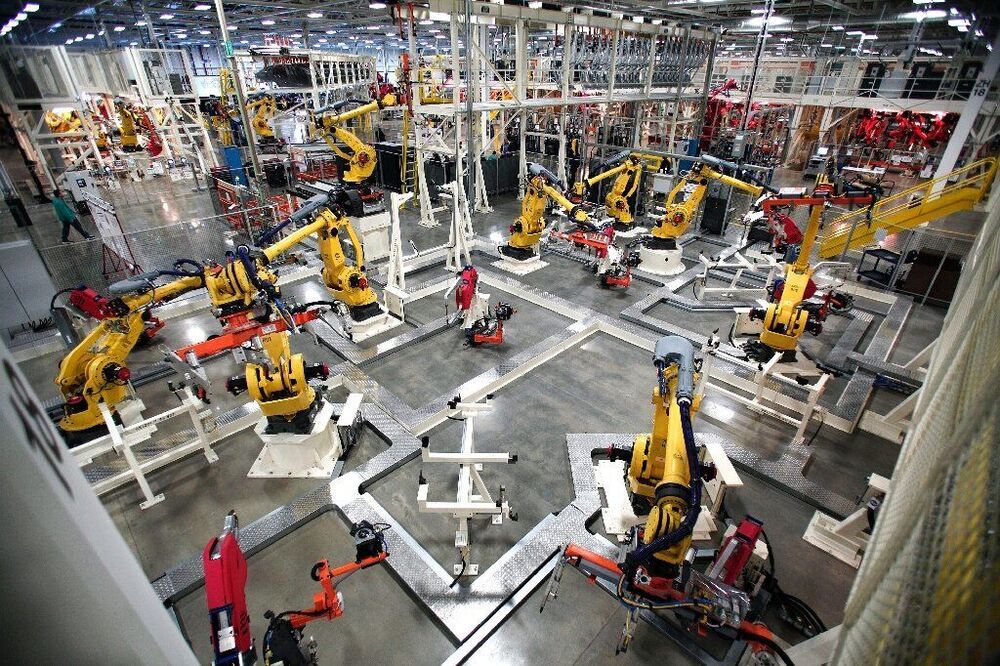
Google’s parent Alphabet unveiled a new “moonshot” project to develop software for robotics which could be used in a wide range of industries.
The new unit, dubbed Intrinsic, will “become an independent Alphabet company,” and seek industrial partners to advance their work helping to make everything from solar panels to cars, the new unit’s chief, Wendy Tan-White, said in a blog post.
“Intrinsic is working to unlock the creative and economic potential of industrial robotics for millions more businesses, entrepreneurs, and developers,” she said.
Dubai uses drones to electrically charge clouds, causing tortential rains in one of the driest nations on Earth. Until now, such experiments had been done succeessfully from the ground only.
Info — Viral — Fun.
#Real #Dubai #makes #its #own #RAIN #to #tackle #122F #heat: #Drones #blast #clouds #with #electrical #charge #to #produce #downpours.
#The #rain #is #formed #using #drone #technology #that #gives #clouds #an #electric #shock #to #‘cajole #them’ #into #clumping #together #and #producing #precipitation.
The #UAE #is #one #of #the #most #arid #countries #on #Earth #and #the #technique #helps #to #increase #its #meagre #annual #rainfall #Video #shows #it #is #working #with #monsoon-like #downpours #across #the #country.
Dubai makes its own RAIN to tackle 122F heat: Drones blast clouds with electrical charge to produce downpours.
The rain is formed using drone technology that gives clouds an electric shock to ‘cajole them’ into clumping together and producing precipitation.
The UAE is one of the most arid countries on Earth and the technique helps to increase its meagre annual rainfall.
Video shows it is working with monsoon-like downpours across the country.
******************************************
Donate & Support the needy people (JUSTGIVING).
https://www.justgiving.com/crowdfunding/infoviralfun-help-po…=x72BzB5ZX
Subscribe our Channel:
http://bit.ly/2QkMlFb.
Top Video:
http://bit.ly/36OpU07
My Favorite:
For decades, scientists have been trying to build a long-lasting replacement for the human heart. Now, an Australian inventor believes he’s cracked one of the hardest problems in medicine.
#Prognosis #Science #BloombergQuicktake.
——-
Like this video? Subscribe: https://www.youtube.com/Bloomberg?sub_confirmation=1
Become a Quicktake Member for exclusive perks: https://www.youtube.com/bloomberg/join.
QuickTake Originals is Bloomberg’s official premium video channel. We bring you insights and analysis from business, science, and technology experts who are shaping our future. We’re home to Hello World, Giant Leap, Storylines, and the series powering CityLab, Bloomberg Businessweek, Bloomberg Green, and much more.
Subscribe for business news, but not as you’ve known it: exclusive interviews, fascinating profiles, data-driven analysis, and the latest in tech innovation from around the world.
Visit our partner channel QuickTake News for breaking global news and insight in an instant.

Stealth recon and intrusion
On Wednesday, France’s National Agency for Information Systems Security—abbreviated as ANSSI—warned national businesses and organizations that the group was behind a massive attack campaign that was using hacked routers prior to carrying out reconnaissance and attacks as a means to cover up the intrusions.
“ANSSI is currently handling a large intrusion campaign impacting numerous French entities,” an ANSSI advisory warned. “Attacks are still ongoing and are led by an intrusion set publicly referred to as APT31. It appears from our investigations that the threat actor uses a network of compromised home routers as operational relay boxes in order to perform stealth reconnaissance as well as attacks.”