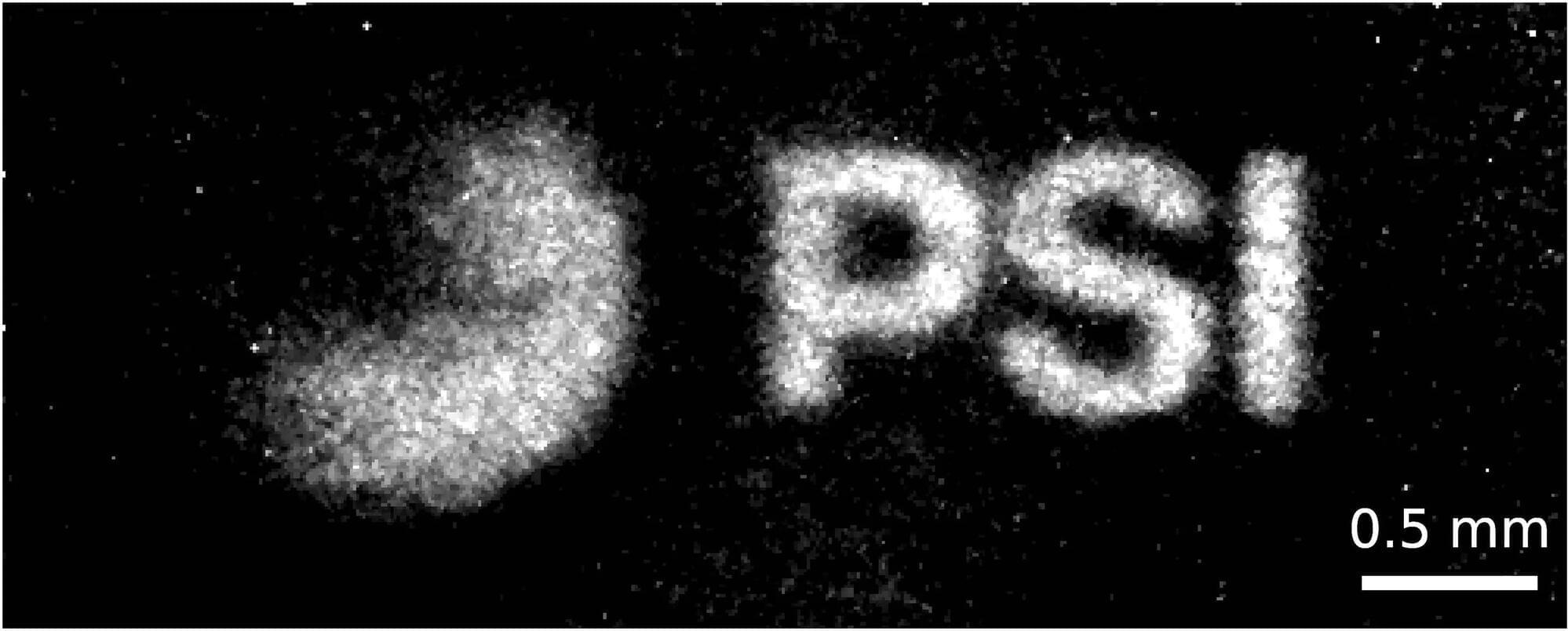
Researchers at Paul Scherrer Institute (PSI) have developed the world’s first achromatic lens for neutron imaging. The lens overcomes a longstanding obstacle in the field: focusing neutrons of different wavelengths well enough to form a sharp, magnified image. With the lens, researchers can now image thick samples and follow processes inside bulky equipment such as furnaces, cryostats or pressure cells.
Neutrons can provide unique insights into the structure of materials—but they are hard to manipulate. Neutrons, like X-rays, are produced as a beam at research facilities such as the Swiss Spallation Neutron Source SINQ and are used to image inside materials and objects. Unlike X-rays, however, neutrons can penetrate deeply into many metals while remaining highly sensitive to light elements such as hydrogen and lithium. In this way, they can be used to observe oil, polymer or lithium distribution inside dense metallic structures such as engines or batteries, reveal water uptake in plants or nondestructively examine priceless archaeological artifacts.
Yet the same weak interaction with matter that makes neutrons such a useful tool also makes them notoriously difficult to deflect or focus—a fact that has limited the development of advanced imaging techniques. Now, PSI scientists have reported in Nature Communications a new type of lens that overcomes this barrier.