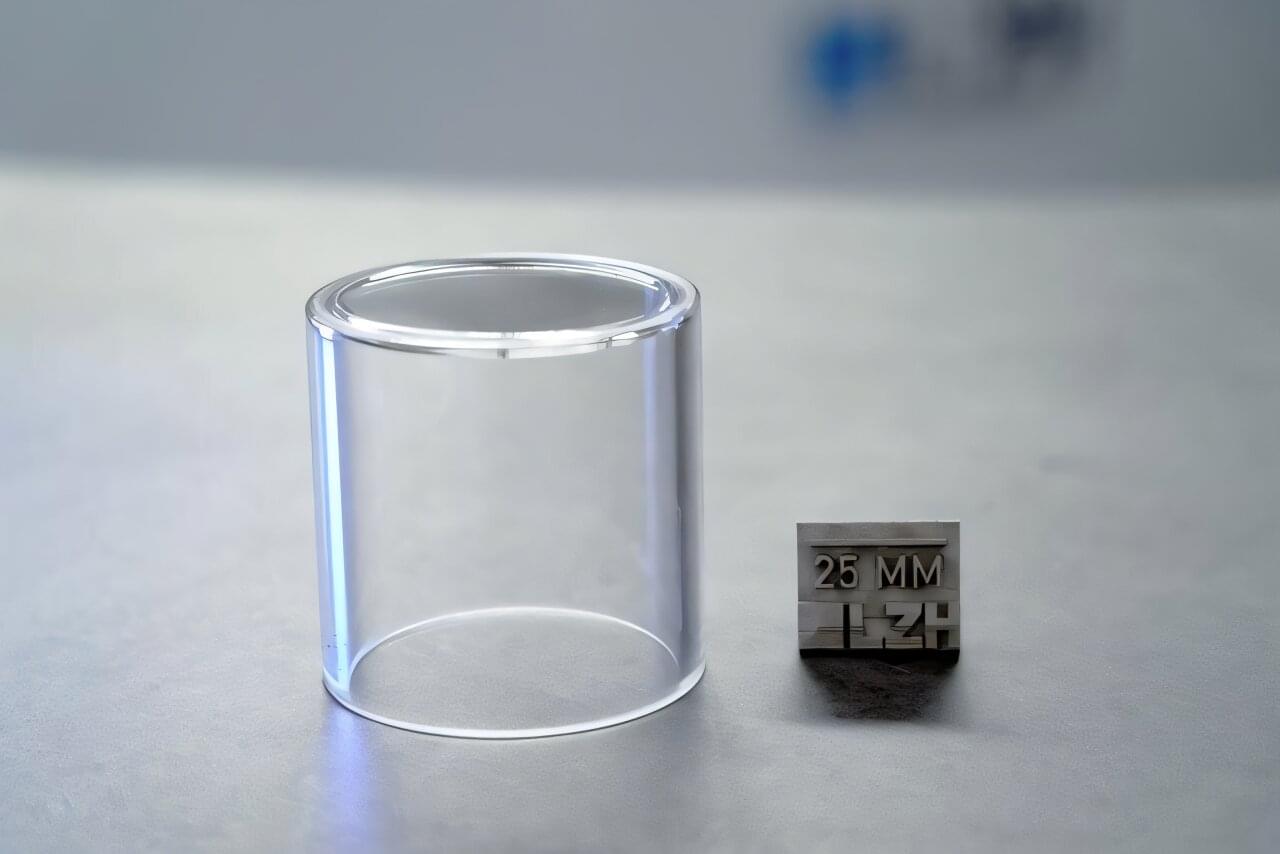
As the adoption of electric vehicles continues to grow, so does the need for the safe and permanent storage of battery materials and industrial chemical waste. Certain waste streams require disposal in what are known as Category IV landfills, which impose particularly stringent requirements on storage containers. These must simultaneously ensure environmental protection, safe handling and long-term structural integrity.
Glass is a highly promising material for this application: It is exceptionally chemically inert—meaning it reacts with virtually no other substances—making thick-walled glass containers especially well-suited for the permanent containment of hazardous materials. Glass containers are also of particular interest in the context of potential new recycling methods in the future. The stored residual materials do not react with the containers and can be readily recovered from them.
Until now, these glass containers have been manufactured primarily using thermal gas processes. However, these are limited by uncontrolled heat input, high residual stresses and restricted automation potential. Laser welding, on the other hand, enables high processing speeds and shows excellent potential for automation.