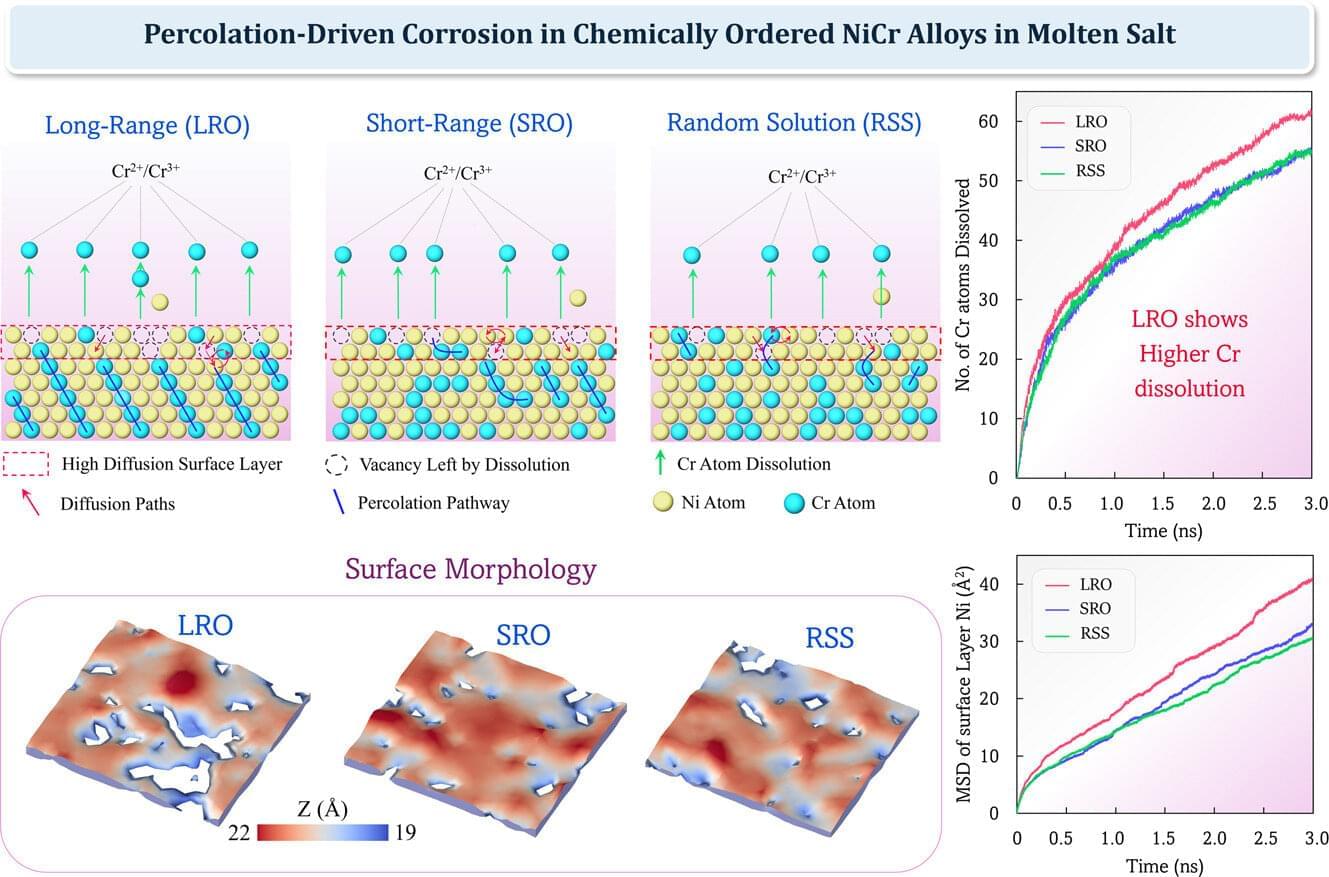
Nuclear reactors are traditionally powered with dense fuel rods that can produce about 1 gigawatt of carbon-free electricity, enough to power about 100,000,000 lightbulbs. Newer power plant designs using molten salt for cooling instead of the water found in traditional reactors could offer better efficiency and stability, but they face a problem—the extreme chemical environment created by the molten salt can corrode the metal comprising the reactor.
A team led by engineers at Penn State found that adjusting the subtle atomic arrangement of structural metals can significantly affect the rate and extent of this corrosion, even with identical baseline chemical compositions. They did this by creating a series of reactive simulations to isolate and study this corrosion mechanism. Their findings are available online ahead of publication in the August issue of Corrosion Science.