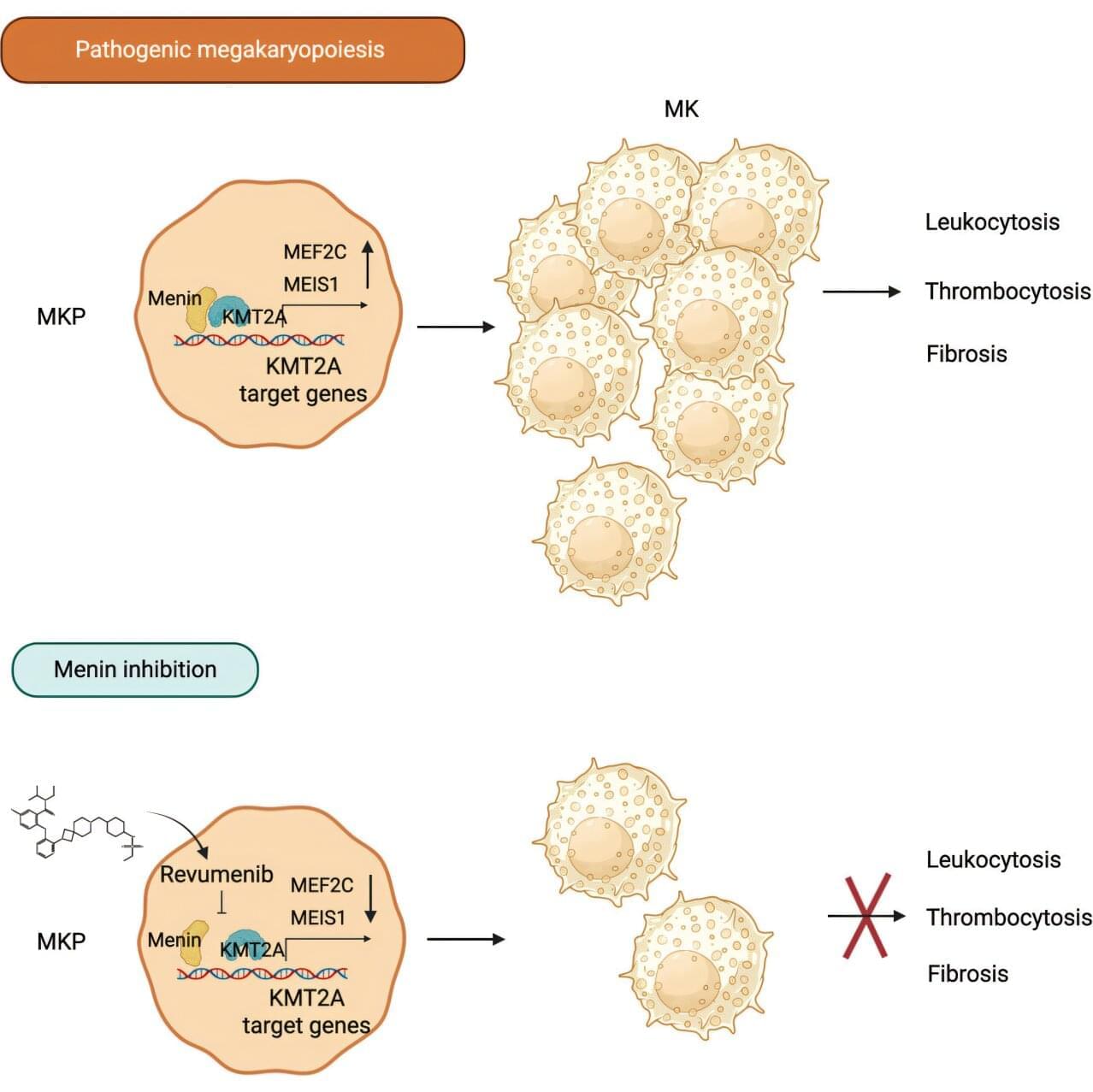
Inhibiting menin, a protein that supports leukemia growth and is already targeted to treat some forms of leukemia, also holds promise for treating myeloproliferative neoplasms. A new study from scientists at St. Jude Children’s Research Hospital showed that inhibiting menin significantly extended survival and reversed multiple disease features in preclinical models. The findings were published today in Cancer Cell.
Menin is best known as a therapeutic vulnerability in certain types of acute leukemia, including those with KMT2A gene rearrangements or NPM1 mutations. Menin inhibitors, such as revumenib, have greatly improved treatment for these cancers and are approved by the Food and Drug Administration (FDA). However, menin inhibition can reduce megakaryocytes (normal platelet-forming cells) and decrease platelet counts. Producing too many megakaryocytes is a hallmark of diseases called myeloproliferative neoplasms, which are slow-developing, rare blood cancers.
John Crispino, Ph.D., MBA, St. Jude Division of Experimental Hematology director and Department of Hematology member, tested whether inhibiting menin could be a viable therapeutic strategy for myeloproliferative neoplasms.