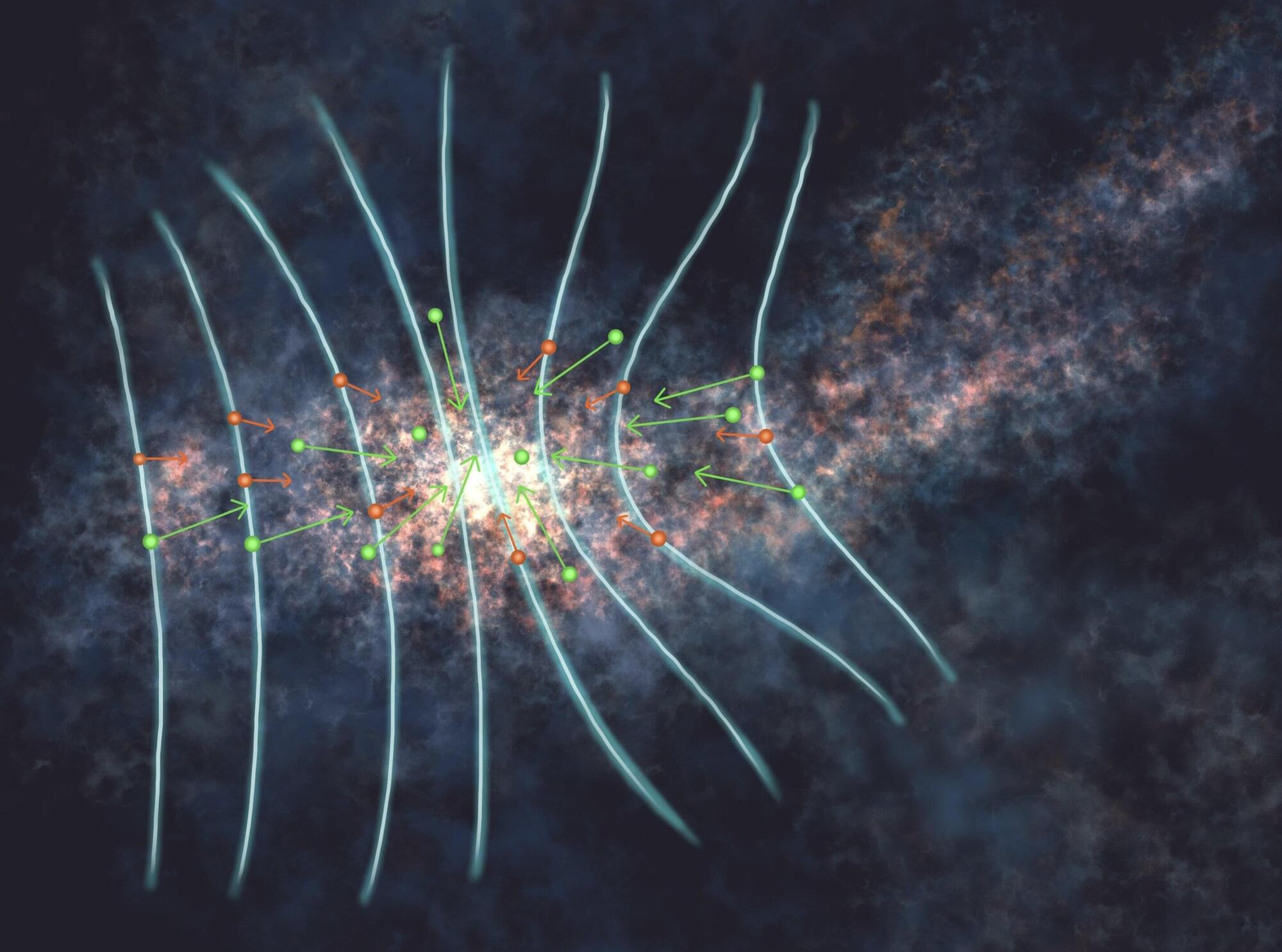
Stars like our sun are formed from the collapse of stellar objects called prestellar cores, cold and dense concentrations of gas and dust held together by gravity. While many questions remain about the exact mechanisms of star formation, advanced radio telescopes have given researchers new insights into the inner workings of infant stars.
Now, publishing in Astronomy & Astrophysics, researchers from Kyushu University and Max Planck Institute for Extraterrestrial Physics have, for the first time, detected a phenomenon known as ambipolar diffusion occurring in a prestellar core. This phenomenon weakens the magnetic support of the core, leading to gravitational collapse to form an infant star called a protostar.
These findings provide further insight into the key processes of early star formation and, by extension, how stellar systems are created.