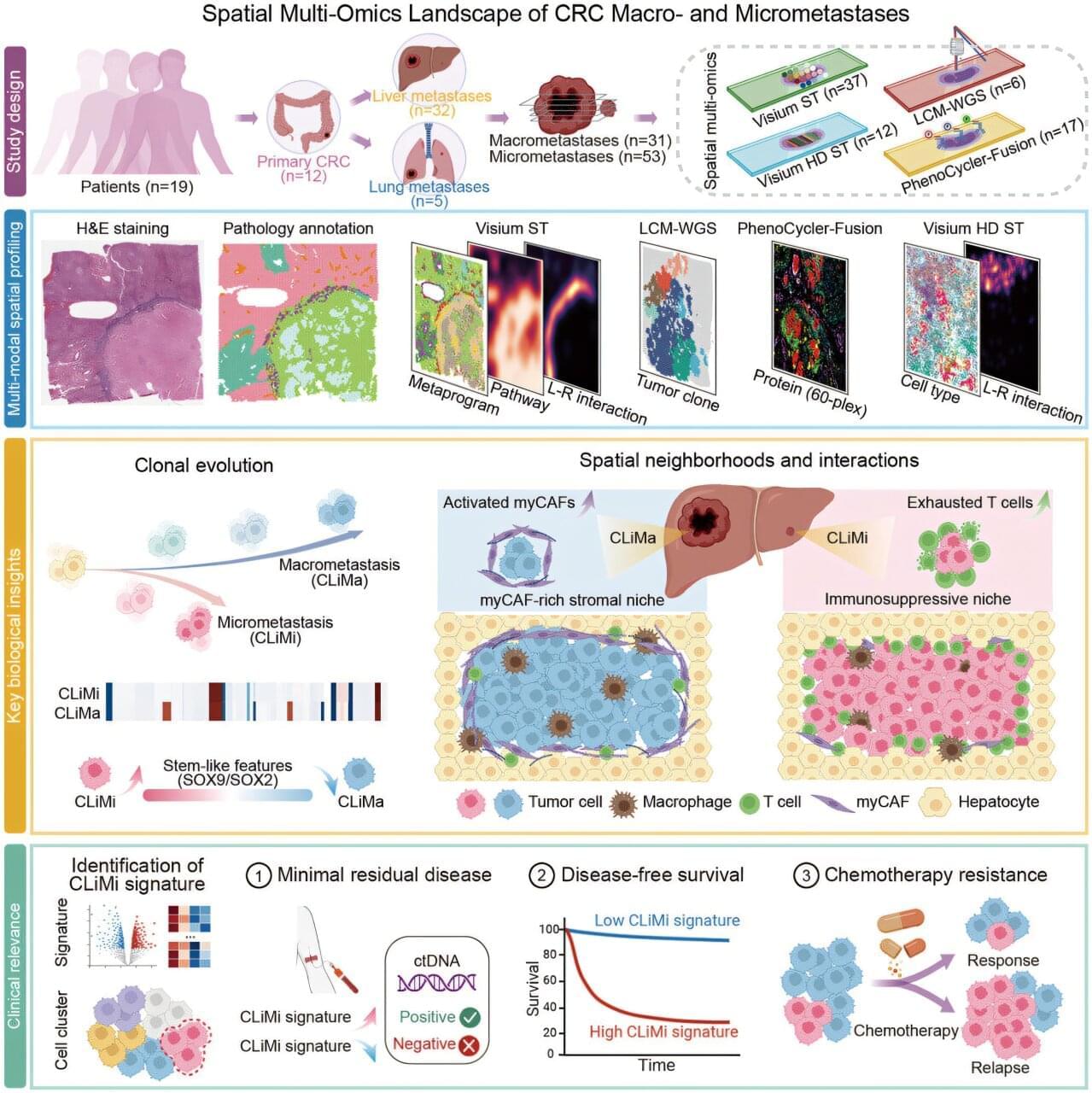
Researchers identified a six-gene signature in microscopic colorectal cancer (CRC) liver metastases that may help predict recurrence after treatment. The findings suggest these tiny, often undetectable tumor deposits could serve as a tissue-based marker of residual cancer cells, recurrence risk and chemotherapy resistance.
Published today in Cancer Cell, the comprehensive spatial analyses of CRC metastases used advanced genomic technologies to uncover insights into how micrometastases evolve, evade the immune system and persist after treatment.
The study was co-led by Dipen Maru, M.D., professor of Anatomical Pathology; Scott Kopetz, M.D., Ph.D., professor of Gastrointestinal Medical Oncology and associate vice president for Translational Integration; Linghua Wang, M.D., Ph.D., professor of Genomic Medicine, executive director and head of the Center for Cellular Language Intelligence, associate member of the James P. Allison Institute, and focus area co-lead with the Institute for Data Science in Oncology; together with co-first authors Yang Liu, Ph.D., postdoctoral fellow of Genomic Medicine, and Akshaya Jadhav, M.D., research scientist in Translational Molecular Pathology.