If a liquid is cooled slowly to its freezing point, it becomes a crystal in which the constituent particles are arranged in an ordered pattern. In contrast, when the liquid is cooled very quickly, the particles are unable to arrange themselves in an ordered fashion, and it becomes glass. Glassy materials are all around us in everyday life. Common examples include window glass, certain metal alloys, polymers, foams, gels and even soft materials like emulsions and colloids.
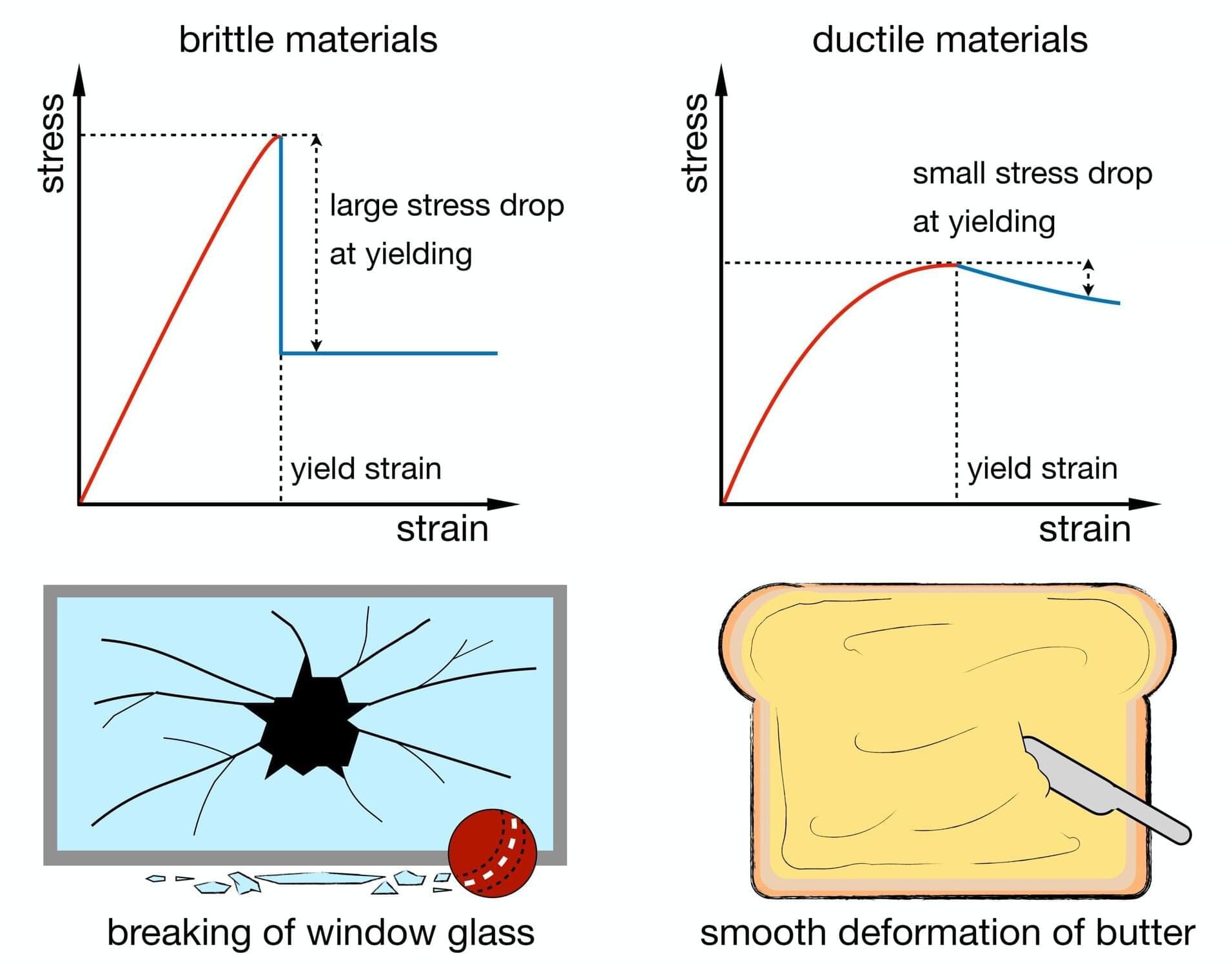
These materials can behave very differently when an external force is applied to them, such as bending, stretching or compressing. Some materials change shape slowly and smoothly under strain (this property is called ductility). Some materials may resist deformation at first but then suddenly break or crack without warning (this property is called brittleness). Whether a material bends or breaks determines how safely and reliably it can be used in everyday objects and engineering applications.
Scientists broadly classify glasses into two types: strong and fragile glasses.