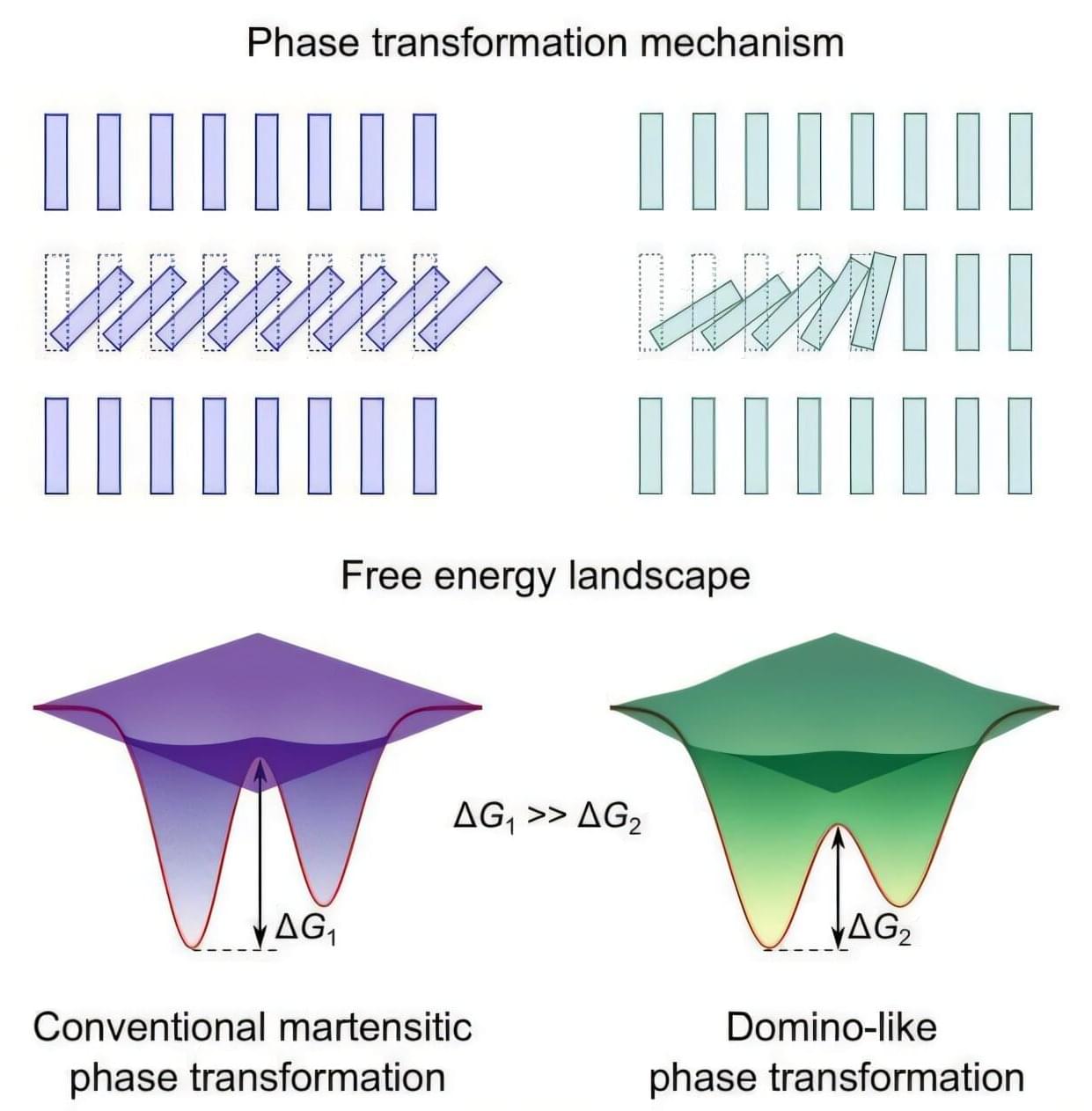
Phase transformations—in which a material changes from one crystal structure to another, thereby acquiring dramatically different properties—are ubiquitous in nature. Understanding the microscopic mechanisms of these transformations is essential for controlling material properties and designing functional devices.
A research team led by Profs. Chen Xingqiu and Sun Yan from the Institute of Metal Research (IMR) of the Chinese Academy of Sciences, in collaboration with Prof. Niu Haiyang from Northwestern Polytechnical University, has uncovered a previously unknown phase transformation mechanism in monolayer molybdenum telluride (MoTe2).
The study, published in Proceedings of the National Academy of Sciences on June 29, reveals a phase transformation pathway that is fundamentally distinct from the conventional martensitic model, in which many atoms move together through concerted shear displacements.