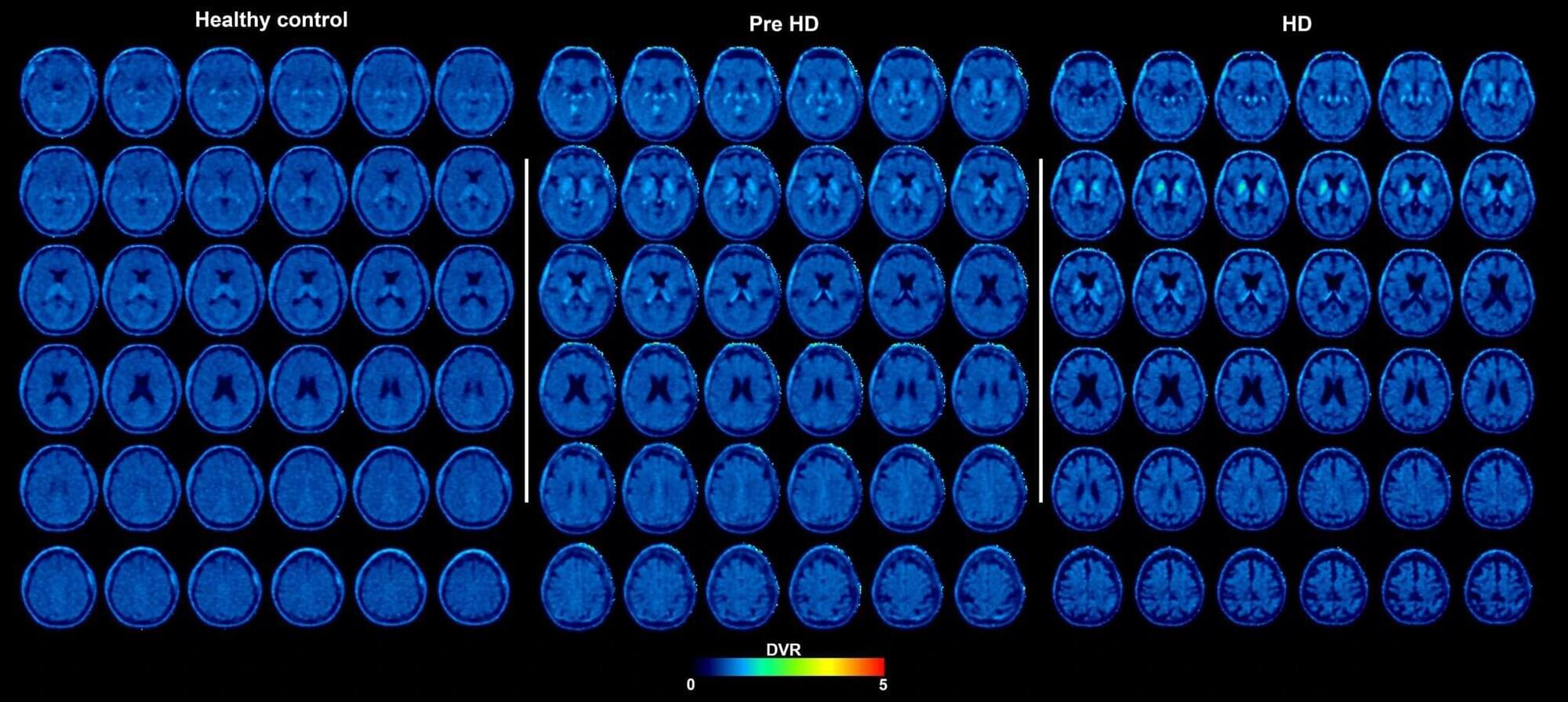
A study conducted by the Sant Pau Research Institute (IR Sant Pau) and Hospital de Sant Pau has identified for the first time in living individuals a brain pattern related to the tau protein that changes according to the stage of Huntington’s disease. This discovery opens the door both to the use of new biomarkers for monitoring the disease and to the development of treatments for a condition for which no therapeutic options are currently available.
Using positron emission tomography—a molecular neuroimaging technique known as PET—and the second-generation radiotracer [¹⁸F]PI-2620, the researchers demonstrated that this signal can already be detected in some mutation carriers who have not yet developed clinically manifest disease and that, as the disease progresses, the signal increases and spreads according to an organized anatomical distribution.
The study, published in the European Journal of Nuclear Medicine and Molecular Imaging, provides new insights into the biological processes that occur between the genetic alteration responsible for the disease and the onset of its motor, cognitive and neuropsychiatric manifestations.