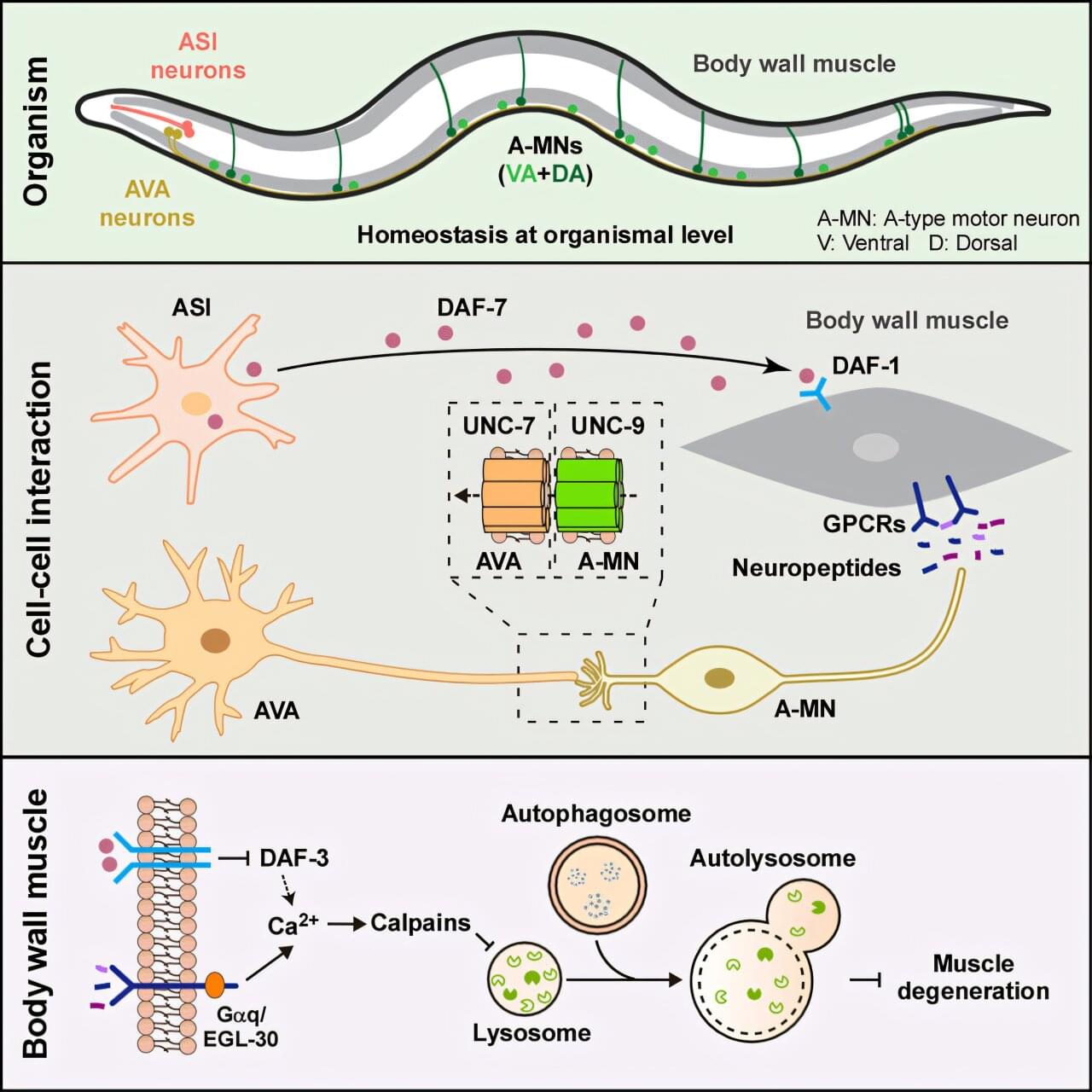
Autophagy is the process by which cells remove damaged proteins, recycle worn-out organelles (e.g., mitochondria), clear cellular waste and provide nutrients during stress. Autophagy is essential for muscles because they are constantly under mechanical stress. If autophagy is too low, damaged proteins accumulate and muscle gradually weakens. If it is too high, muscle tissue can begin breaking itself down.
Disruption of autophagy has been implicated in a wide range of muscle disorders, and abnormal muscle autophagy is frequently observed in neurogenic diseases. However, the neuronal signaling pathways that control this process had previously remained largely unknown.
Now, researchers led by Prof. Zhang Hong from the Institute of Biophysics of the Chinese Academy of Sciences have identified two parallel neuronal circuits that regulate the autophagy-lysosome pathway in the body wall muscle of Caenorhabditis elegans, a tiny nematode worm. Their research has uncovered a previously unknown mechanism by which the worm’s nervous system maintains muscle homeostasis.