A novel vaccination strategy against certain malignant brain tumors could fundamentally improve treatment for patients. Researchers from the German Cancer Research Center (DKFZ), Mannheim University Medical Center, Heidelberg University Hospital and numerous partner institutions have published encouraging long-term results from a clinical trial involving a vaccine that activates the immune system against a common genetic mutation in these tumors.
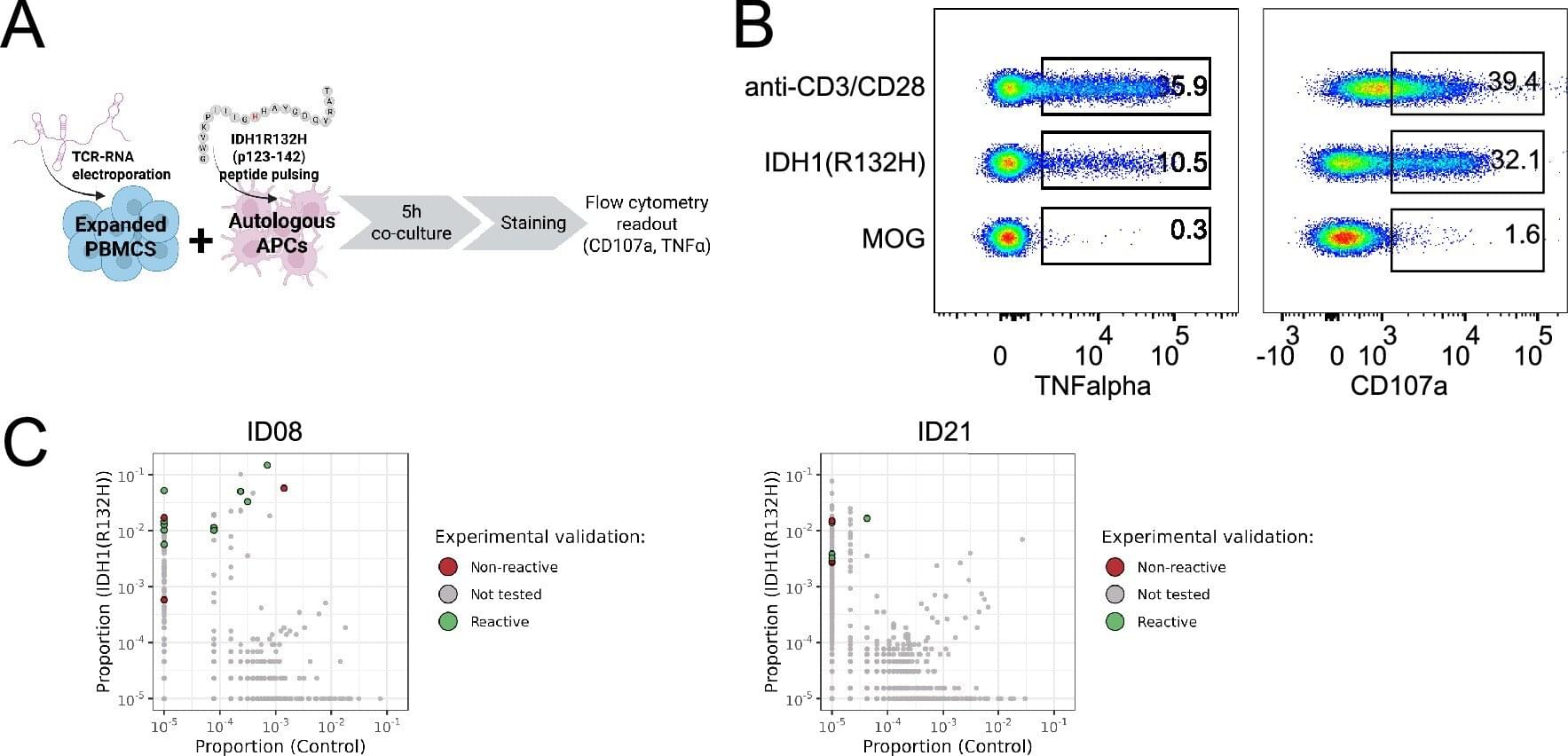
Gliomas are usually incurable brain tumors that are difficult to remove completely through surgery. Chemotherapy and radiation therapy are also effective only to a limited extent. These tumors often share a key characteristic: In most cases, the cancer cells carry a common genetic mutation. An identical genetic error causes a specific amino acid to be substituted in the IDH1 enzyme. This results in a novel protein structure—a so-called neoepitope. What makes this special is that the neoepitope drives tumor growth and, at the same time, is recognized as foreign by the patient’s immune system, making it an ideal target for immunotherapies.
The research team from Heidelberg/Mannheim and Tübingen developed a peptide vaccine that specifically trains the immune system to recognize and fight tumor cells with this mutation. The vaccine was tested for safety and efficacy in a phase 1 clinical trial (NOA 16) involving 33 patients with newly diagnosed high-grade astrocytomas, the most common form of glioma. The patients received the vaccine in addition to standard therapy consisting of surgery, radiation therapy and chemotherapy. The work is published in the journal Nature Cancer.