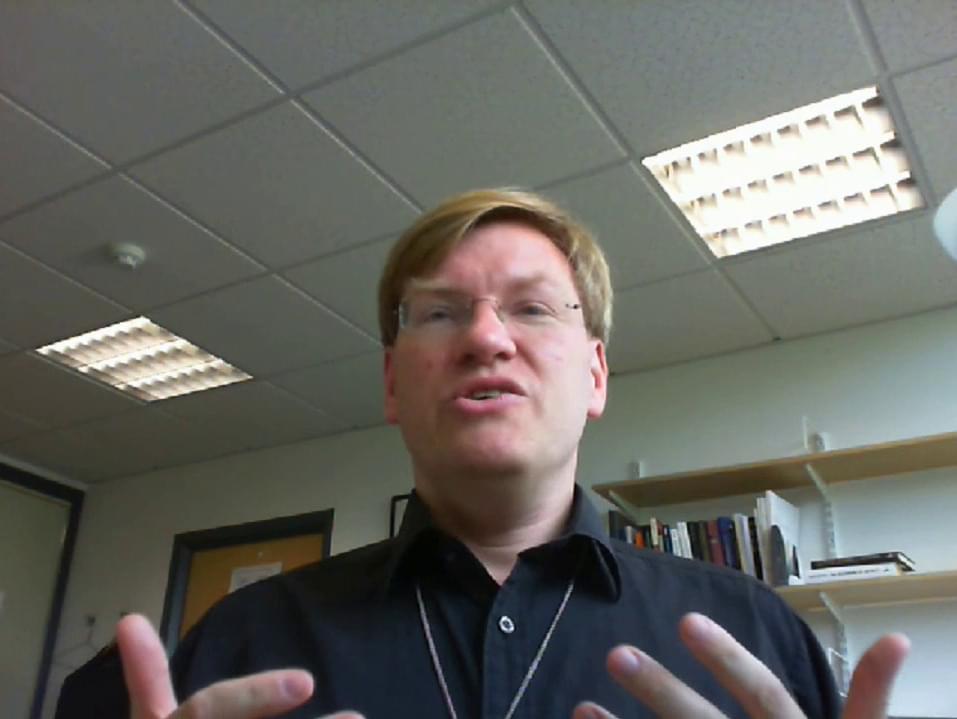
“That which does not kill us only makes us stranger.”
14 years ago, I sat down with Dr. Anders Sandberg, computational neuroscientist and research fellow at Oxford’s Future of Humanity Institute, for his second appearance on my podcast. His twist on Nietzsche has stayed with me ever since.
This was 2012. Before ChatGPT, before CRISPR babies, before Neuralink implants in human skulls. And yet listen to what we covered:
The ethics of transhumanism and the limits of being human The Epic of Gilgamesh and humanity’s oldest obsession: immortality Enhancement arms-races and the risk of conflict between transhumanists and neo-luddites Hive-minds, distributed intelligence, and whether the Borg should scare us Mind uploading and what survives when the body doesn’t.
What strikes me now, rewatching it, is how little the fundamental questions have changed. The technology raced ahead. The philosophy is still catching up.
Anders argued that embracing strangeness is not a bug of the human future; it’s the feature. The question was never whether we would change. It’s whether we will change wisely.
This conversation holds up remarkably well, which is either reassuring or worrying, depending on how you look at it.
What do you think: are we any closer to answering these questions in 2026 than we were in 2012?
#Transhumanism #Futurism #AI #HumanEnhancement #philosophy.
Watch or listen to my full conversation with Dr. Anders Sandberg here: [ https://snglrty.co/4ppZaMP](https://snglrty.co/4ppZaMP)
Subscribe: RSS
Dr. Anders Sandberg is a well-known transhumanist, futurist, and computational neuroscientist who is currently a research fellow at the Future of Humanity Institute at Oxford University. I enjoyed talking to him last time he was on Singularity 1 on 1 and was happy to have him back for another one.
During our second conversation with Anders, we cover a wide variety of topics such as transhumanism and the ethics thereof; the limits of being human; the Epic of Gilgamesh and our quest for immortality; overcoming death and enhancing life; life expectancy and our willingness to take risks; the potential for enhancement arms-races; the likelihood of armed conflict between transhumanists and neo-luddites; the most likely path to human enhancement; personal versus collective enhancement; hive-minds, distributed intelligence, the Borg and individuality; post-humanism and mind uploading.