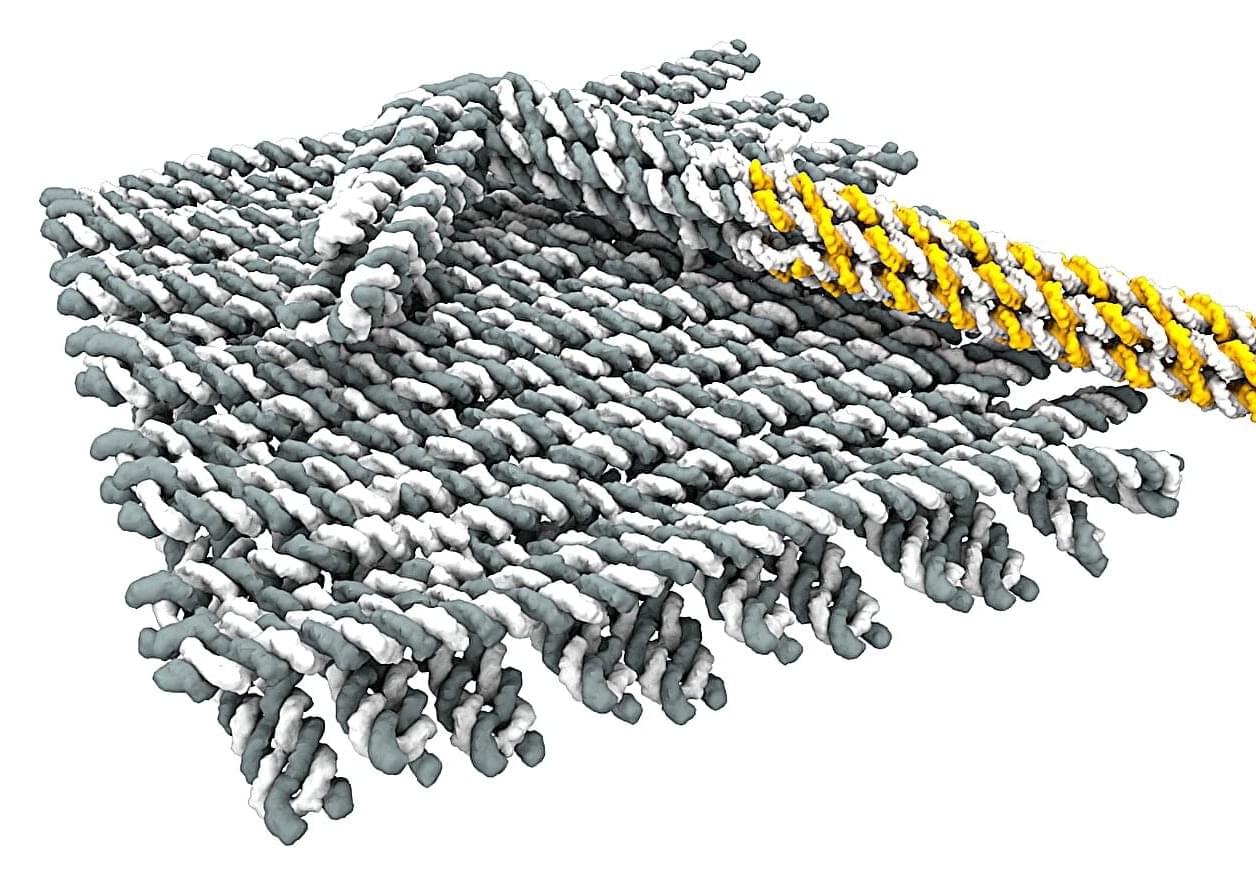
Scientists have engineered a nanoscale switch using DNA “origami.” Inspired by macroscale mechanical switches, the device achieves long-term functionality without the continuous forcing mechanism that past versions required while remaining capable of fast switching. The paper is published in the journal Science Robotics.
This is not the first time scientists have used DNA as a building material. DNA origami—a technique that folds a single-stranded DNA scaffold into precise 2D or 3D shapes using short DNA strands—offers a way to build custom nanomachines. It has been used in everything from drug delivery to electrically actuated devices. However, in electrically actuated devices, many prior designs faced a trade-off between speed, stability and durability.
In particular, researchers have been interested in creating nanoscale switches that act like their macroscopic counterparts. So far, attempts at DNA-based nanoswitches have lacked either long-term stability without continuous forcing, millisecond switching or high cycle endurance. Many earlier devices relied on DNA “latches,” but these were slow or prone to spontaneous dissociation from natural nanoscale thermal movements.