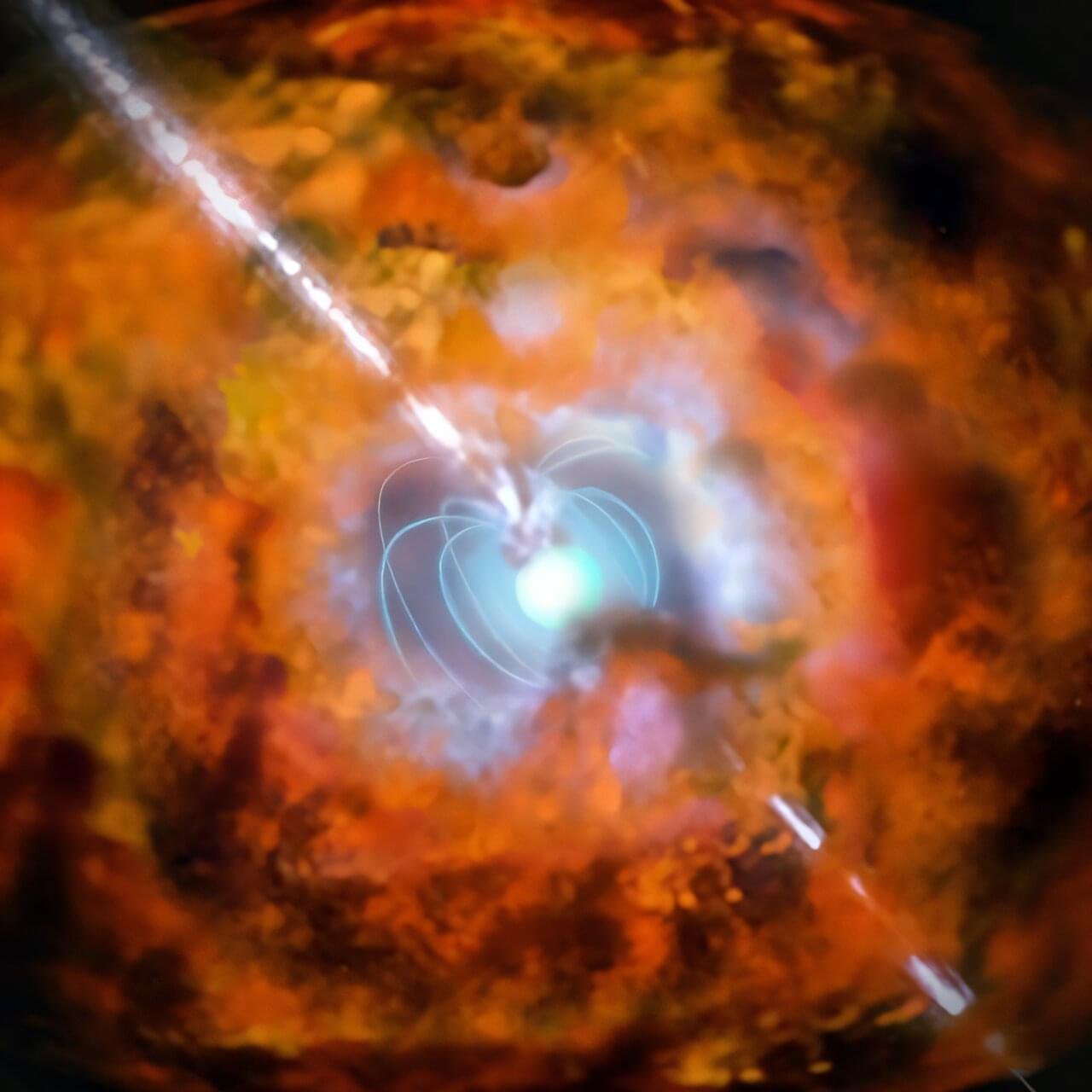
On Jan. 26, 2026, the Submillimeter Array (SMA) on Maunakea crossed an important threshold for time-domain astronomy. For the first time, scientists from the Center for Astrophysics | Harvard & Smithsonian (CfA) demonstrated a new rapid-response capability at millimeter and submillimeter wavelengths, zooming in on a gamma-ray burst (GRB) within minutes of its discovery and capturing the earliest observations of such an event ever made at these frequencies. The successful demonstration is published in The Astrophysical Journal Letters.
GRBs are the brightest explosions in the universe—brief but staggeringly immense flashes produced by jets launched in the collapse of massive stars or the merger of compact objects like neutron stars. Their initial burst is followed by a glow that X-ray and optical telescopes have long been able to chase within seconds or minutes of the event, but millimeter-wave telescopes have historically lagged behind in observing it.
That changed in January of this year, when the SMA rapidly responded to an automated alert from NASA’s Neil Gehrels Swift Observatory, which detected a flash of gamma rays. The sequence played out almost entirely without human intervention. Within 90 seconds, the on-duty operator had been alerted. Within four minutes, the telescope was moving to start observations.