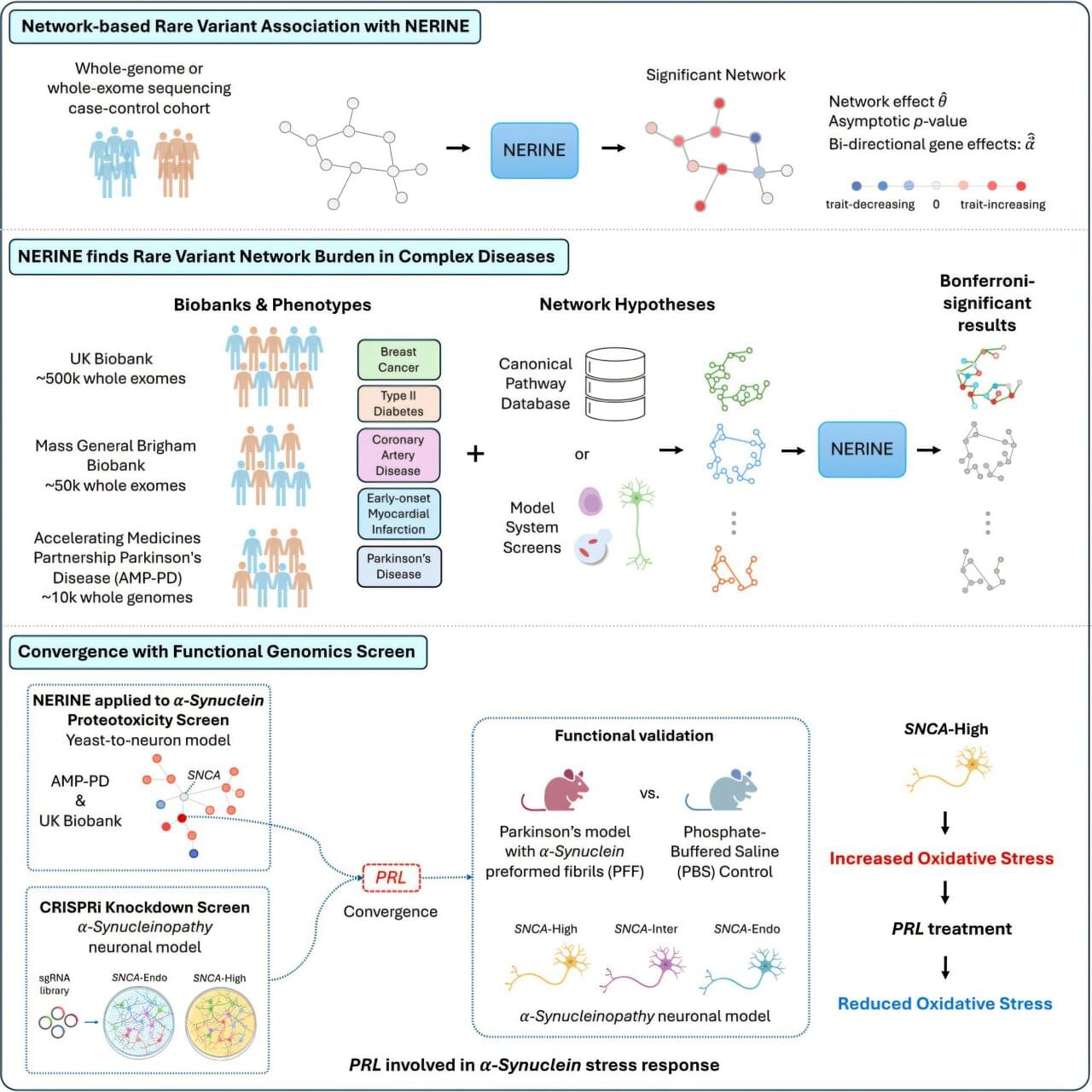
Studies of genetics conducted in yeast cells, human neurons, mice or other model systems often reveal networks of genes that could contribute to complex diseases, such as breast cancer, type 2 diabetes and Parkinson’s disease. But those findings don’t always translate to human biology. Human genetics offers a path to determining which genes among those networks are most relevant to human disease.
Researchers at Harvard Medical School have developed a new statistical framework to link networks identified in models with human genetic data. This could make it faster and easier for researchers to identify which groups of genes are most likely to contribute to a particular human disease, uncover rare disease-causing mutations and zero in on promising therapeutic targets.
The work was published in Cell Genomics.