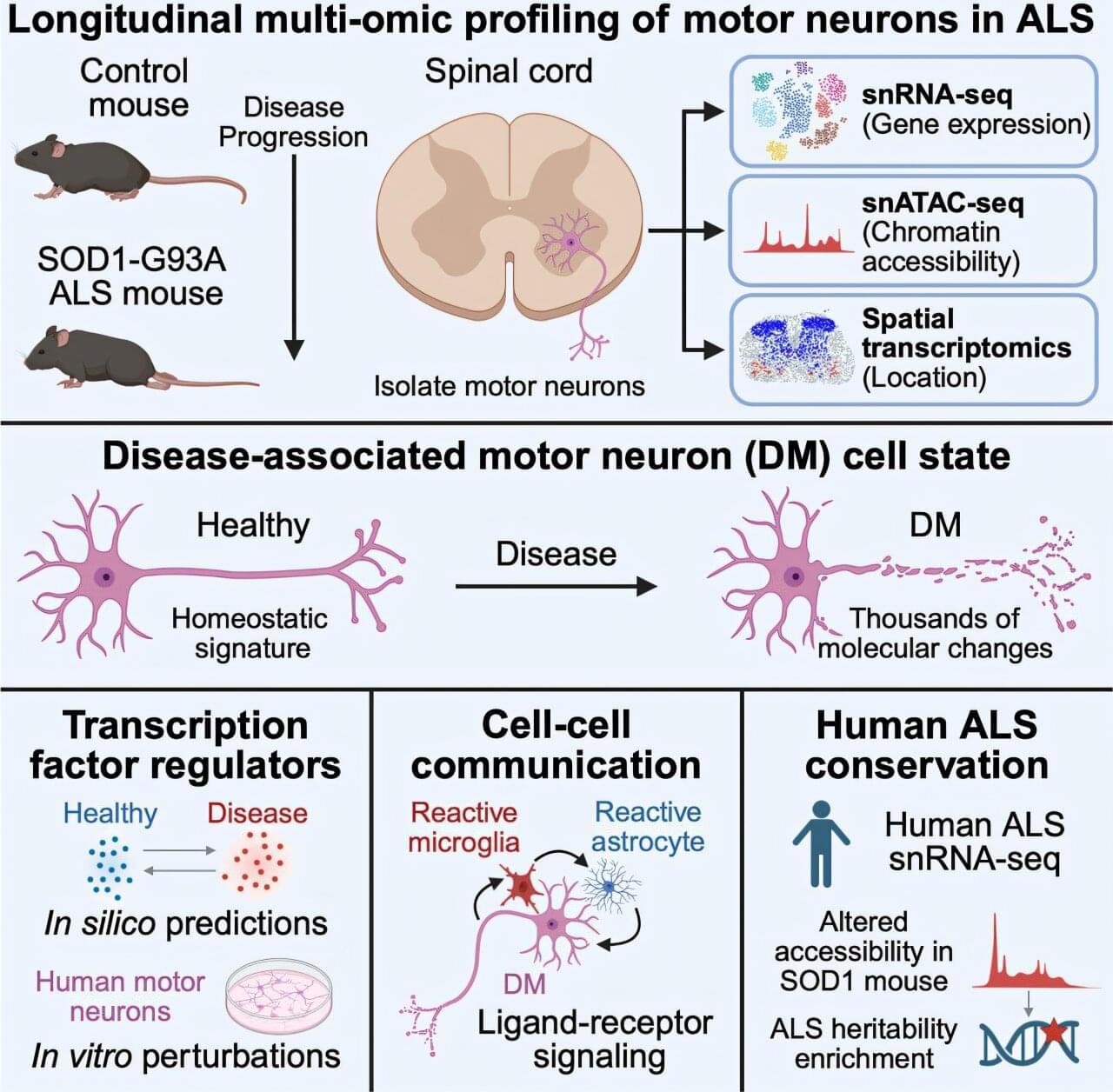
A new study from the Knight Initiative for Brain Resilience researchers may help explain an enduring mystery about amyotrophic lateral sclerosis (ALS): why the disease kills off some of the brain and spinal cord’s movement-controlling neurons while others show greater resilience.
As ALS progresses, more and more of those motor neurons degenerate and die. As a result, patients lose control of their bodies and become unable to breathe. Many people are diagnosed in middle to late adulthood, and most survive only three to five years after diagnosis.
“It’s a cruelly rapid disease,” said Olivia Gautier, a postdoctoral scholar in the lab of Knight Initiative researcher Aaron Gitler, the Stanford Medicine Basic Science Professor and a professor of genetics at Stanford Medicine.