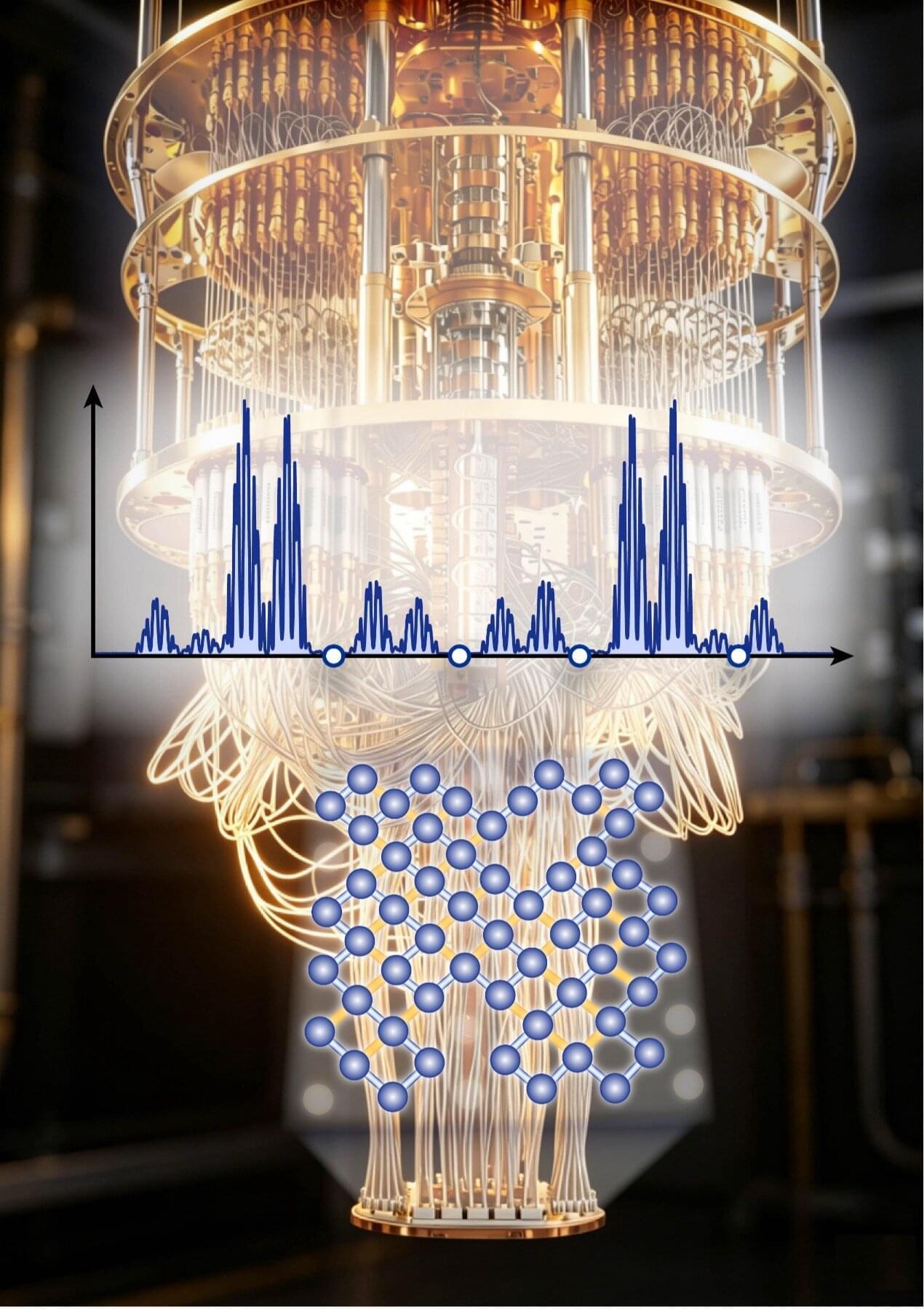
Sound waves, light waves and other types of waves, generally spread freely through space and over time. In 1958, physicist Philip W. Anderson first described a phenomenon via which irregularities or other sources of disorder in materials would prevent waves from propagating freely, which is now known as Anderson localization.
In quantum systems, one can observe quantum states that are spread throughout a system (i.e., extended), confined to a small region (i.e., localized) or somewhere between the two (i.e., critical). Critical quantum states have so far proved to be very difficult to identify and study using Anderson’s localization theory.
Researchers at the International Quantum Academy and Southern University of Science and Technology in China recently set out to further explore critical quantum states in a quantum processor based on superconducting qubits.