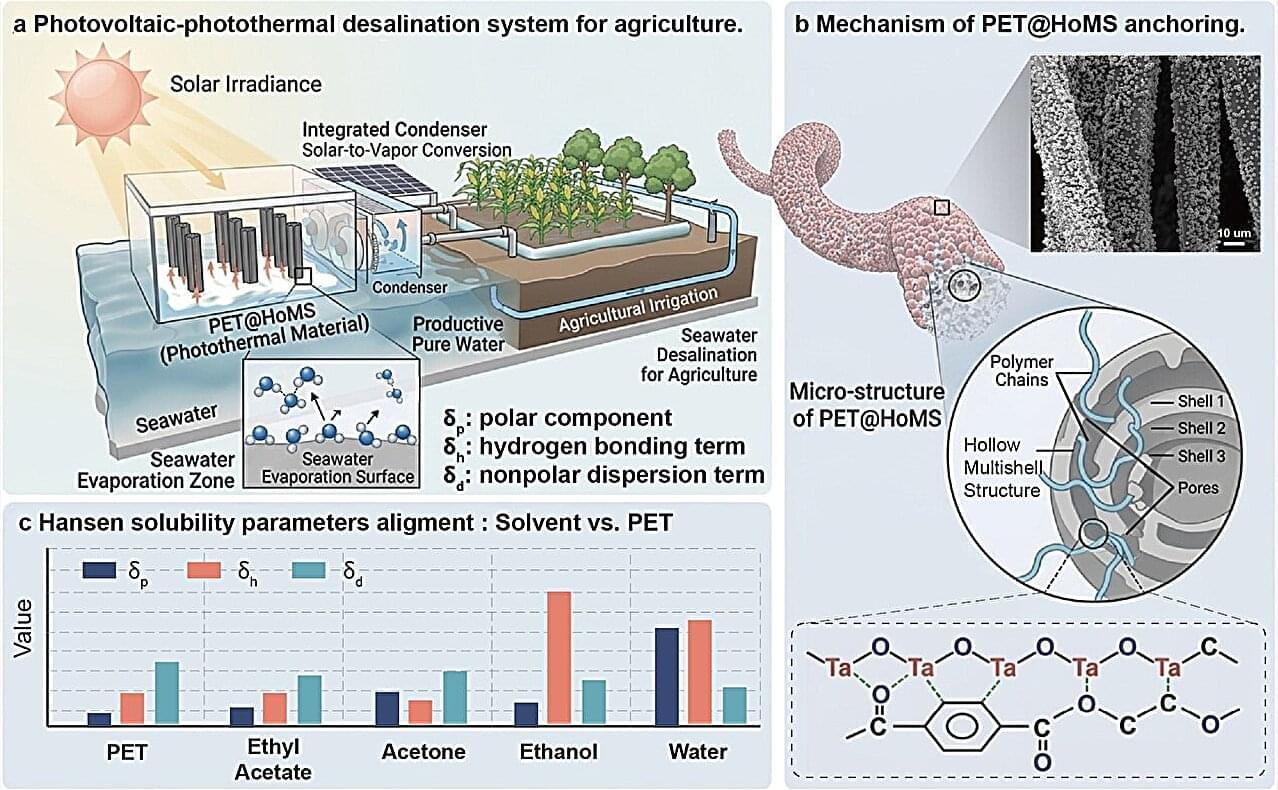
The global shortage of freshwater has become a critical challenge. Conventional water treatment relies heavily on fossil fuels and associated infrastructure, which can make it unsuitable for remote and harsh regions. In contrast, solar thermal evaporation is a promising alternative, but its application is limited by material performance and production constraints.
Now, researchers from the Institute of Process Engineering, Chinese Academy of Sciences, and Shenzhen University have developed a new three-dimensional (3D) photothermal structure that greatly improves solar evaporation efficiency.
The new structure tightly integrates polymer chains with hollow multishelled structures (HoMS), yielding a record evaporation rate of 38.14 kg m-2 h-1 —a figure 8.5 times higher than rates previously reported for two-dimensional membrane systems.