Many conditions that cause vision loss share a common feature: the gradual breakdown of the retina, the light-sensing tissue at the back of the eye. Although scientists know some of the structural changes that ensue as this damage progresses, less is understood about the molecular signals that shape how the retina copes with disease.
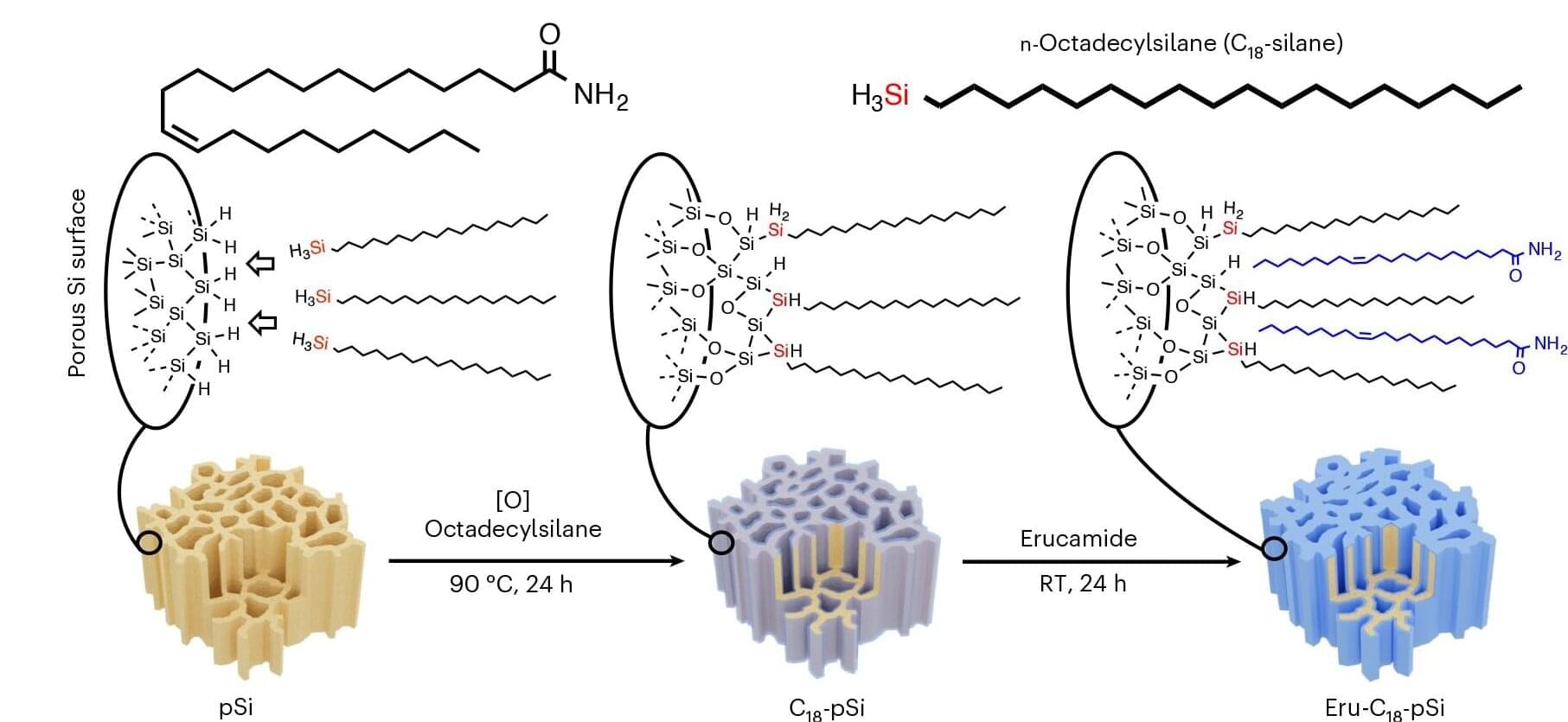
Now, a team at Scripps Research, in collaboration with UC San Diego and the Lowy Medical Research Institute, has found that a naturally occurring molecule called erucamide plays a role in how cells communicate in the retina. Their study, published in Nature Neuroscience, found that while erucamide levels drop as light-sensing cells known as photoreceptors begin to die, restoring the molecule activates cellular responses that support retinal stability. These findings suggest that erucamide may be part of a natural protective response in the retina and could offer a new way to slow the progression of diseases that lead to vision loss.
“The retina doesn’t simply deteriorate; in fact, it actively responds to injury,” says senior author Martin Friedlander, a professor at Scripps Research. “Our work identifies erucamide as a signaling molecule that helps coordinate that response.”