The information exchanged by modern devices is typically protected by cryptographic techniques, approaches that convert readable data into scrambled, unreadable code that can only be deciphered by authorized parties or devices. To descramble encrypted data, devices or accounts need access to randomly generated cryptographic keys, unique, randomly generated sequences of binary code, letters or numbers that are essential for encrypting or decrypting data.
To detect cyberattacks, most traditional hardware security systems monitor the power consumption, electrical signals or other changes in devices. However, cyberattackers have devised effective techniques that sometimes allow them to bypass these systems’ defenses.
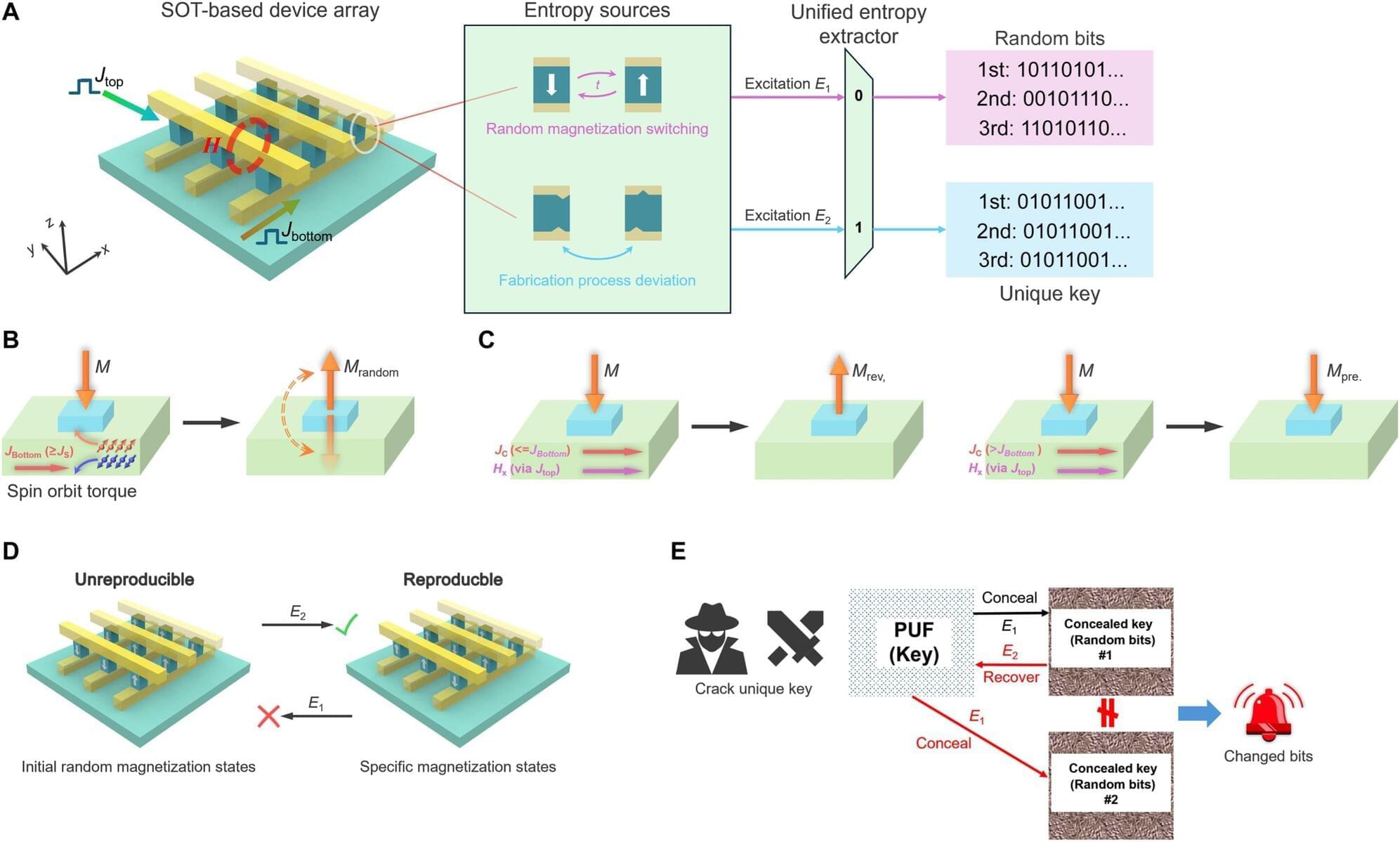
Researchers at Huazhong University of Science and Technology and Hubei University recently introduced a new hardware security system based on spin-orbit torque (SOC) devices, technologies that operate by leveraging both electrical charge and a quantum property known as electron spin.