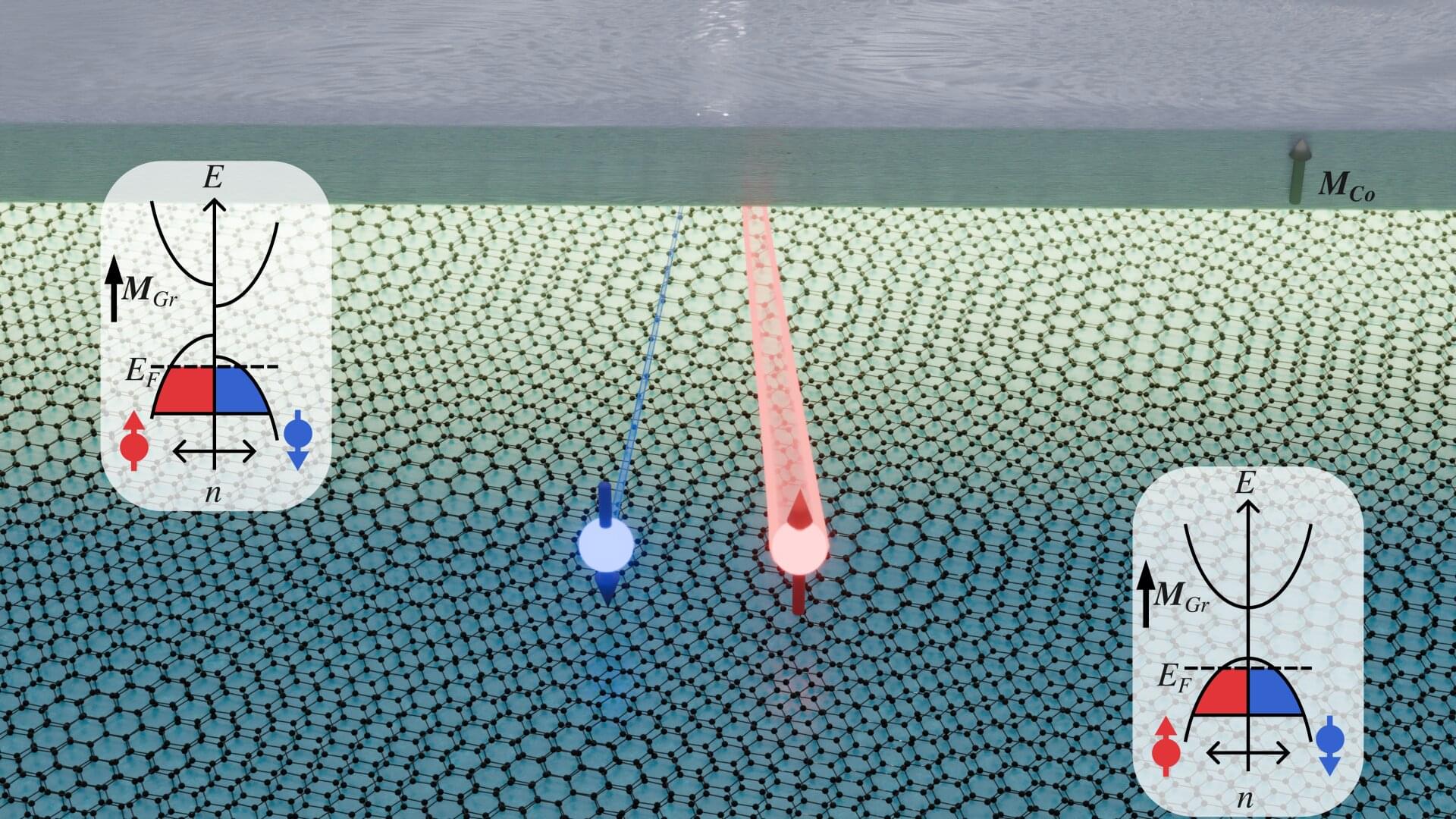
Researchers at the National Graphene Institute, in collaboration with the National University of Singapore, have shown that the magnetic behavior of electrons in graphene can be precisely controlled using electricity, revealing unusually large spin signals in a carefully engineered graphene system.
The study, published in Nature Communications, demonstrates how placing graphene close to a magnetic material can influence the spin of electrons without permanently altering graphene itself. By combining this magnetic proximity effect with graphene superlattices and operating at very low charge densities, the researchers were able to strongly tune how spins move through the material.
“This work shows that by combining graphene with nearby magnetic materials, we can gain a high level of control over electron spin using electrical signals alone,” said Dr. Daniel Burrow, from the University of Manchester. “In simple terms, we are learning how to pass information through graphene using the spin of electrons rather than their electrical charge.”