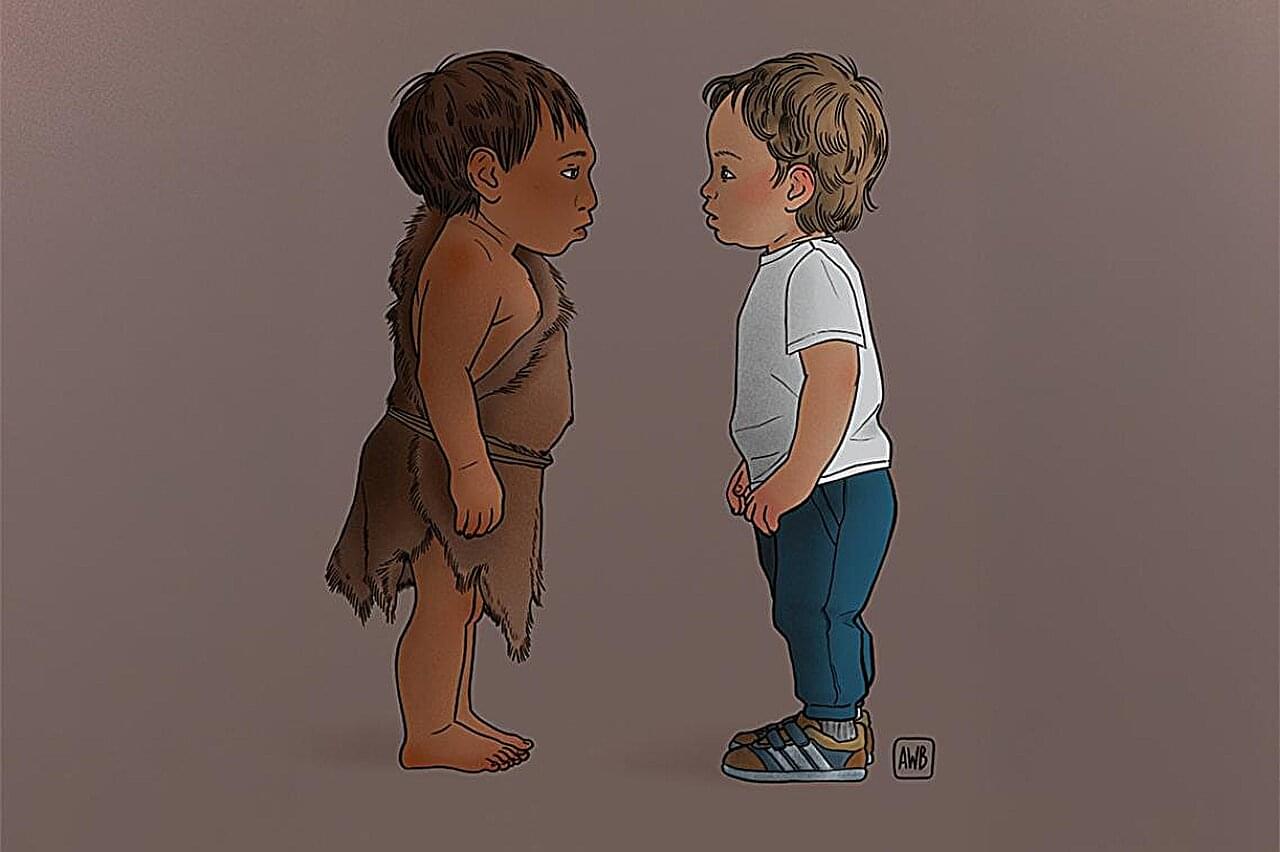
An international study of infant remains from 50,000–75,000 years ago has provided new evidence about the developmental trajectory of our evolutionary “cousins,” Neanderthals.
University of Queensland skeletal histologist Dr. Justyna Miszkiewicz led an analysis of ancient baby teeth and bones, revealing the growth of Neanderthals was remarkably similar to that of modern humans. The study is published in Royal Society Open Science.
“The remains were unearthed in Sesselfelsgrotte, Germany, in the 1960s and 1970s and lay in a museum until around 20 years ago, when it was confirmed they were Neanderthal,” Dr. Miszkiewicz said.