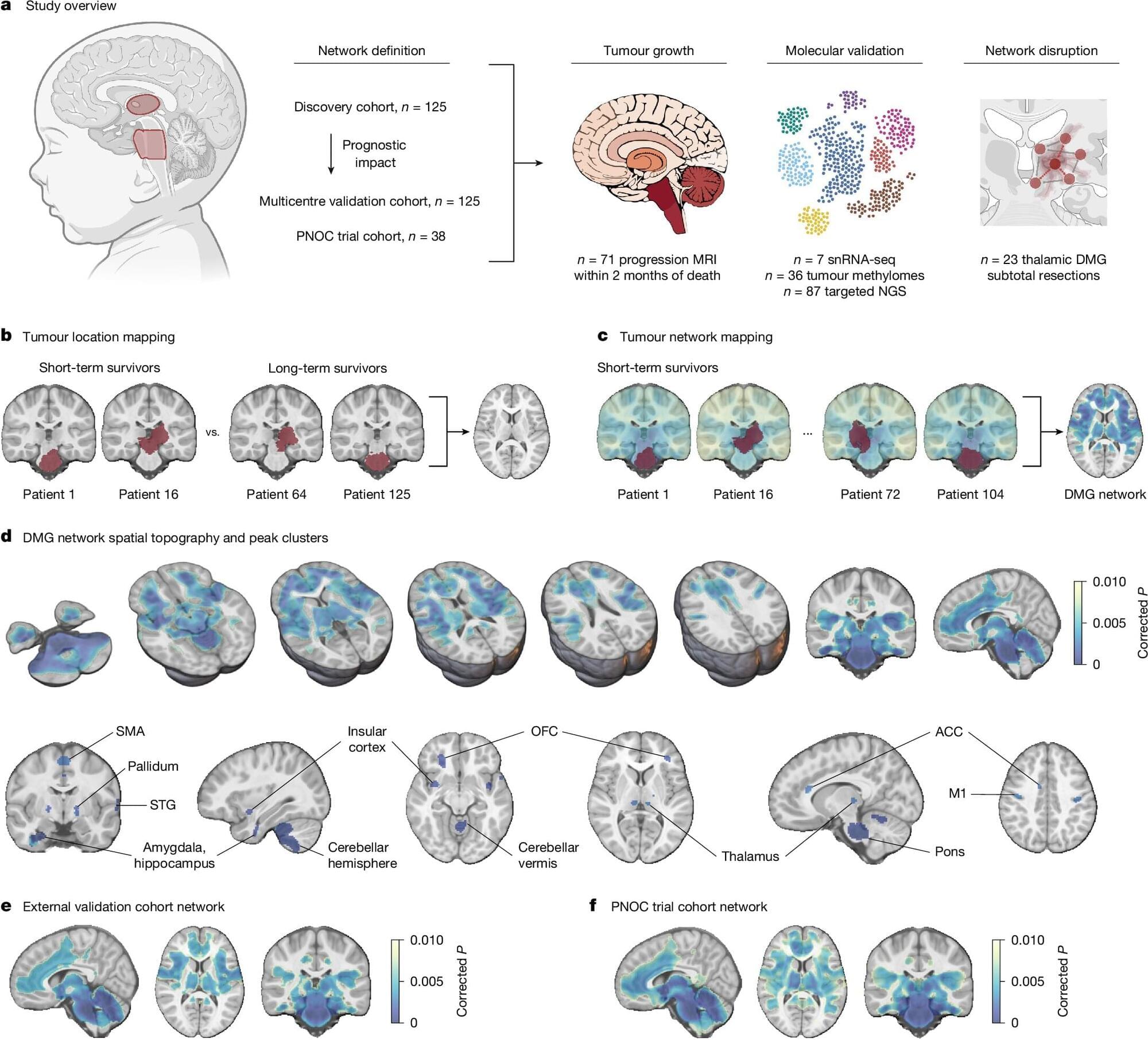
A human brain network associated with survival in children with diffuse midline glioma (DMG), the deadliest childhood brain cancer, has been identified by UCL clinician-scientists, raising the possibility of entirely new treatment approaches. The researchers found that DMG tumors seem to exploit the brain’s existing neural circuitry to drive tumor growth and progression. Tumors that were more strongly connected to this network were associated with significantly shorter patient survival.
The study, published in Nature, builds on pioneering work in the field of cancer neuroscience, which shows that brain tumors, including DMG, dynamically interact with the otherwise healthy brain.
The study was led by Dr. Jai Sidpra and Dr. Valentina Lind, medical students enrolled in the MBPhD Program within the UCL Division of Medicine and senior author Professor Darren Hargrave’s group at the UCL Great Ormond Street Institute of Child Health.