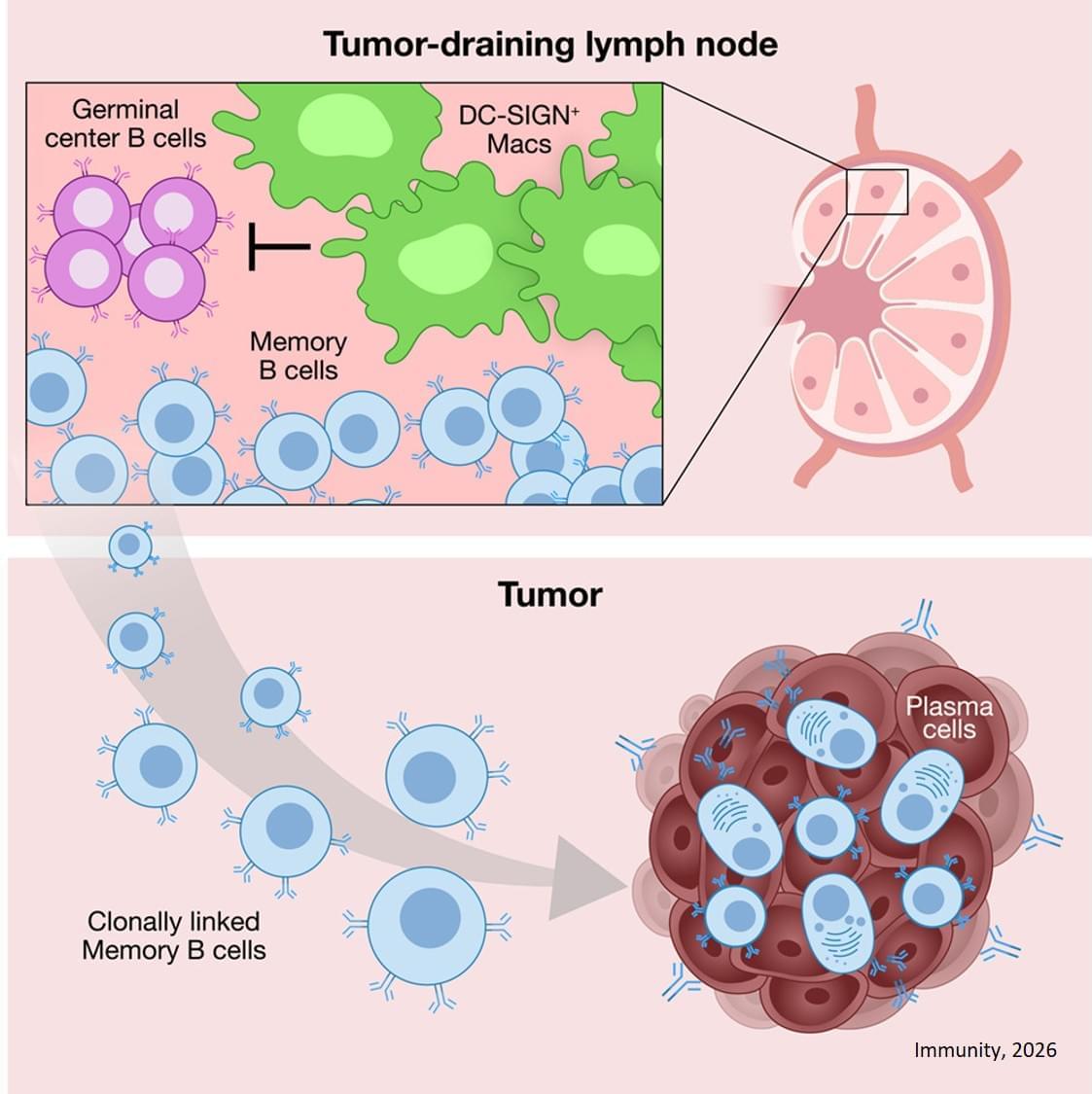
While we tend to quickly forget having been ill or having received a vaccine, the immune system remembers remarkably well. It has memory B cells – “trained” immune cells that circulate throughout the body in search of harmful invaders they have encountered previously; these cells can rapidly deploy targeted weapons when faced with a pathogen again. Now, researchers report that activated memory B cells can also recognize an internal enemy: cancer cells.
In patients with ovarian cancer, the researchers identified memory cells that are capable of homing in on the tumor, springing into action and producing effective antibodies against it. The new study, whose findings were published in Immunity, advances the development of vaccines and therapies based on immune memory against cancer.
The immune system’s arsenal contains hundreds of millions of B cell clones, each producing a unique antibody against a specific pathogen. These antibodies are proteins that identify their target and either neutralize it or recruit other immune cells to attack it. When a clone encounters its target for the first time, its antibody binds weakly and elicits a limited response. But some of these cells enter “training camps” – structures called germinal centers in the lymph nodes – where they undergo genetic changes and rigorous selection, emerging with much more effective antibodies. Some of these trained cells immediately become active antibody producers; others develop into memory cells that remain inactive, circulating between the blood and the lymph nodes, but able to rapidly snap into action if the body is exposed again to the pathogen.