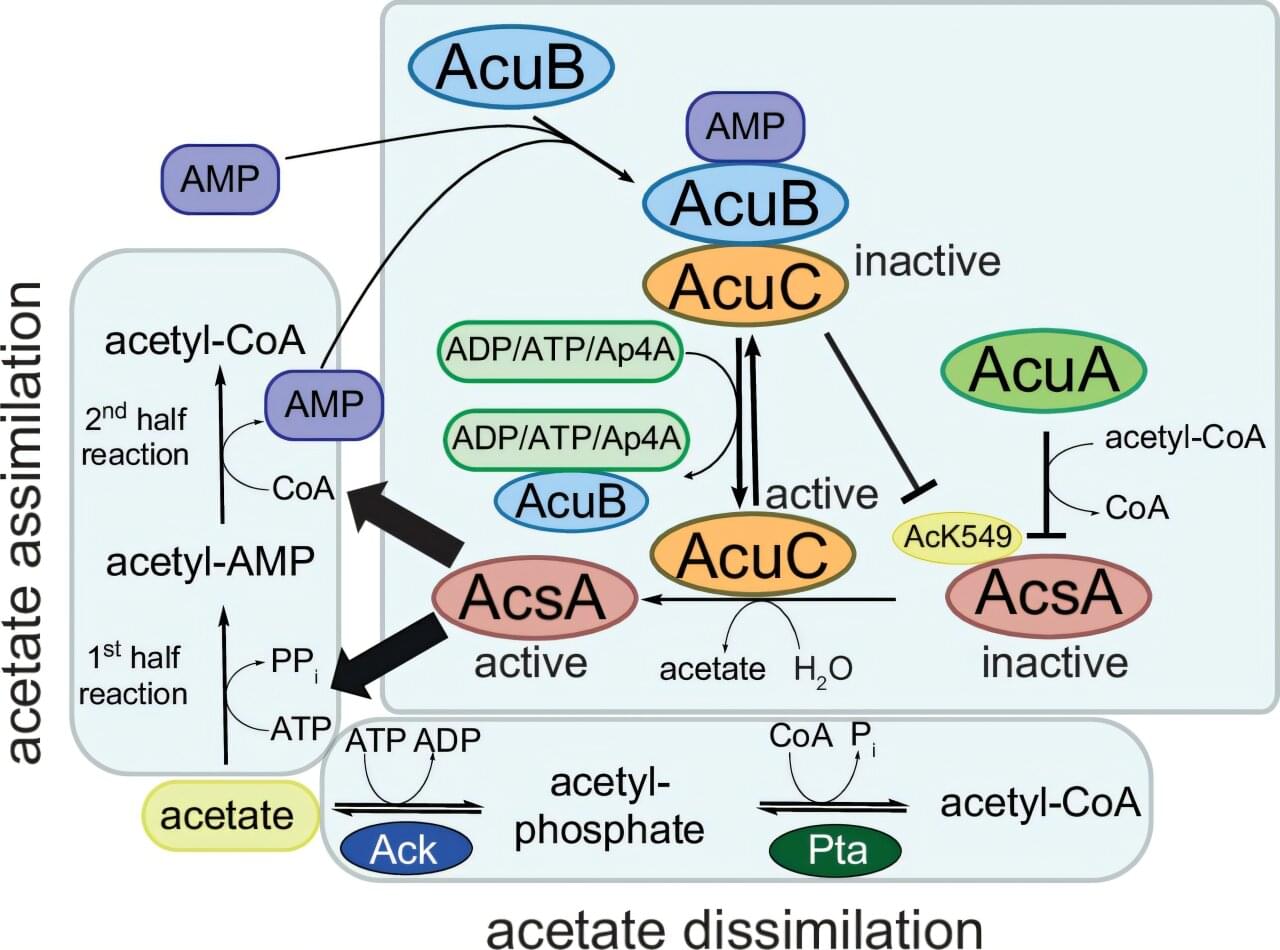
Researchers at the University of Greifswald have discovered a new mechanism by which bacteria such as Bacillus subtilis can regulate the production of the central metabolic molecule acetyl coenzyme A (Acetyl-CoA). Acetyl-CoA, also known as activated acetic acid, is crucial in the production of nutrients, i.e., proteins, carbohydrates and lipids, and thus plays a key role in the metabolism of all cells.
Until now, it was unclear how bacteria coordinate the production and decomposition of activated acetic acid using this pathway. New findings published in the journal Nature Communications have now shown that Bacillus subtilis uses a special regulatory mechanism to coordinate both processes.
When cells are supplied with an abundance of nutrients, they are forced to decide whether to gain energy or create building blocks for growth. At the heart of this decision-making process is acetyl coenzyme A, which links the decomposition of nutrients with the synthesis of proteins, carbohydrates and lipids, thereby acting as a central hub for the entire metabolism during cell formation.