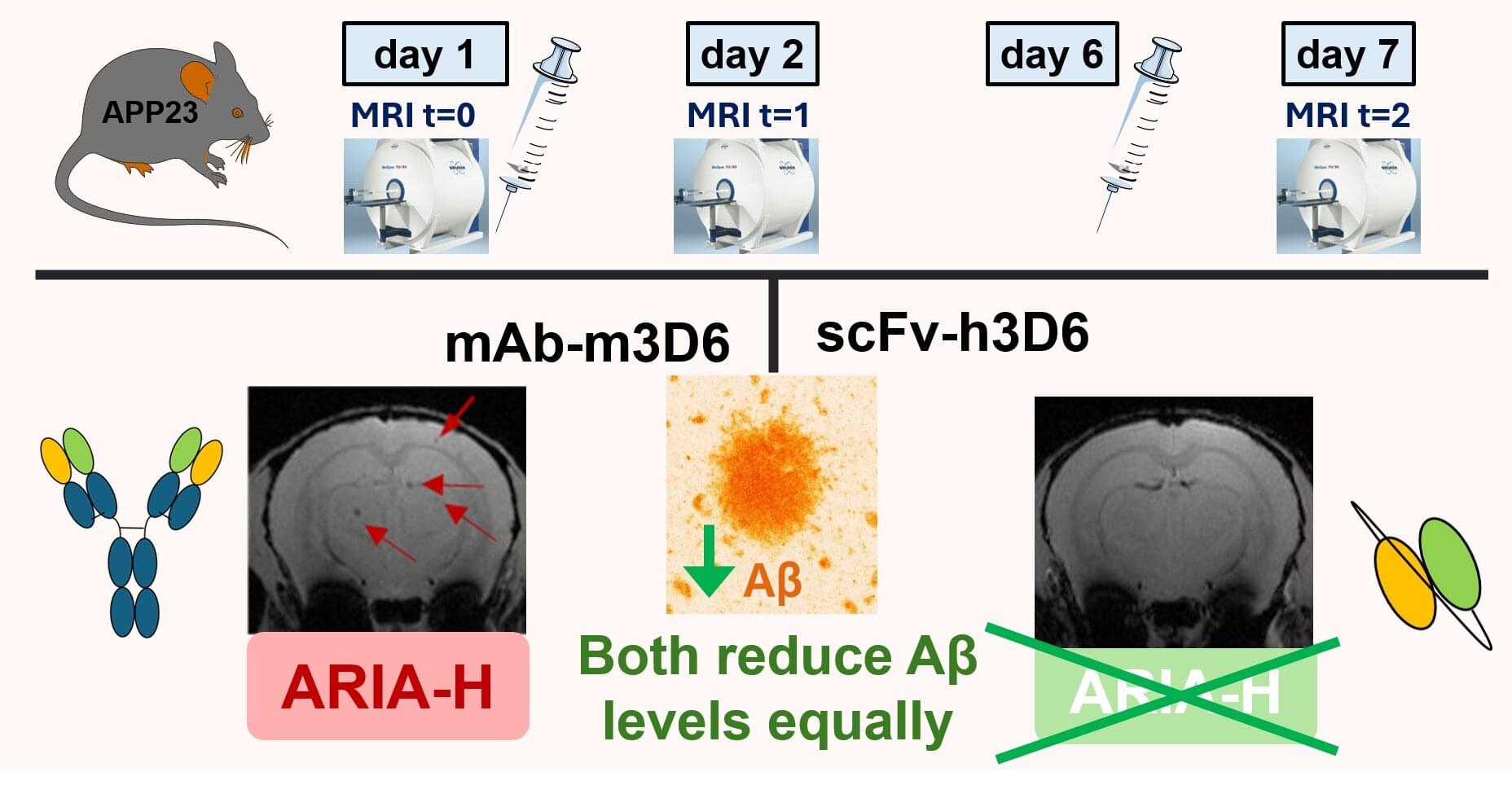
In 2025, the European Medicines Agency approved two antibodies for Alzheimer’s disease: lecanemab (LeqembiTM, from Biogen) and donanemab (Kisunla, from Eli Lilly and Co.), both based on immunotherapy (the use of molecules from the immune system to treat diseases). These antibodies, obtained in the laboratory, act against the Aβ peptide, a protein fragment that accumulates in the brains of patients with Alzheimer’s disease. Elimination of this protein by the immune system helps slow the characteristic cognitive decline of the disease.
These two antibodies are the first disease-modifying therapies for Alzheimer’s. They stop and, in some cases, even partially reverse this devastating condition. However, a frequent and characteristic side effect of these drugs is cerebral bleeding, detectable by magnetic resonance imaging. The brain does not have the molecules and cells that make up the systemic immune system, so the entry of antibodies into the brain is not desirable under healthy conditions, although it is necessary for these treatments to be effective.
The incidence of bleeding in clinical trials ranged from 10% to 27% of treated patients, with a particularly high incidence in individuals carrying a specific apolipoprotein allele: APOEε4. In Europe, these treatments can be administered only to people with one or no copy of the APOEε4 allele, a genetic variant associated with a higher risk of Alzheimer’s.