You have gone without food for days, and the temperature drops to near freezing. What do you do? For some animals, the answer is influenced by the brain’s circadian clock. Hummingbirds, bats, and mice are among the animals that can enter torpor, which reduces body temperature and metabolism. Scientists suspected that the brain’s circadian clock controls the timing of torpor, but until now the exact mechanism was not known.
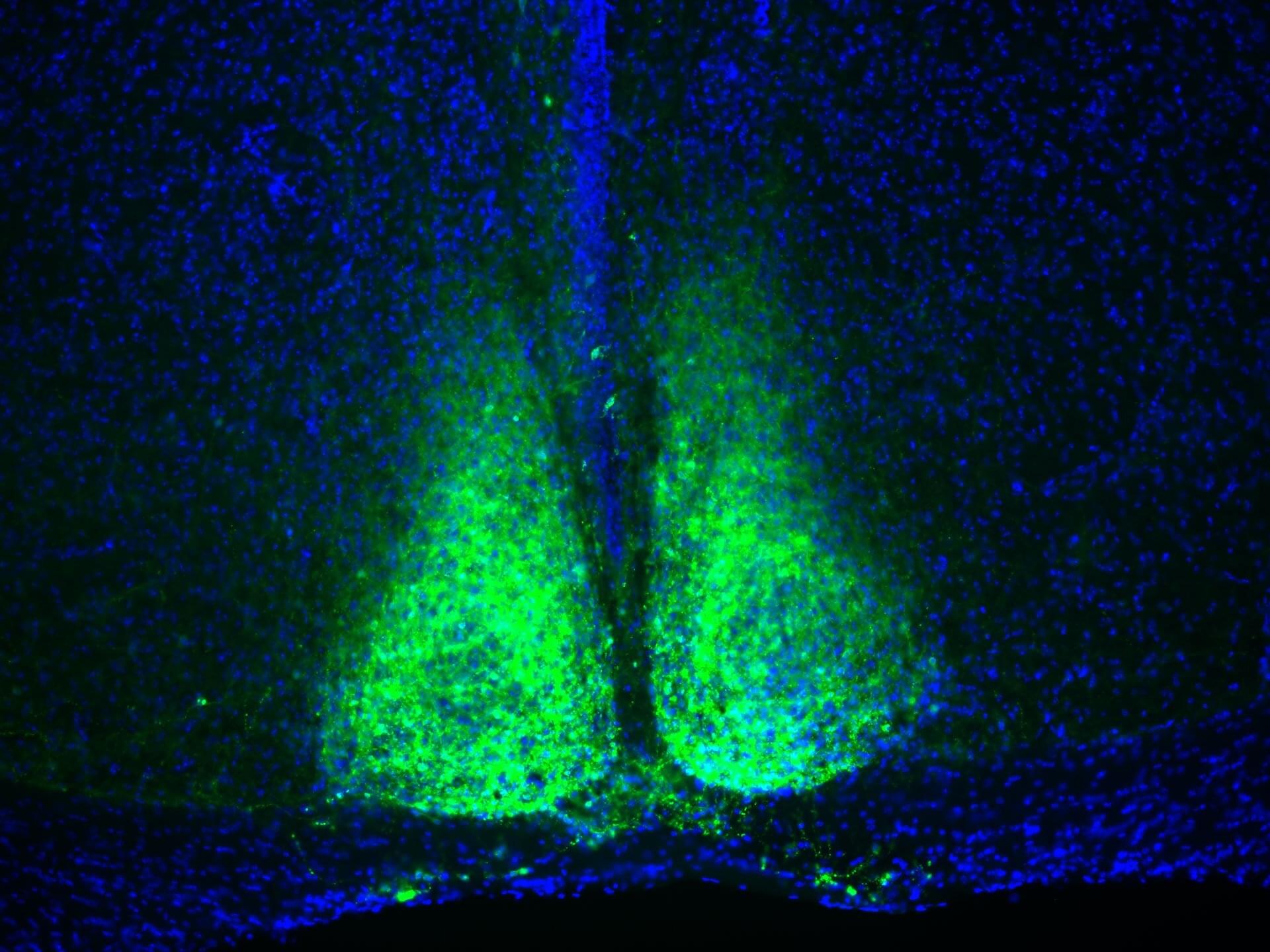
Researchers at Nagoya University in Japan have identified the specific neural circuit responsible for this survival strategy. They have shown that the brain’s circadian clock, a small cluster of neurons located in the hypothalamus at the base of the brain, sends silencing signals through this circuit to a nearby temperature-regulating region, suppressing torpor during the day. The findings were published in Nature Communications.