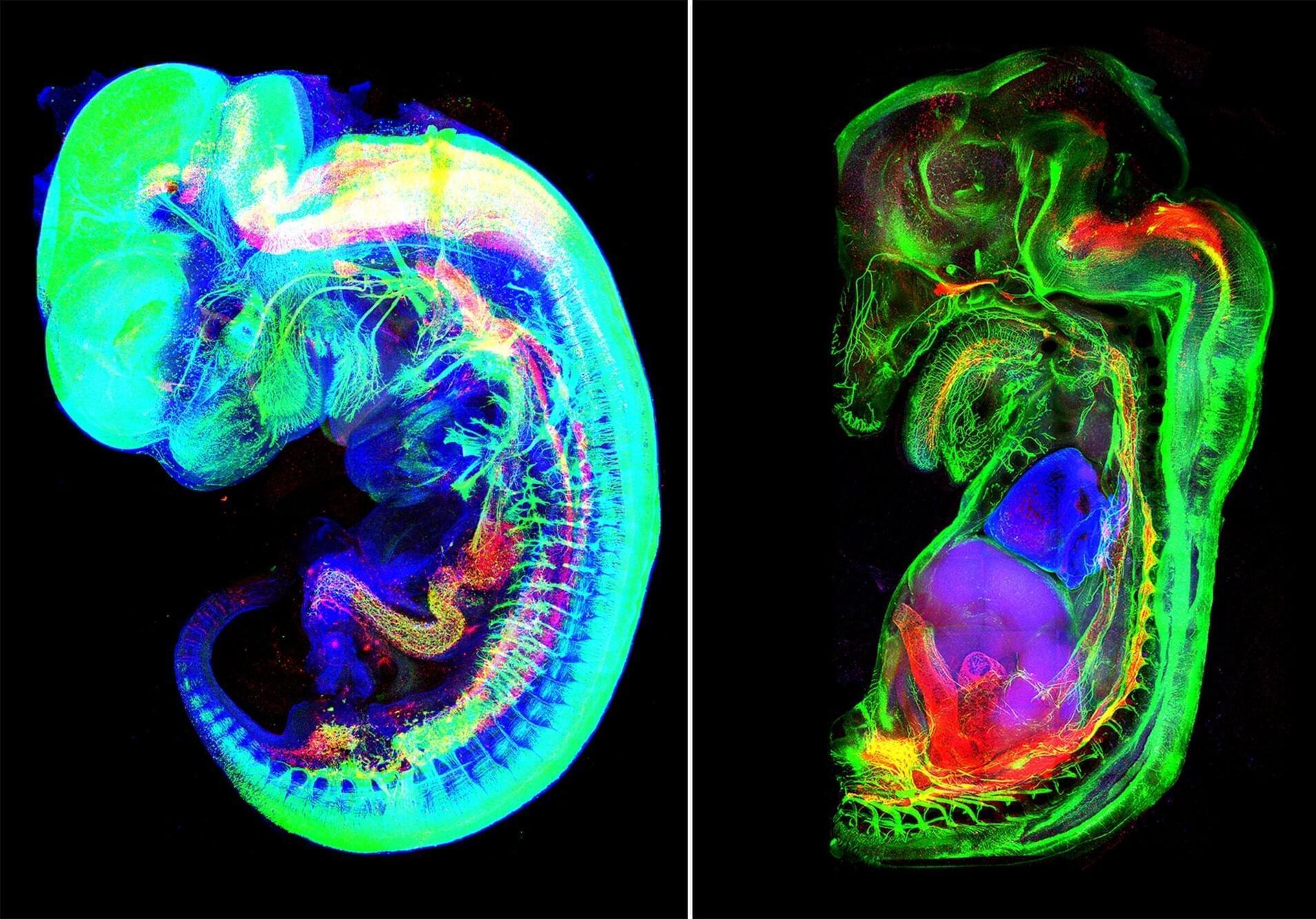
A new Yale study reveals that major organ systems in the body aren’t just passive structures operating on directions from command central—the brain—but instead are active participants in controlling their own functions.
Writing in the journal Nature, a team of researchers led by Yale’s Rui Chang demonstrates how organs develop and maintain their own neural circuitry, which in turn communicates with the brain in a sort of two-way conversation.
The findings provide a new understanding of how the body and brain communicate via networks of neurons embedded inside organs that constitute a mini-nervous system, called “organ intrinsic nervous systems,” which help control critical functions such as digestion, heart rhythm, breathing, insulin secretion, and immune responses, the researchers say.
The concept of organ intrinsic nervous systems is fascinating. It makes intuitive sense that organs would have evolved their own local signaling networks rather than relying solely on centralized control from the brain. This mirrors what we see in distributed computing architectures — local processing at the edge is more efficient than routing everything through a central hub. Looking forward to seeing how this research impacts treatments for digestive and cardiac conditions.