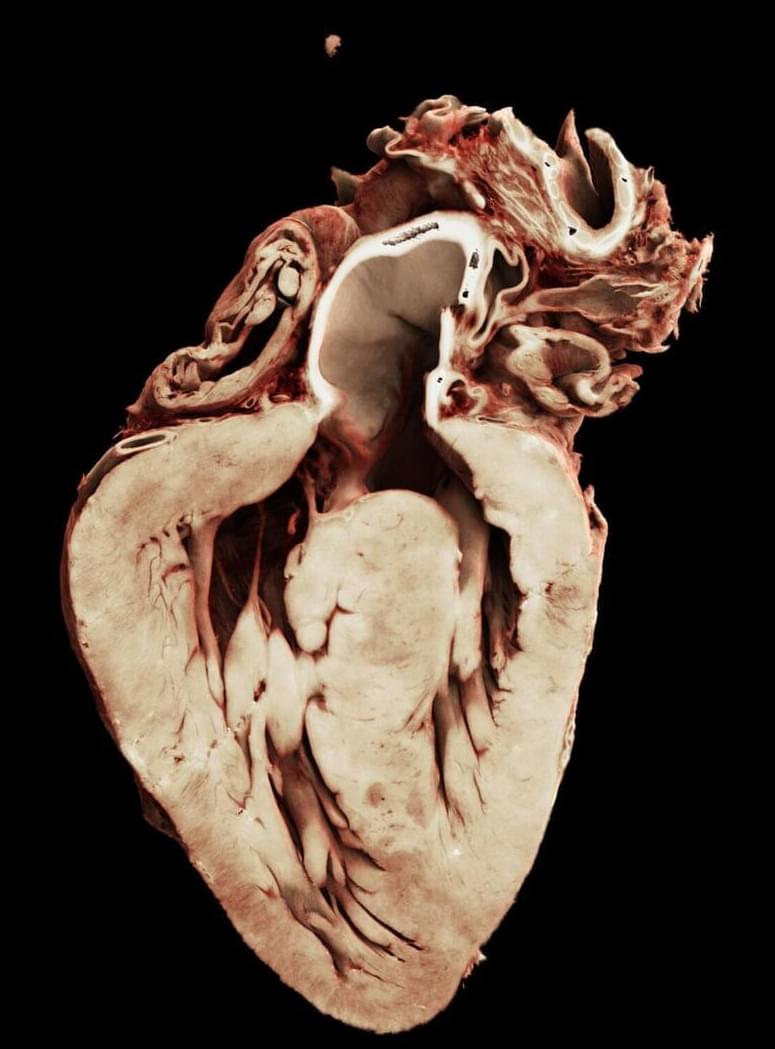
Researchers from UCL (University College London) and the ESRF (The European Synchrotron) have produced the first three-dimensional map of the heart’s electrical wiring in Tetralogy of Fallot, one of the most common congenital heart problems, revealing anatomical features that may explain why many patients develop heart conduction disorders in this condition.
The research, part of the Human Organ Atlas international collaboration, can be used for surgical training and lead to even better outcomes for patients. The research appears in JTCVS Structural and Endovascular.
Congenital heart disease affects around 1% of the population worldwide. In many cases, babies must undergo life-saving heart surgery shortly after birth. Although survival rates are now high, many patients develop complications later in life, particularly abnormal heart rhythms or contraction patterns. Surgeons have long known that these problems can arise when the heart’s delicate electrical conduction system, which is invisible during surgery, is disturbed.