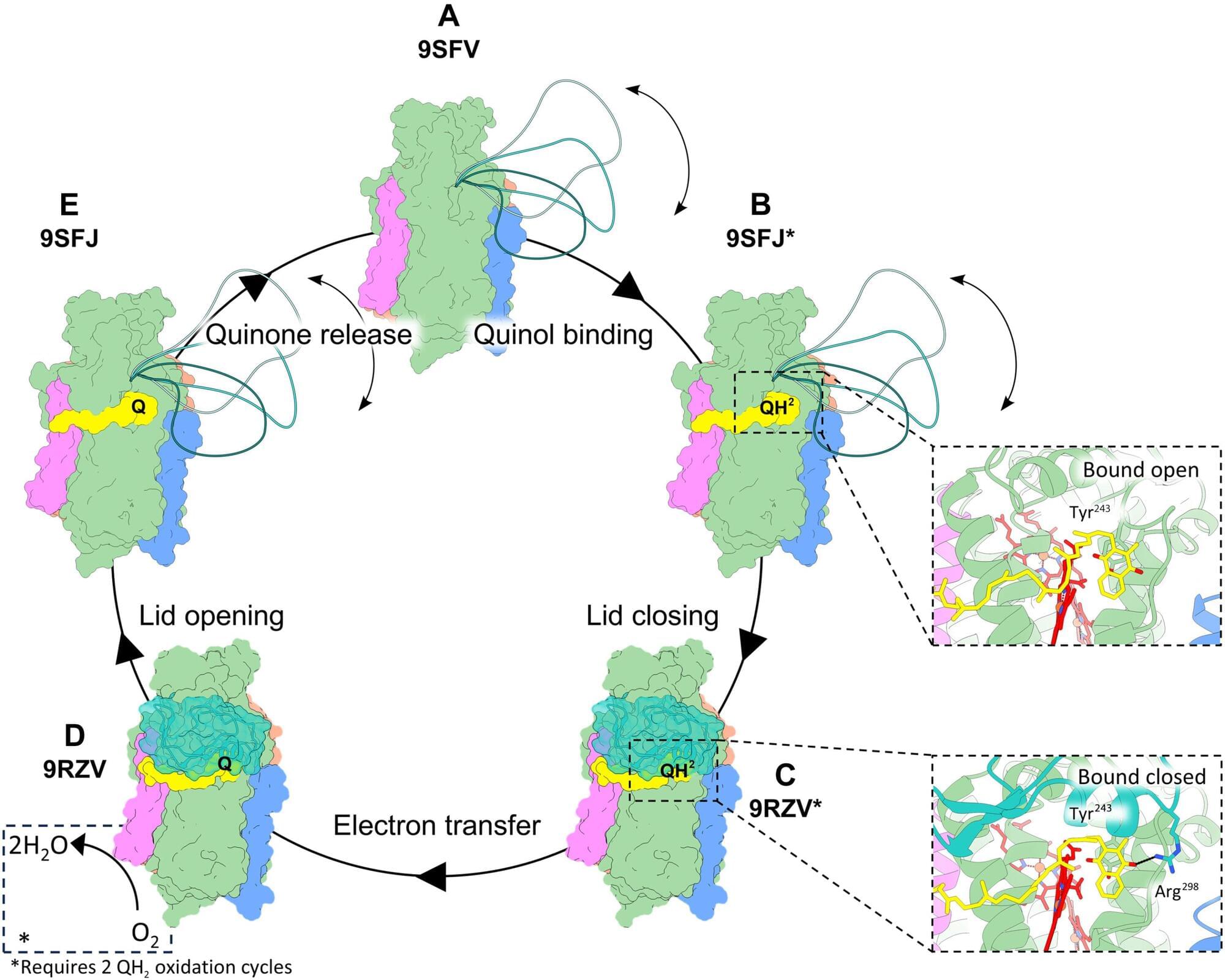
Researchers in Leiden have, for the first time, observed how a specialized enzyme helps bacteria stay alive when oxygen levels are low, and how that process can be blocked. The study, published in Science Advances, opens up new possibilities for targeted antibiotics.
It really exists: a secret trick that allows bacteria to survive with very little oxygen. This also applies to bacteria that can make us sick. “Like us, these bacteria need oxygen to survive,” says Ph.D. candidate Tijn van der Velden. “But unlike humans, they have a special enzyme called cytochrome bd that allows them to keep producing energy even when oxygen levels are very low.” Because the enzyme is so important for bacterial survival, it is a promising target for new antibiotics, including potential treatments for tuberculosis.