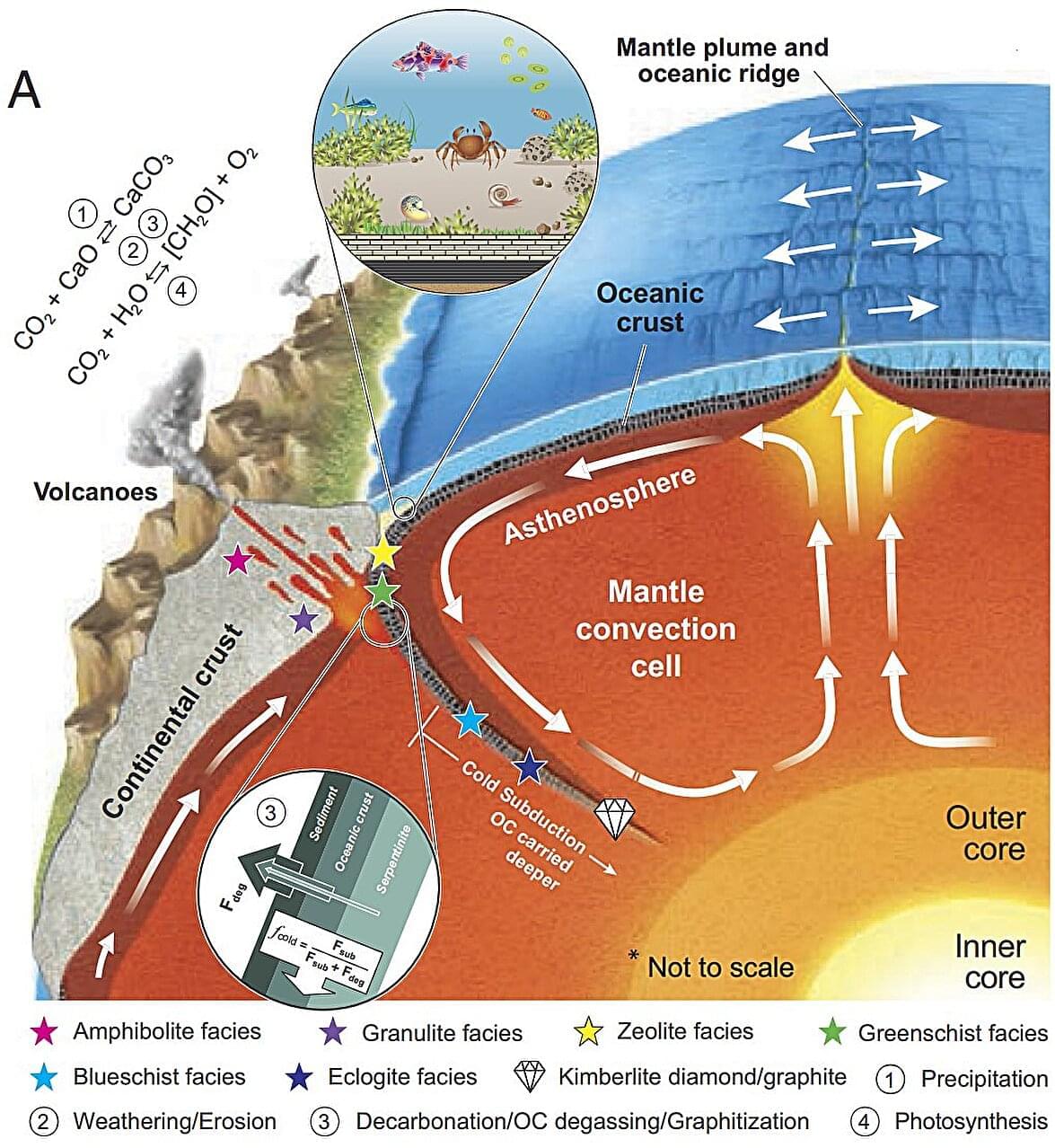
Earth was mostly devoid of oxygen for much of its 4.5 billion year lifetime. That is, until certain processes started to allow for the eventual buildup of oxygen up to the levels we have now (around 21% of the atmosphere). While scientists have found evidence of the approximate timescales of rises in oxygen over time and are aware of some of the mechanisms behind it, the main driver behind Earth’s long-term oxygenation is still unclear.
A new study explores whether changes in subduction style—how tectonic plates sink—influenced oxygen levels over time. The study, published in Proceedings of the National Academy of Sciences, points to a process called cold subduction as the main driving factor behind Earth’s rise in oxygen levels, which ultimately led to a more habitable Earth.