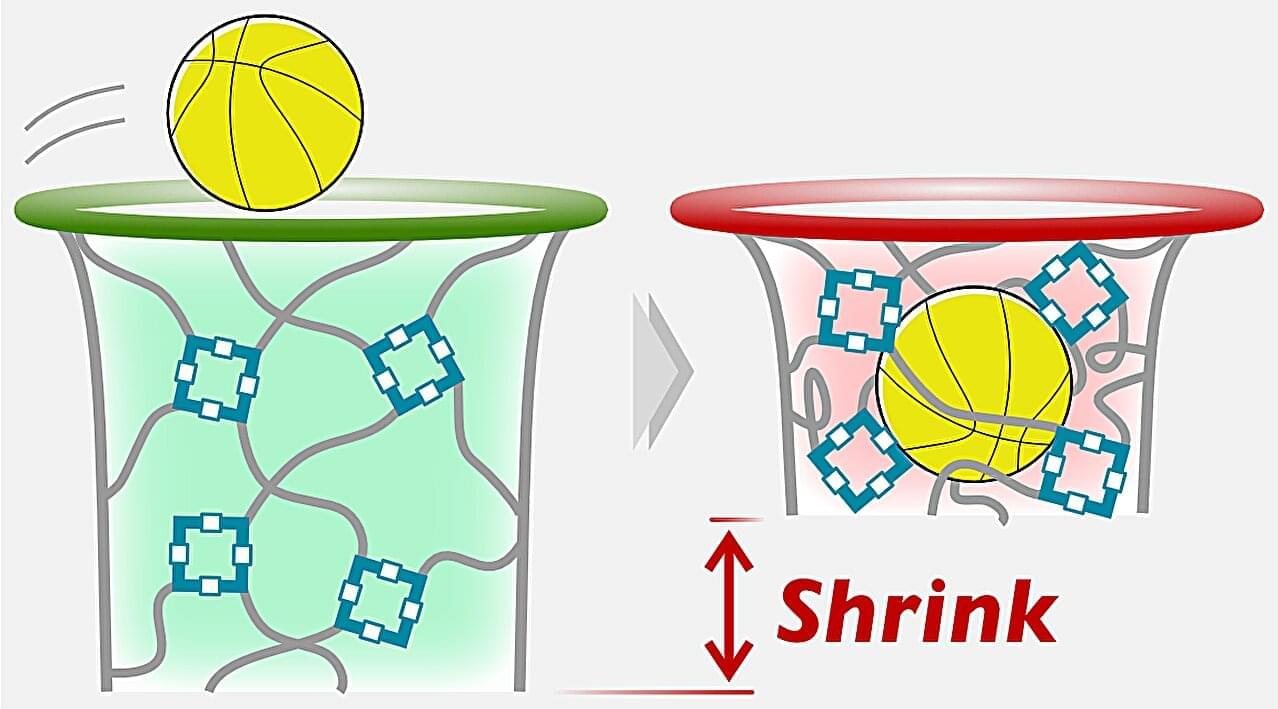
Researchers at Kyoto University and Tohoku University have developed a new porous polymer gel that selectively recognizes specific molecules (referred to as “guests” in the study) through coordination chemistry and converts these invisible molecular-scale interactions into strikingly visible, macroscale deformation.
The study demonstrates how subtle differences in molecular structure can directly alter the shape, color, and mechanical properties of a soft material, opening new possibilities for “smart” stimuli-responsive materials and molecularly programmable soft matter that can sense and react to its environment.
Molecular recognition is a central concept in supramolecular chemistry and biology, where molecules selectively interact through precisely arranged chemical interactions. While most artificial molecular recognition systems rely on noncovalent interactions such as hydrogen bonding, the present study instead exploits coordination interactions —a type of chemical “handshake”—between metal centers and electron-rich guest molecules.