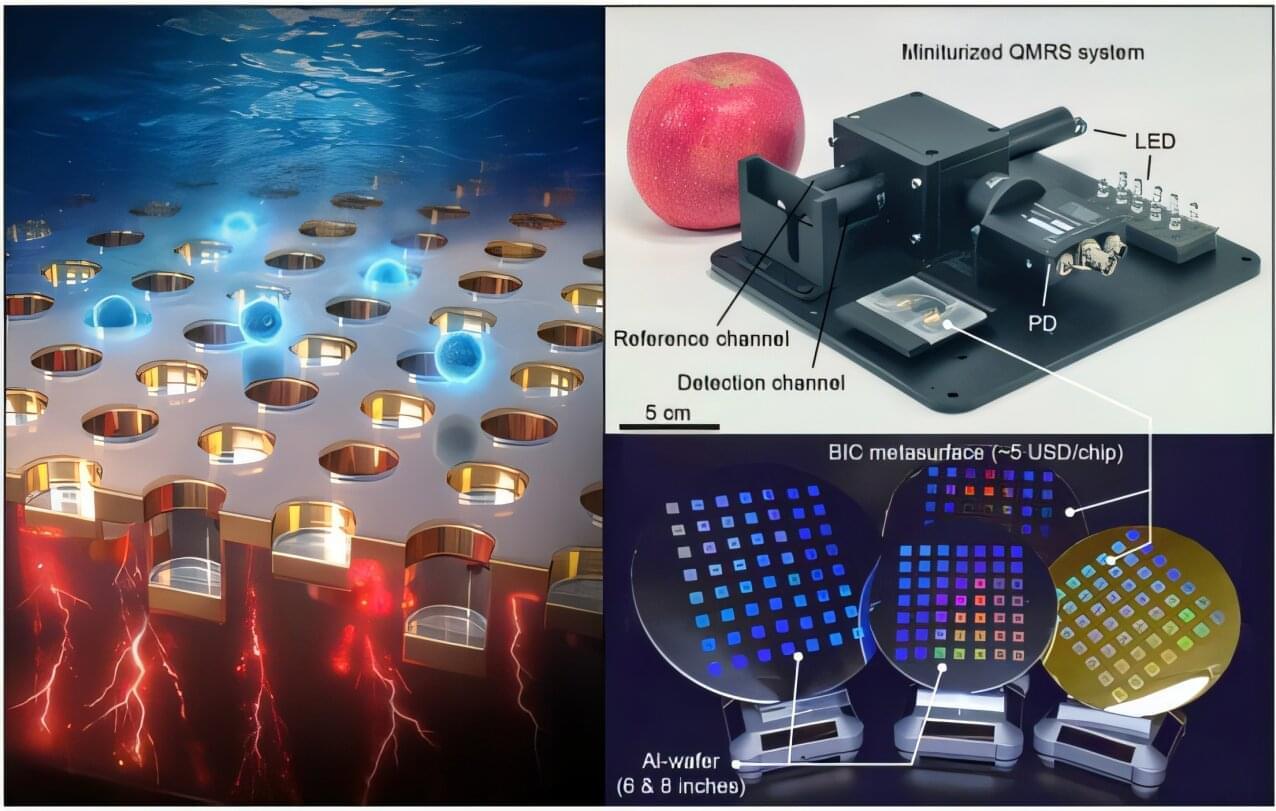
When we think about highly sensitive medical testing, we often imagine a hospital laboratory filled with large instruments, trained technicians, and carefully controlled conditions. This is especially true for optical biosensing, where scientists try to detect extremely small changes caused by biomolecules binding to a sensor surface.
These tiny changes can carry important information about disease, treatment response, or biological function. But detecting them often requires precise spectrometers, stable light sources, and carefully aligned instruments. This makes many advanced biosensing technologies powerful in the laboratory, but difficult to use in smaller clinics, remote regions, or point-of-care settings.
In our recent study, now published in Nature Photonics, we asked a simple question: Can we make high-performance label-free biosensing smaller, more robust, and easier to scale, without sacrificing sensitivity?