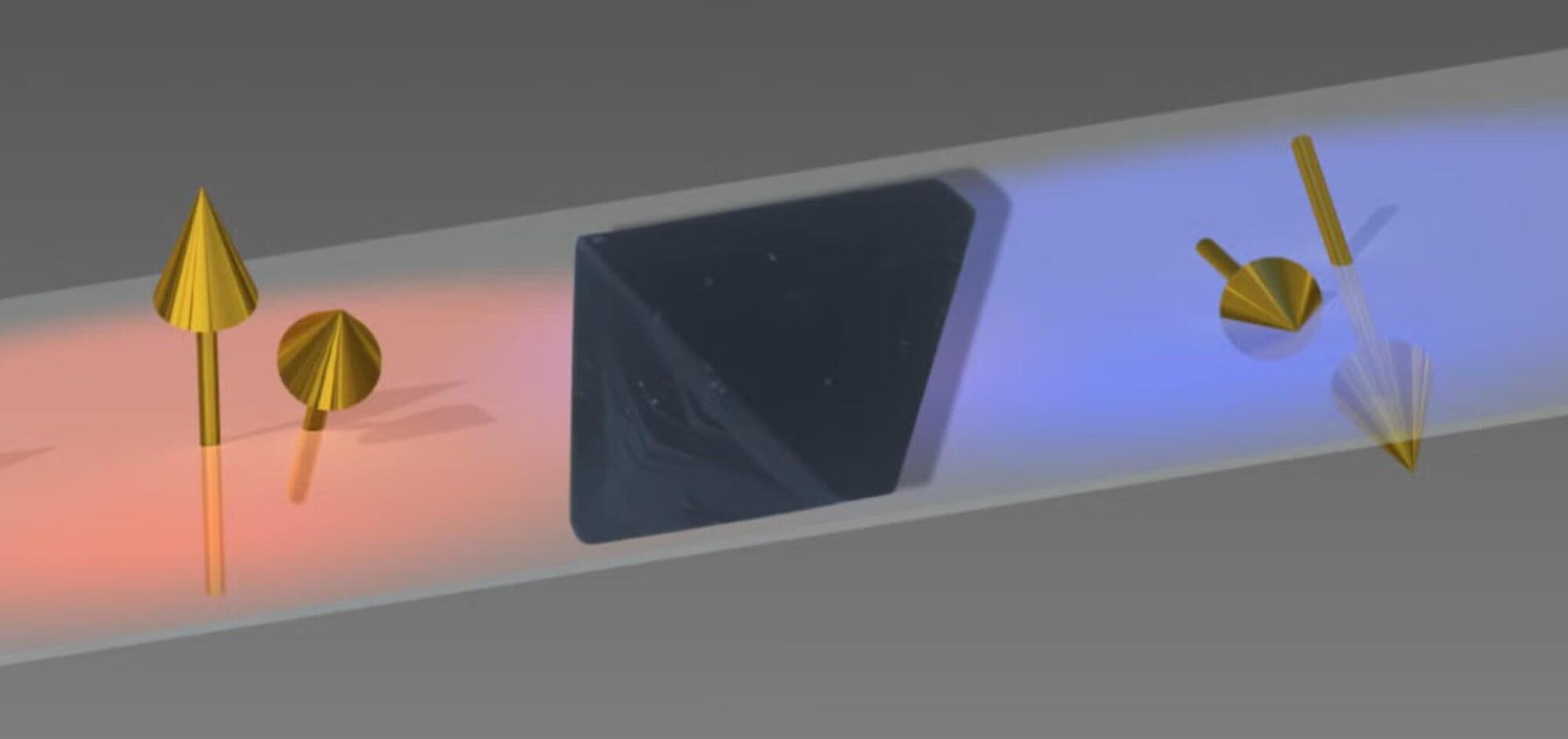
How come our universe is full of disorder, when all elementary particles appear to follow strictly ordered laws of physics? And are there organizing principles behind disorder and apparent chaos?
One avenue of studying these fundamental questions is through an assembly of spins: the quantum property that makes electrons behave like tiny bar magnets, with a preferred orientation of either up or down. Neighboring spins align either in parallel (up-up) or antiparallel (up-down-up-down), as in ferromagnets and antiferromagnets, respectively. This simple ruleset makes spin systems very attractive for studying the emergence of order.
However, while the theory of spin is well-established, creating the material conditions for observing spin disorder has proven notoriously elusive. While physicists have been able to create exotic materials that exhibit spin disorder, tracing the evolution from order to disorder within materials has been challenged by the lack of a clean starting point.