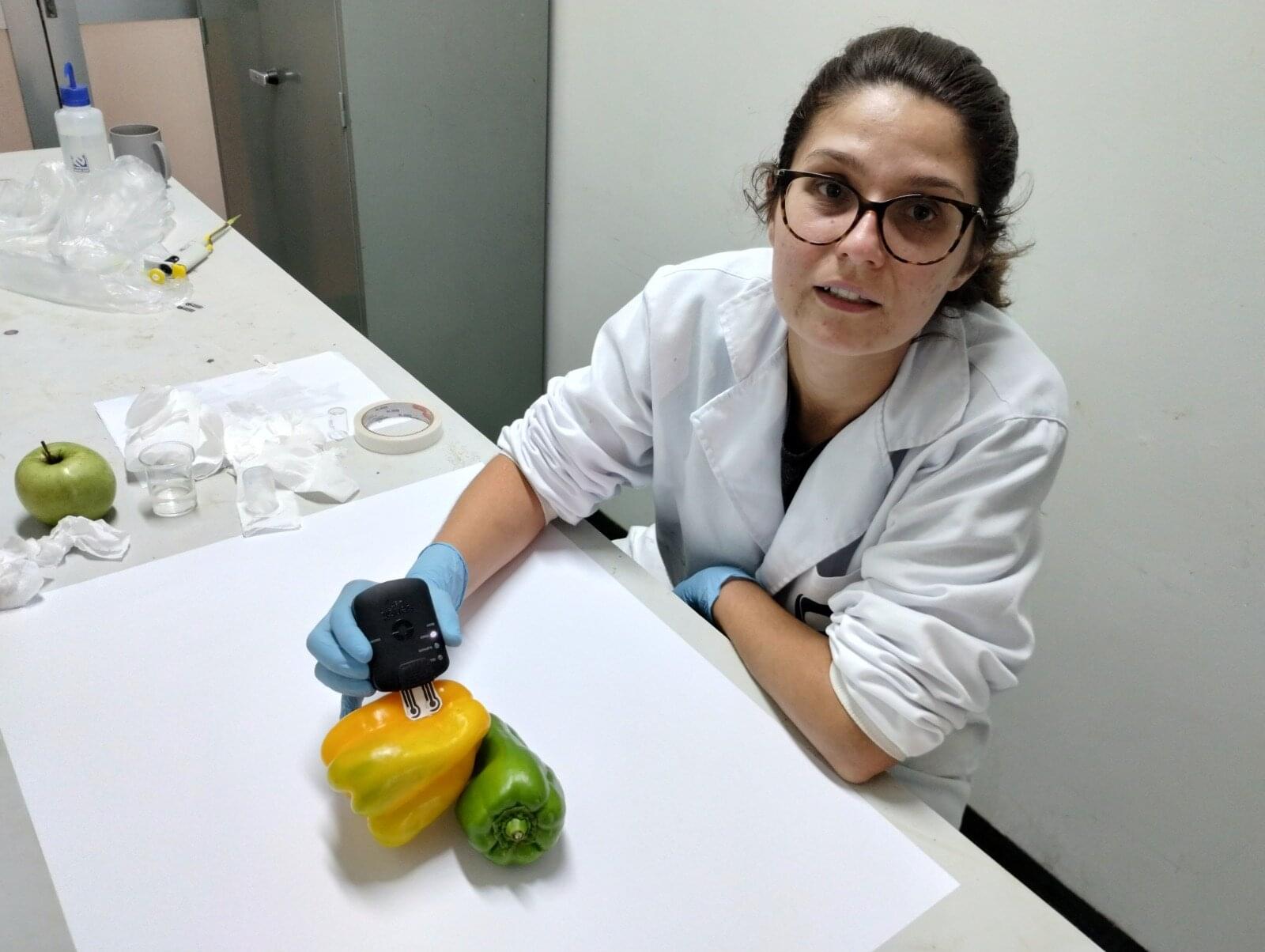
Researchers at the São Carlos Institute of Physics at the University of São Paulo (IFSC-USP) in Brazil, led by Paulo Augusto Raymundo-Pereira, have created biodegradable, “wearable” sensors for plants to monitor their health, including the presence of pesticides. The sensors are made from carbon ink and are screen-printed onto transparent cellulose acetate bioplastics.
The study was published in Biosensors and Bioelectronics: X. The World Economic Forum selected wearable sensor engineering as one of the top ten emerging technologies of 2023 for its potential to improve plant health and increase agricultural productivity.
However, most wearable devices today are made from nonrenewable plastic polymers derived from petroleum and have poor adhesion to uneven, wavy, and curved surfaces.