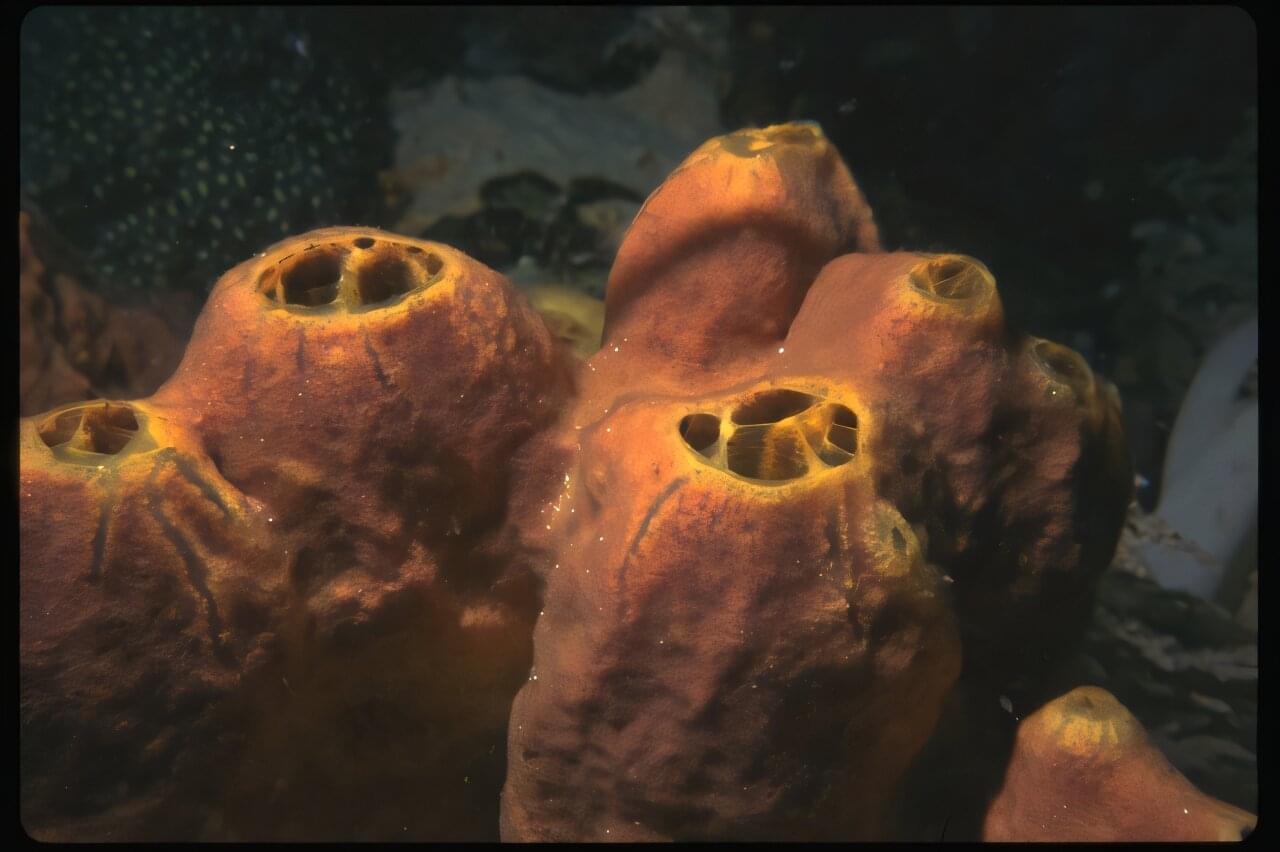
Florida State University chemists have synthesized new molecules derived from bacteria found in a Pacific Ocean sea sponge, a breakthrough for the future of drug development, particularly for rare forms of cancer.
“Around 50% of approved drugs are either natural products or derivatives of natural products,” said Zackary Firestone, a fourth-year doctoral student in FSU’s Department of Chemistry and Biochemistry, and the study’s lead author. “Synthetic access to these molecules is important because it allows for easier procurement for biological testing as well as the making of new derivatives.”
The research team is the first to successfully synthesize two new marine natural products: tetradehydrohalicyclamine B and epi-tetradehydrohalicyclamine B. Both were isolated from bacteria that lives in symbiosis with Acanthostrongylophora ingens, a Pacific-dwelling sea sponge.