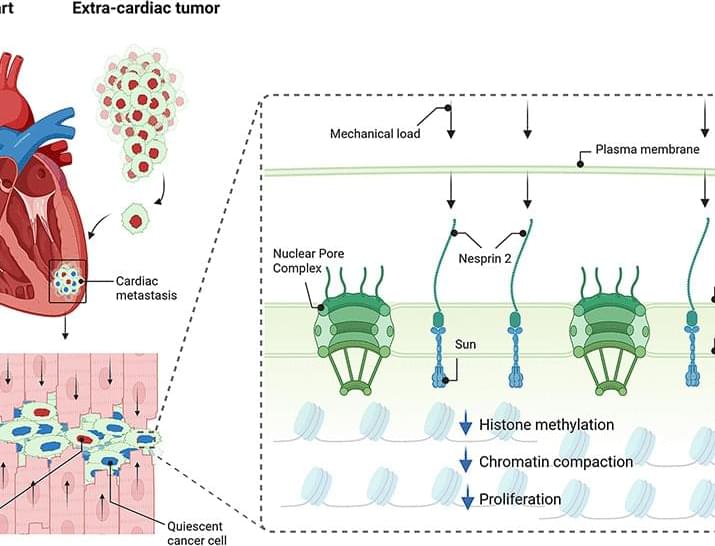
The heart’s constant beating may actively suppress tumor growth in cardiac tissues, a new Science study reports. This is because cellular pathways in these tissues alter gene regulation in cancer cells to keep them from proliferating.
The findings shed light on the role of mechanical forces in protecting the heart from cancer and may pave the way to new cancer therapies based on mechanical stimulation.
The heart rarely develops cancer, and, at the same time, it lacks regenerative capacity, as cardiomyocytes stop proliferating after birth. This suggests that mechanisms limiting cardiac regeneration may also protect against cancer. In this work, we investigated the role of mechanical load and used in vivo cancer models and ex vivo engineered heart tissues to show that mechanical load reduces cancer cell proliferation in the myocardium. Spatial transcriptomics of human cardiac metastases revealed decreased histone methylation and chromatin compaction. These changes affect chromatin accessibility at proliferation-related loci, with Nesprin-2 identified as a key mechanosensor. Our results uncover how mechanical forces protect the heart from cancer and suggest potential strategies for cancer therapy based on mechanical stimulation.