What if every scientific paper you read was just the “highlight reel” of a much longer, messier, and more complicated movie? You see the breakthrough, but you never see the hundreds of hours of footage showing what didn’t work.
Ultimately, the ARA marks a shift toward a future where “The Last Human-Written Paper” isn’t the end of science, but the beginning of a much deeper, machine-readable conversation.
However, this shift toward radical transparency comes with its own set of hurdles. While ARAs make AI agents more efficient, the study found a “prior-run box” effect where seeing a human’s past failures actually limited an AI’s ability to think outside the box and find creative new solutions. There is also a significant cultural and technical gap to bridge: the system relies on researchers being willing to expose their “messy” unfinished work, and even with better data, the jump in actual experiment reproduction was relatively modest. Furthermore, the reliance on “compilers” to translate old papers into this new format risks baking in errors or “hallucinations” if the original source was vague, proving that while machine-readable data is powerful, it isn’t a magic fix for the inherent complexities of scientific discovery.
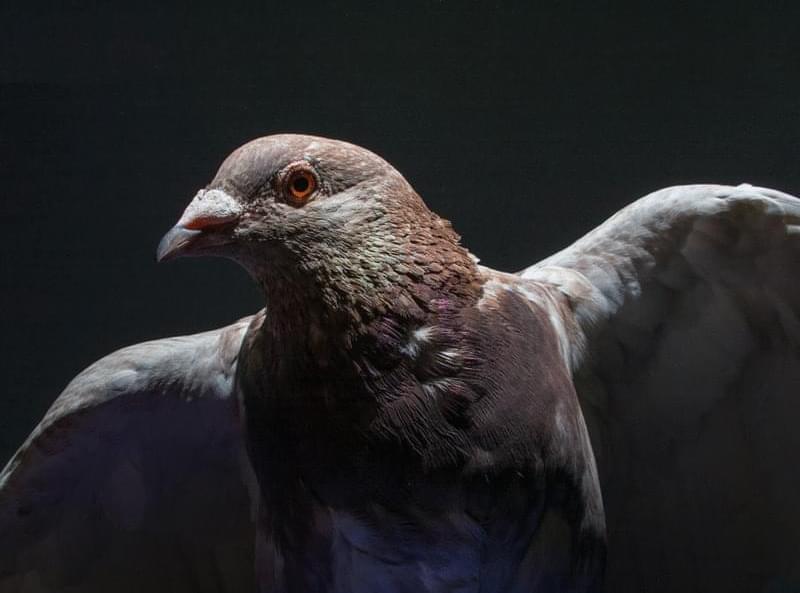
How animals detect Earth’s magnetic field remains a mystery in sensory biology. Despite extensive behavioral evidence, the neural circuitry and molecular mechanisms responsible for magnetic sensing remain elusive. Adopting an unbiased approach, we used whole-brain activity mapping, tissue clearing, and light sheet microscopy to identify neuronal populations activated by magnetic stimuli in the pigeon (Columba livia). We demonstrate robust, light-independent bilateral neuronal activation in the medial vestibular nuclei and the caudal mesopallium. Single-cell RNA sequencing of the semicircular canal cristae revealed specialized type II hair cells that express the molecular machinery necessary for the detection of magnetic stimuli by electromagnetic induction.