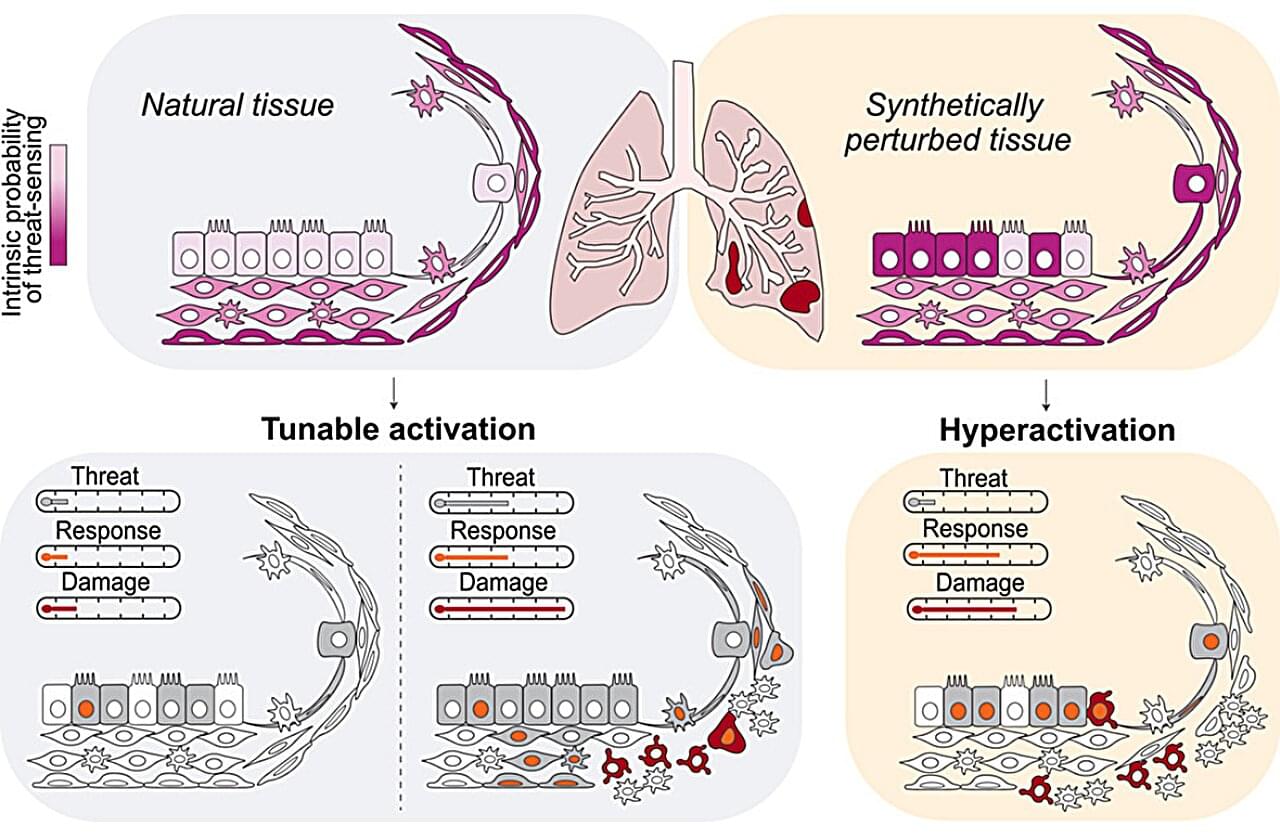
Barrier organs that form boundaries between the body and the outside environment, such as the lungs, skin, and intestines, face a difficult balancing act. They must respond quickly to threats such as infection, but they also need to avoid triggering unnecessary inflammation that can damage the tissue. A new study led by Whitehead Institute member Pulin Li and graduate student in her lab Diep Nguyen reveals one way the lung manages that tradeoff.
Published in Cell Systems, the research found that immune sensitivity is not evenly distributed across the lung. Instead, it arranges in tiers: cells at the outer surface respond cautiously, while cells deeper in the tissue are more likely to sound the alarm when a threat breaks through.
“The central question was how tissues balance the benefits and harmful effects of immune activation when they face different degrees of danger or stress,” says Li, who is also a professor of biology at MIT. “Too little immune activation leaves the tissue unprotected, but too much can create inflammation and damage.”