Eighty years ago, Penn researchers J. Presper Eckert and John Mauchly launched the age of electronic computing by harnessing electrons to solve complex numerical problems with ENIAC, the world’s first general-purpose electronic computer. Today, that same architecture still underlies general computing, but electrons are beginning to show their limits. Because they carry a charge, they lose energy as heat, encounter resistance as they move through materials, and become harder to manage as chips incorporate more transistors and handle larger volumes of data.
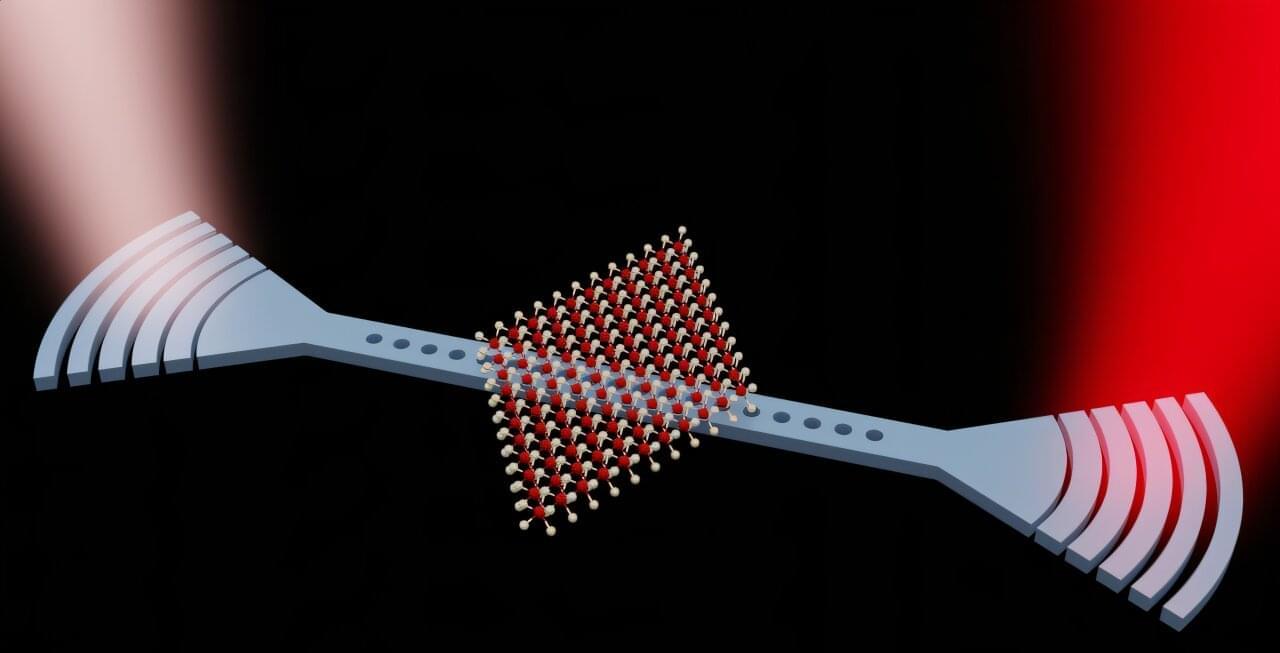
With artificial intelligence pushing today’s hardware to process, move, and cool more, Penn physicists led by Bo Zhen in the School of Arts & Sciences are looking to the electron’s massless counterpart, the photon, to shoulder more of the load.
“Because they are charge-neutral and have zero rest mass, photons can carry information quickly over long distances with minimal loss, dominating communications technology,” explains Li He, co-first author of a paper published in Physical Review Letters and a former postdoctoral researcher in the Zhen Lab. “But that neutrality means they barely interact with their environment, making them bad at the sort of signal-switching logic that computers depend on.”