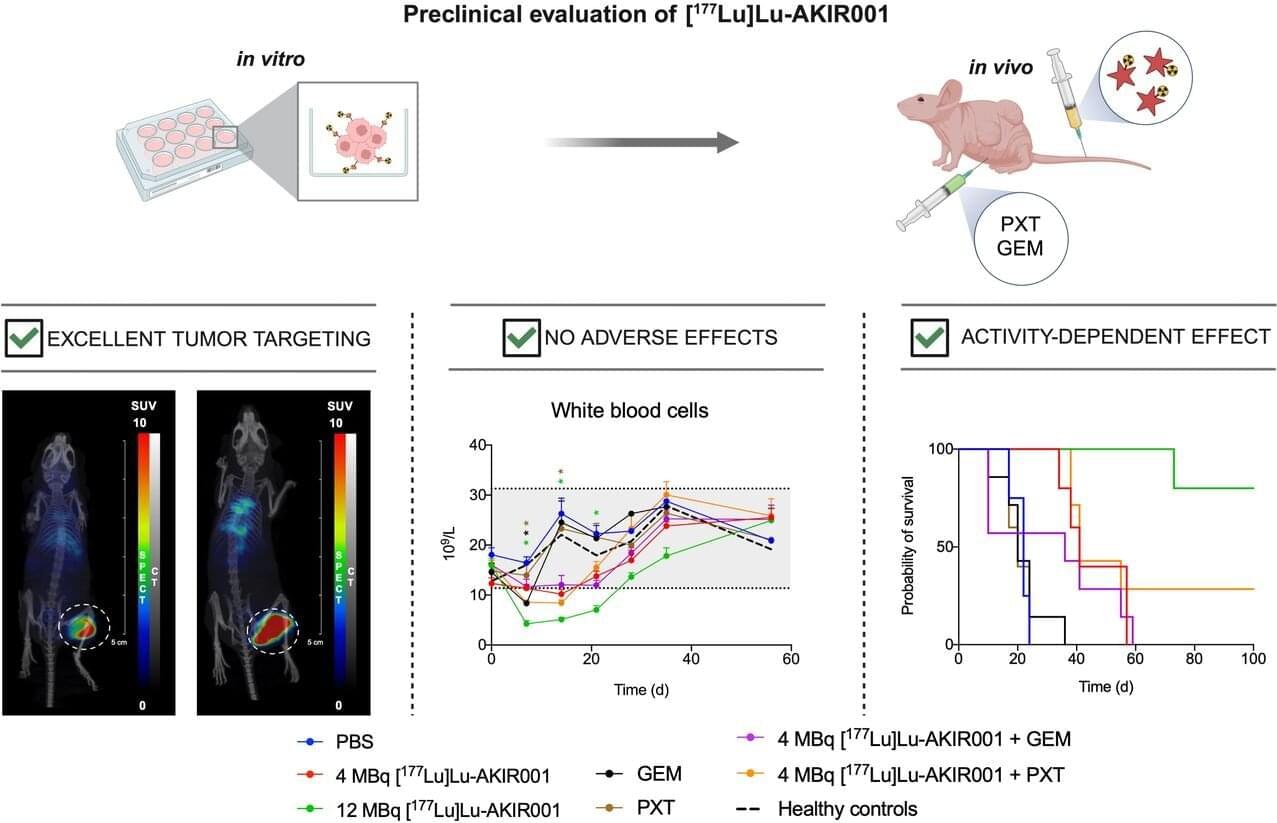
A newly developed targeted radiopharmaceutical treatment can effectively slow tumor growth in pancreatic ductal adenocarcinoma (PDAC), according to new research published in the May issue of The Journal of Nuclear Medicine. In preclinical models, the treatment achieved complete remission of the disease, highlighting its potential to transform care for this highly aggressive cancer.
PDAC accounts for more than 90% of pancreatic cancer cases and remains one of the most lethal malignancies, with a five-year survival rate of less than 5% in patients with metastatic disease. Although surgery is the only curative approach, it is feasible only in 10%–20% of patients with localized disease.
“PDAC is very difficult to treat, and new options are urgently needed,” said Marika Nestor, professor in the Department of Immunology, Genetics and Pathology at Uppsala University in Sweden. “Our previous findings suggest a possible new targeted treatment approach for pancreatic cancer patients whose tumors express CD44v6, which may help make treatment more precise and effective.”