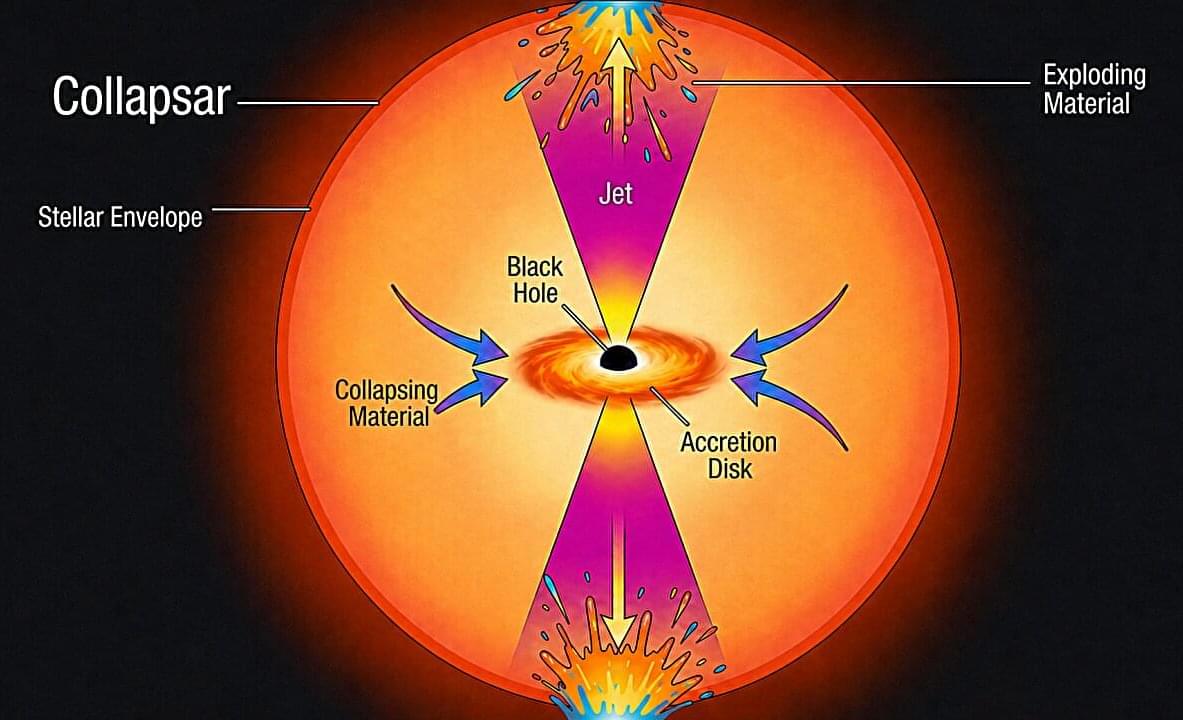
An international team of researchers has developed new stellar and supernova models to explain the mysterious elemental abundance patterns left by billions of supernova explosions around the Perseus constellation, which have been difficult to explain with conventional theoretical models, reports three recent studies published in The Astrophysical Journal.
Deep within the Perseus constellation lies one of the most massive structures known to science: the Perseus Cluster. A titan of the cosmos, it anchors over a thousand galaxies within a sea of superheated gas known as the Intracluster Medium (ICM). This gas, glowing fiercely in X-rays, acts as a celestial ledger, recording the chemical “fingerprints” left behind by billions of supernova explosions over billions of years.
However, data from the HITOMI (Astro-H) space telescope revealed a profound mystery. Long-standing theoretical models by researchers need important corrections.