The artificial intelligence (AI) machines that guide the world can be grouped into three main categories: inference machines, learning machines and discovery machines. Researchers at Washington University in St. Louis are tackling the rarest of these machines. A new study points to a better way to build discovery machines, thanks to recent research led by Shantanu Chakrabartty, the Clifford W. Murphy Professor and vice dean for research in the McKelvey School of Engineering at Washington University in St. Louis.
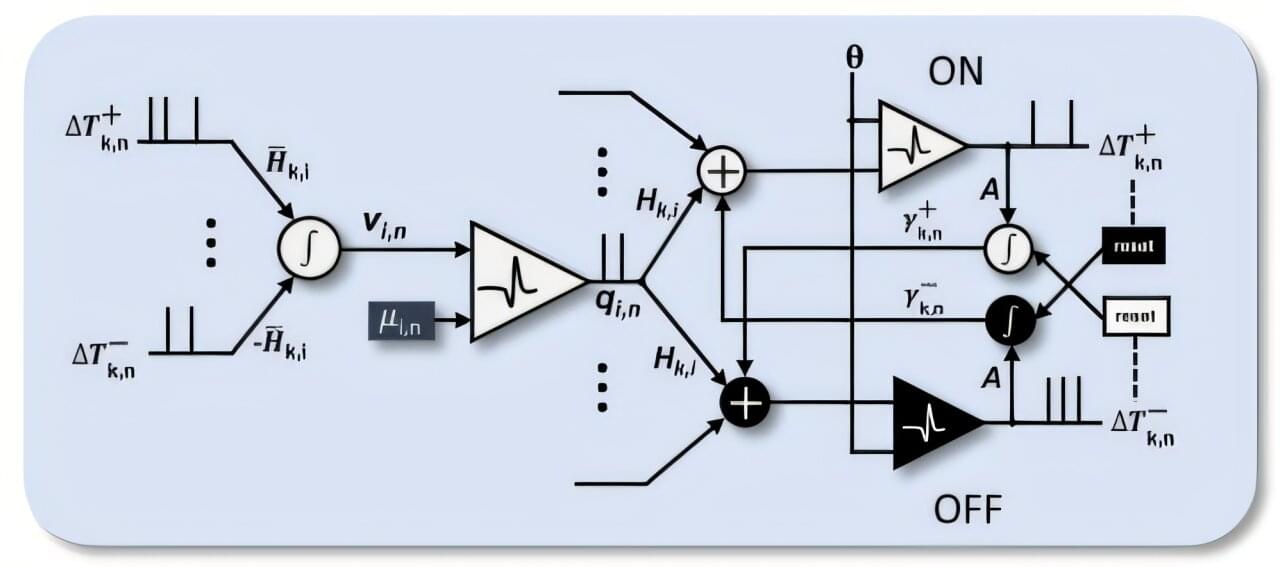
The work, now published in Nature Communications, builds off previous research on establishing a hybrid systems architecture, one that employs “neuromorphic” architecture modeled on human neurobiology functions combined with systems that leverage quantum mechanics to find optimal solutions to complex problems.
The research shows that these machines can consistently produce state-of-the-art solutions with high reliability and with competitive time-to-solution metrics, Chakrabartty said.