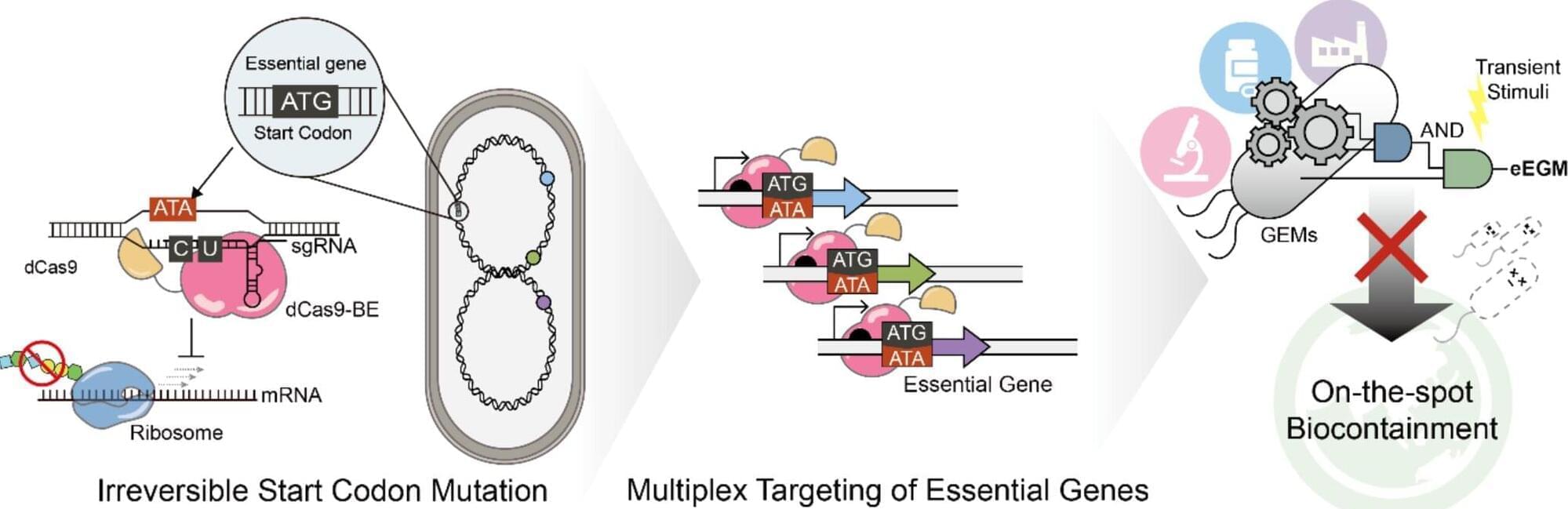
Engineered microorganisms are widely used in industrial biotechnology and biopharmaceutical applications, including the production of biofuels, sustainable chemicals, and therapeutic compounds. However, concerns remain regarding the unintended environmental release and uncontrolled proliferation of genetically engineered microbes. For this reason, biocontainment technologies, which are designed to prevent microorganisms from surviving outside controlled environments, have become increasingly important in both academia and industry.
Conventional biocontainment strategies have relied on auxotrophy-based approaches, toxin–antitoxin systems, or DNA cleavage-based technologies such as CRISPR-Cas9. However, these methods often suffer from environmental dependency, genetic instability, and the risk of unintended mutations and cellular stress caused by DNA double-strand breaks.
In particular, DNA cleavage-based systems may compromise genomic stability and allow certain mutant cells to escape survival control. In addition, CRISPR interference (CRISPRi)-based systems are inherently reversible, posing challenges for achieving complete and permanent control of cell viability.