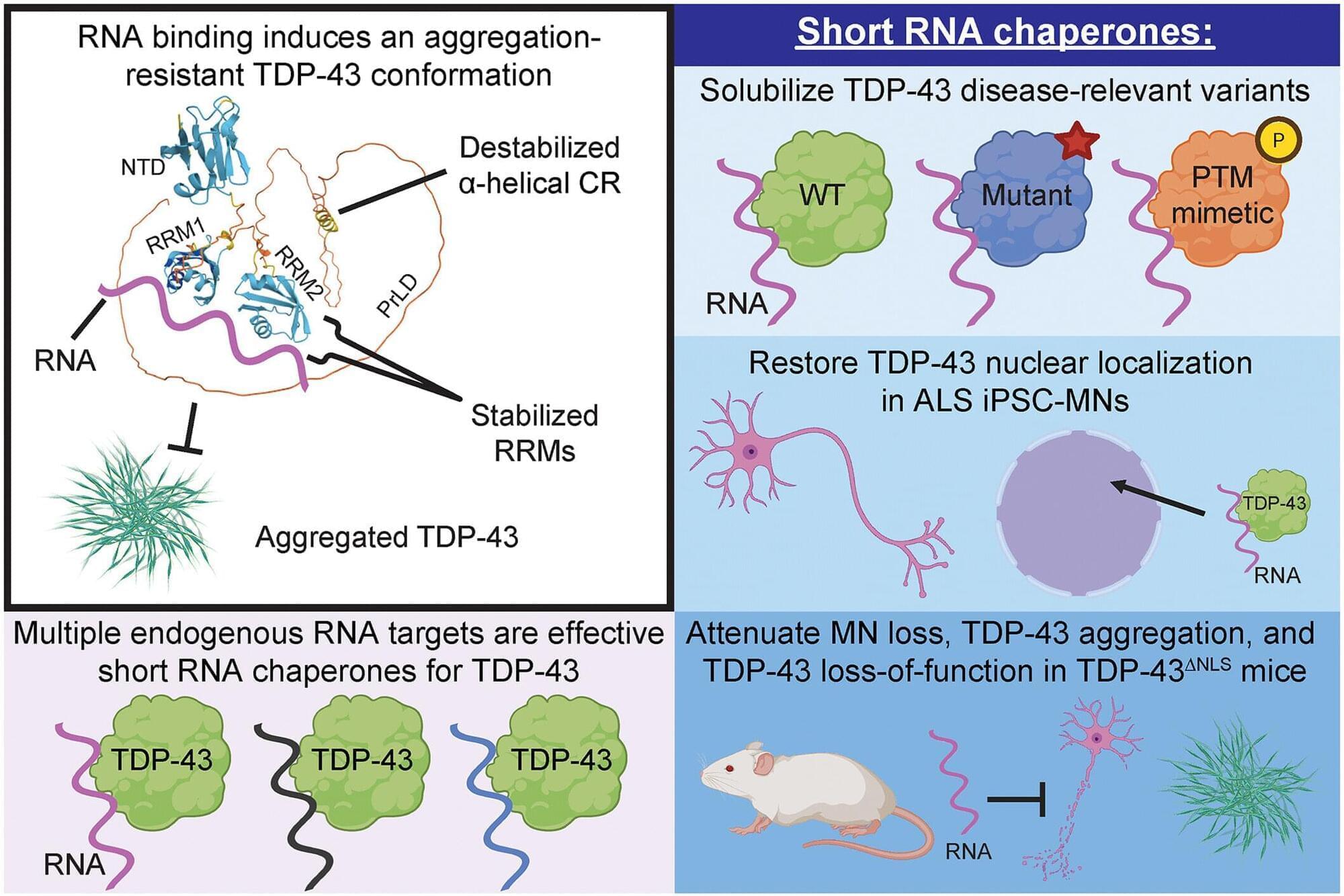
Misshapen proteins cause a mess of trouble—particularly in neurodegenerative diseases. But a new study suggests it’s possible that giving them a little bit of extra support could keep them working correctly, and even reverse the damage they have caused.
The new research focuses on one such aberrant protein, TDP-43, which binds to RNA in the cell’s nucleus and is responsible for regulating thousands of human genes. If TDP-43 turns from a healthy, liquid-like phase into diseased, fibrous solid-like aggregates, its presence can be fatal.
This protein is one of the key drivers of the diseases amyotrophic lateral sclerosis (ALS) and frontotemporal dementia (FTD)—a discovery first made by pioneering Penn Medicine scientists Virginia M.-Y. Lee, Ph.D., MBA, and the late John Trojanowski, MD, Ph.D.