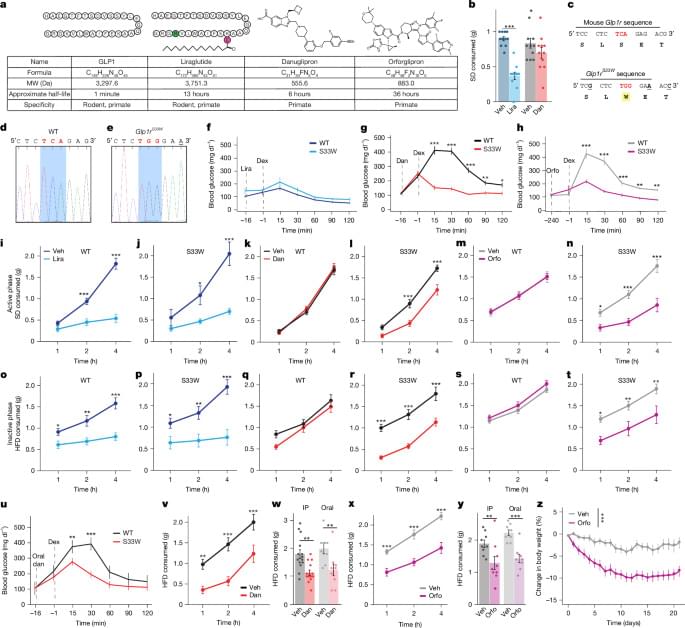
New research using humanized mouse models has finally pulled back the curtain on how these small-molecule drugs work in the brain, revealing that they don’t just tell the body it’s full—they actually change how we perceive “treats.”
1. The Homeostatic Circuit: This is the body’s fuel gauge. It involves the hypothalamus and hindbrain, which manage basic hunger and energy levels. It’s the circuit that tells you, “I’ve had enough calories for today.”
These new weight-loss pills do more than just settle your stomach; they speak directly to the brain’s reward center to help quiet the “food noise” that leads to overeating.
This is a “proof of concept” study. It proves the mechanism exists, but it doesn’t yet guarantee that a pill will be a side-effect-free “cure” for overeating in humans.
Humanized glucagon-like peptide 1 receptor (GLP1R) mouse models are used to investigate the neural circuitry through which small-molecule GLP1R agonists modulate feeding, with implications for how these orally delivered weight-loss drugs engage brain reward circuits.