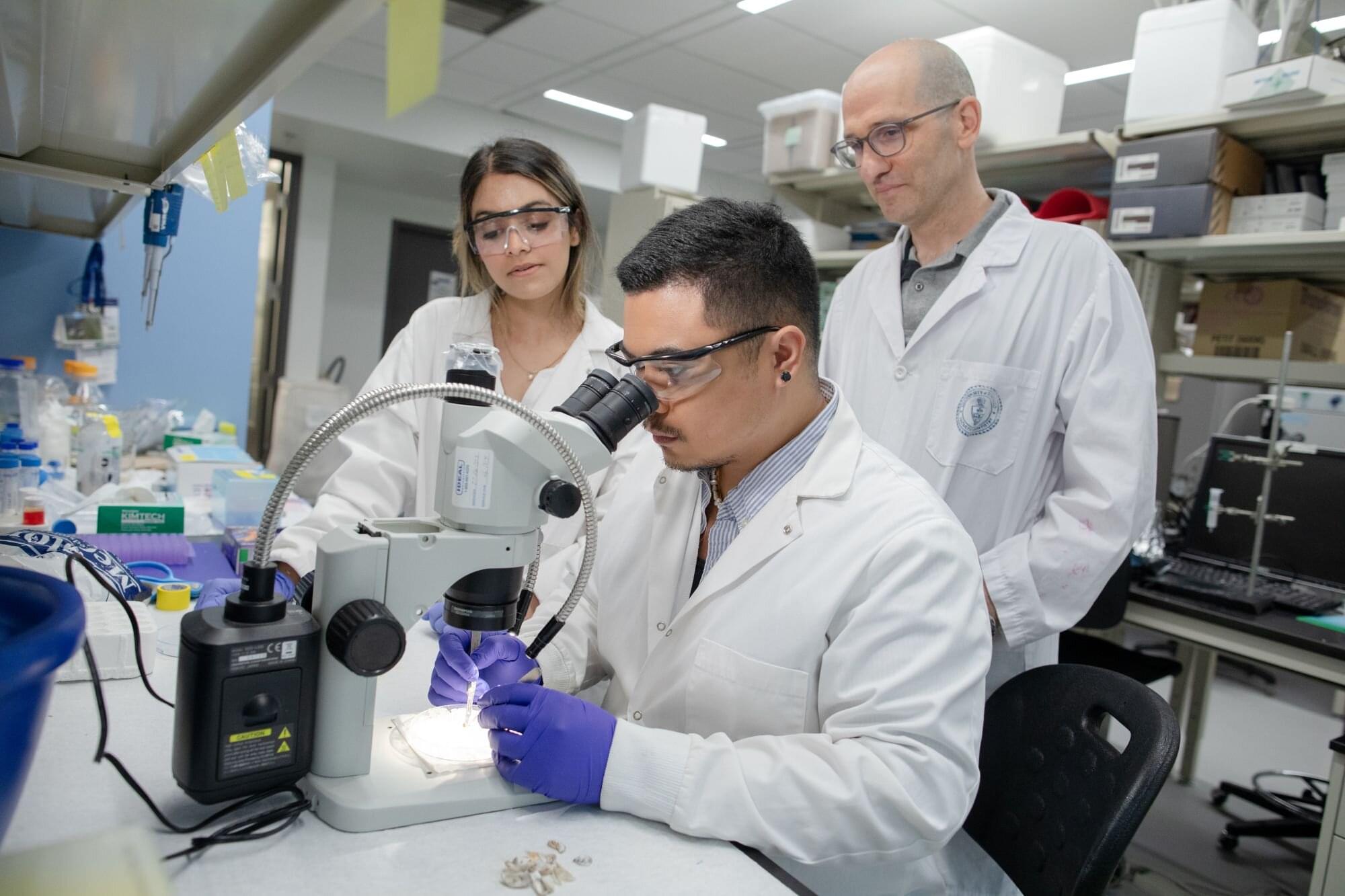
Researchers at the University of Toronto have identified a protein from the quagga mussel that can stick to surfaces underwater, even though it lacks a chemical feature long thought to be essential for this kind of adhesion. The protein, called Dbfp7, is the first freshwater mussel adhesive protein to be functionally characterized.
The finding, published in PNAS, helps explain how some organisms attach themselves in wet environments and could inform the design of future medical glues—such as medical sealants and surgical adhesives—or other materials that need to work reliably in water.
Most studies of underwater adhesion have focused on marine mussels, which use proteins rich in a modified amino acid called 3,4-dihydroxyphenylalanine (DOPA) to bond to surfaces. Freshwater species have been studied less, and whether they rely on the same chemistry has not been clear.