Over the past few decades, neuroscientists and medical researchers worldwide have been trying to leverage available health records, brain scans and other medical data to uncover biological markers associated with the onset of specific diseases or neuropsychiatric disorders. The identification of these biomarkers could help to devise new tools to predict the risk that individual patients will develop a specific condition, allowing doctors to intervene early, preventing or delaying its emergence or slowing down its progression.
Researchers at the University of Texas Health Science Center, UTHealth Houston School of Behavioral Health Sciences, Keck School of Medicine of USC, and University of Maryland School of Medicine recently devised a new brain-based index that could be used to track early risk factors that, in specific people, may lead to the development of Alzheimer’s disease (AD). AD is a progressive neurodegenerative condition that prompts the deterioration and death of brain cells, leading to progressive memory loss and a decline in mental functions. AD has very limited treatment options after the diagnosis but the brain changes that culminate in AD take decades, thus suggesting that public effort should be focused on prevention.
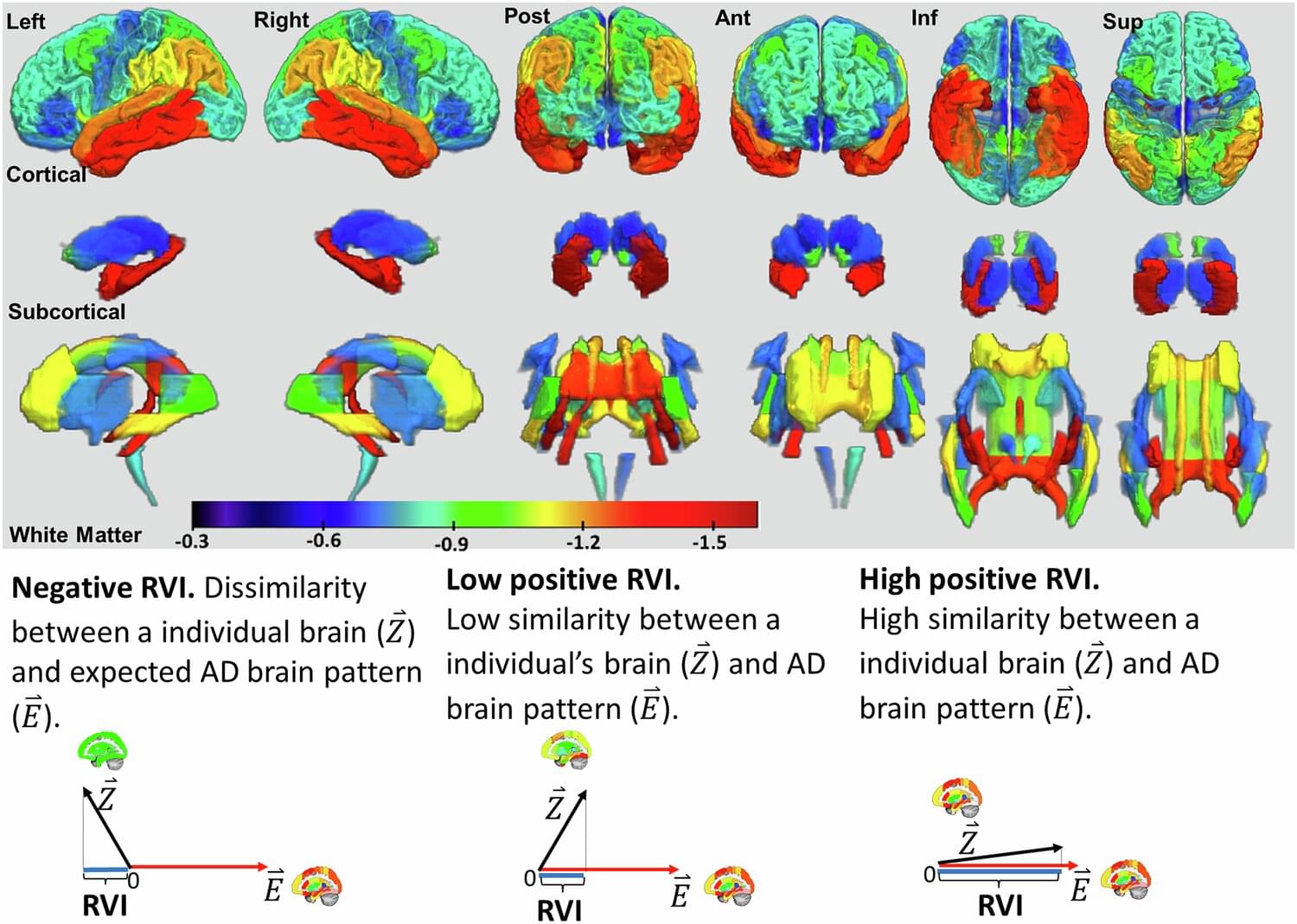
The researchers devised an index that could be used to quantify patterns in a person’s brain that measure the similarity to those observed in individuals diagnosed with AD and followed as a part of the research studies such as Alzheimer’s Disease Neuroimaging Initiative (ADNI). This index, introduced in a paper published in Molecular Psychiatry, was derived by performing a mega-analysis of publicly available brain imaging data collected from people with and without AD.